Why Is My Dog Licking Their Paws? Allergies, Yeast, Injury, Anxiety & When to See a Vet
Paw licking is one of the most common concerns dog parents search for — and one of the most misunderstood. Learn the real reasons behind this behaviour, what your dog's paws may be telling you and when it is time to visit the vet.
Written by the Raise Happy Dog editorial team. Educational only — not a substitute for your veterinarian. Read our editorial policy.
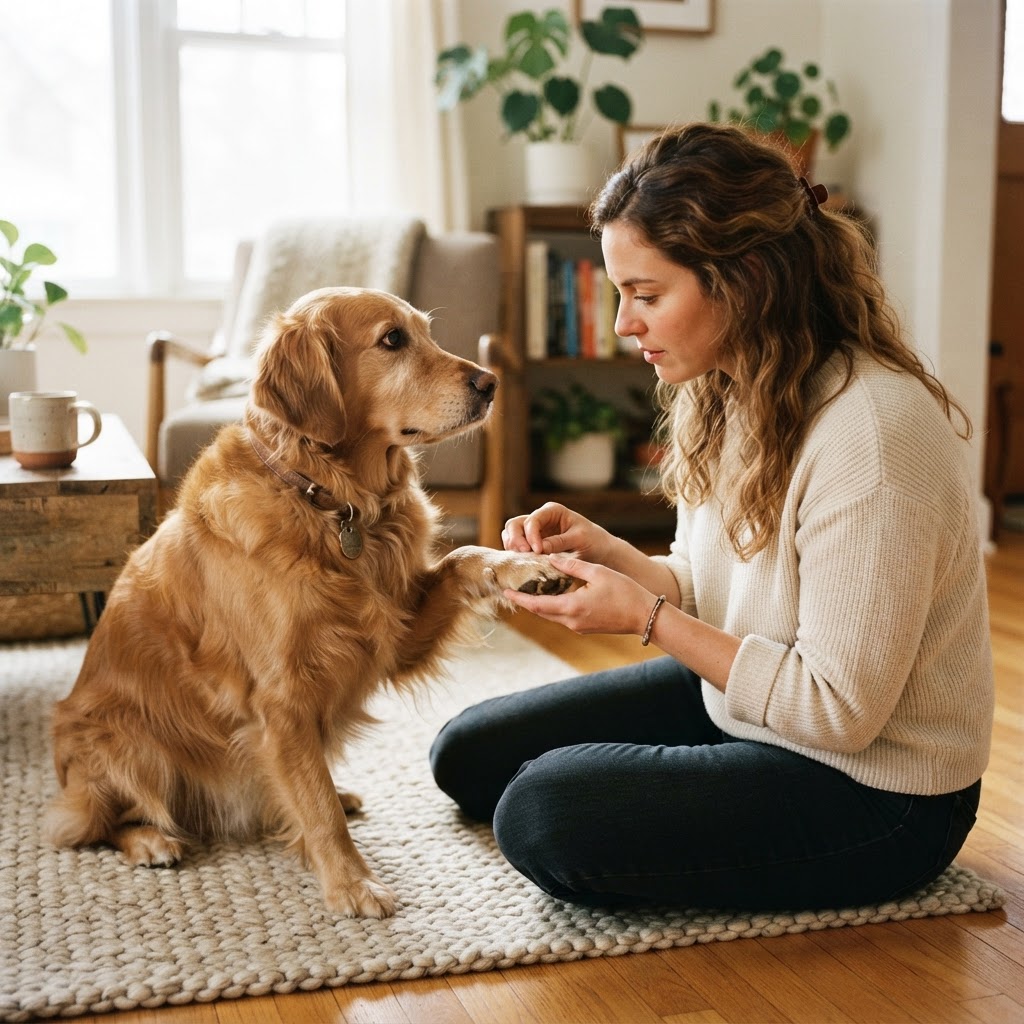
You are reading on the sofa and there it is again — that quiet, rhythmic sound of your dog licking their paws. It might have started a few days ago. Or perhaps you have been noticing it for weeks and wondering whether it means something.
You are not imagining things. And you are not overreacting.
Paw licking is one of the most frequently searched dog health concerns, and for good reason. It can be completely harmless — or it can be the first visible clue that something uncomfortable, painful or irritating is happening beneath the surface.
The tricky part is that paw licking has many possible causes. Allergies, infections, injuries, parasites, pain and even anxiety can all drive the same behaviour. That is why understanding what to look for — and when to involve your veterinarian — matters so much.
Important note: This article is designed to help you recognise patterns and ask better questions. It is not a substitute for veterinary examination and diagnosis. If your dog's paw licking is persistent, worsening or accompanied by visible changes, please consult your veterinarian.
Is occasional paw licking normal?
Yes — to a point.
Dogs groom themselves, and licking their paws is a normal part of that process. After a walk, after eating, before settling down to sleep — brief, casual paw licking is usually nothing to worry about.
It becomes a concern when:
- The licking is frequent, prolonged or intense
- Your dog returns to the same paw again and again
- The licking interrupts sleep — yours or theirs
- You notice redness, swelling, moisture, staining or a change in smell
- Your dog seems unable to stop, even when distracted
Occasional grooming is healthy. Persistent, focused licking is your dog trying to tell you something.
One paw or all four? This clue matters
Before diving into causes, pay attention to how many paws are involved. This simple observation can help point the investigation in the right direction.
One paw only
When your dog keeps licking or chewing a single paw, the cause is more likely to be localised — something specific to that foot.
Think about:
- A thorn, splinter or grass seed stuck between the toes
- A cut, scrape or cracked pad
- A broken or torn nail
- An insect sting or spider bite
- An interdigital cyst (a painful lump between the toes)
- A localised injury or bruise
- Pain in that limb — such as a sprain, strain or arthritis in a specific joint
Several paws or all four
When multiple paws are involved, the cause is more likely to be systemic — something affecting the whole body rather than just one spot.
Common possibilities include:
- Environmental allergies (pollen, grass, dust mites, mould)
- Food allergies or sensitivities
- Yeast or bacterial infections
- Flea allergy dermatitis
- Contact irritation from chemicals, treated grass or cleaning products
- Seasonal skin sensitivity
Mostly at night
Some owners notice their dog licks more — or only — at night. This pattern does not point to a single cause, but there are reasons it may seem worse after dark.
During the day, your dog is distracted by activity, walks and interaction. At night, the house is quiet and there is nothing to redirect their attention away from an itch, a sore spot or an anxious habit.
There is also a natural drop in the body's circulating cortisol — an anti-inflammatory hormone — during the evening hours. This can make existing skin inflammation feel more intense at night than it did during the day.
However, nighttime licking should never be dismissed as "just a habit" without first ruling out medical causes.
The most common causes of paw licking
1. Allergies
Allergies are the single most common reason dogs lick their paws persistently. According to VCA Animal Hospitals, allergies are the most frequent underlying trigger for chronic paw licking, and they can be environmental, food-related or flea-driven. (VCA Animal Hospitals)
Environmental allergies (atopic dermatitis) are especially relevant. Cornell University's College of Veterinary Medicine explains that dogs with atopic dermatitis commonly lick and chew their feet, sometimes developing redness, hair loss and brown saliva staining. Atopic dermatitis may affect as much as 10–15% of the dog population. (Cornell University College of Veterinary Medicine)
The American Animal Hospital Association identifies increased licking as one of the subtle signs through which owners may first notice allergies. (AAHA)
Environmental allergens include grass pollen, tree pollen, weed pollen, mould spores, dust mites and dander. Some of these are seasonal (worse in spring and summer), while others — like dust mites — are present year-round.
Food allergies can also cause paw licking, though they are less common than environmental allergies. A veterinarian-supervised elimination diet is the gold standard for identifying food-related triggers. Blood and saliva tests marketed for food allergies are widely considered unreliable by veterinary dermatologists.
Flea allergy dermatitis can cause intense itching from just a single flea bite in sensitised dogs, which may lead to licking and chewing at the paws and other areas.
For a deeper look at recognising and managing allergic reactions, see our guide on dog allergy symptoms and management.
2. Yeast infections
When a dog licks their paws repeatedly, they create a warm, moist environment between the toes — which is exactly where the yeast organism Malassezia thrives.
In many cases, a yeast infection is not the original problem. It develops as a secondary complication after allergies, moisture or skin-barrier disruption weakens the skin's natural defences.
The Merck Veterinary Manual notes that bacterial and yeast infections frequently cause foot licking and can worsen the original irritation, creating a self-perpetuating cycle: the dog licks because of the itch → the moisture promotes more yeast growth → the yeast causes more itching → the dog licks more. (Merck Veterinary Manual)
Signs that suggest yeast involvement include:
- A distinctive "corn chip" or musty, sweetish odour from the paws
- Reddish-brown discolouration of the fur, especially between the toes
- Greasy, thickened or flaky skin
- Persistent itching that does not fully respond to allergy management alone
3. Bacterial infections
Like yeast, bacteria can colonise irritated, moist paw skin and create a secondary infection. Dogs may develop redness, swelling, discharge or small pustules between the toes.
Bacterial infections on the paws often occur alongside yeast — and both can develop on top of an underlying allergy. Treating the infection without addressing the root cause means it is likely to return.
4. Injury or foreign body
A thorn, grass seed, small stone, piece of glass or burr lodged between the toes or in the paw pad can cause sudden, focused licking — often of a single paw.
Grass seeds are particularly problematic because they are barbed and designed to move in one direction. If not removed, they can burrow deeper into the tissue, causing abscesses and painful channels of infection.
Other injuries that trigger paw licking include:
- Cuts or puncture wounds on the pad
- Cracked or dry paw pads
- Burns from hot pavement, sand or artificial surfaces
- A broken, torn or overgrown nail
- Bruising from impact
If your dog suddenly begins licking one paw intensely after a walk, an injury or foreign object is a strong possibility. Hot surfaces are a common summer culprit — our guide on how hot is too hot to walk a dog explains how to protect the paw pads.
5. Interdigital cysts (interdigital furuncles)
These painful, inflamed lumps develop between the toes and can cause significant discomfort and persistent licking. Despite the common name "cysts," they are more accurately described as interdigital furuncles — areas of deep inflammation often triggered by embedded hair shafts, foreign material, allergies or infection.
The MSD Veterinary Manual notes that pododermatitis (inflammation of the paw skin) is a clinical presentation rather than a single diagnosis, and identifying the underlying trigger is essential for effective treatment. (MSD Veterinary Manual)
Certain breeds with wide, weight-bearing paws — such as English Bulldogs, Labrador Retrievers and Bull Terriers — are more prone to this condition. Treatment usually involves addressing the infection, managing the inflammation and identifying the root cause to prevent recurrence.
6. Fleas, mites and ticks
Parasites can cause localised or widespread itching that leads to licking.
- Fleas may not always be visible, but even a single bite can trigger intense itching in dogs with flea allergy dermatitis
- Mites (such as Sarcoptes or Demodex) can cause intense skin irritation and are not always easy to detect
- Ticks can attach between the toes and be difficult to spot without careful inspection
Year-round parasite prevention is one of the simplest ways to rule out this cause.
7. Contact irritation
Some dogs react to substances they walk through or stand on, including:
- Lawn chemicals, herbicides or fertilisers
- Road salt or ice-melt products in winter
- Cleaning products used on floors
- Certain carpet treatments or fabric detergents
- Treated artificial grass
This type of irritation may come and go depending on where the dog has been walking.
8. Pain — arthritis, sprains and referred discomfort
Dogs sometimes lick an area not because the skin itches, but because something underneath hurts. A dog with arthritis in a toe joint, a sprained digit or pain referred from higher up the limb may lick the affected paw as a way of self-soothing.
This is worth considering in:
- Older dogs
- Dogs who lick one paw consistently without any visible skin changes
- Dogs who are also showing stiffness, limping or reluctance to exercise
9. Anxiety, boredom or compulsive licking
Paw licking can sometimes be a behavioural response to stress, anxiety, boredom or a lack of mental stimulation. However — and this is important — behavioural causes should only be considered after medical causes have been thoroughly ruled out.
Many owners assume paw licking is a "nervous habit," but this assumption can delay critical treatment for underlying health problems.
VCA Animal Hospitals describes lick granuloma as a condition with both physical and psychological components, noting that fear, anxiety and obsessive-compulsive tendencies can drive repetitive licking behaviour. It occurs mainly in medium to large breeds, particularly Doberman Pinschers, Great Danes, Labrador Retrievers, Golden Retrievers and Irish Setters. (VCA Animal Hospitals)
If your veterinarian has ruled out allergies, infections, injuries and other physical causes, a behavioural assessment may be the next step. This may involve:
- Enrichment strategies (puzzle feeders, scent work, structured play)
- Environmental changes to reduce stress triggers
- Behaviour modification plans
- In some cases, veterinary-prescribed medication to reduce anxiety
Once medical causes have been ruled out, our AI Training Advisor can help you build enrichment and behaviour-support routines.
What the paws may look or smell like
Healthy paws should be clean, free from strong odour and a consistent colour. If your dog has been licking excessively, you may notice some or all of the following:
- Redness — especially between the toes or on the underside of the foot
- Swelling — around the toes, between the pads or on the top of the foot
- Brown or reddish-brown saliva staining — caused by porphyrins, iron-rich compounds naturally present in saliva that oxidise and stain the fur when licking is persistent
- Hair loss — patches where the fur has been licked away
- Discharge — clear, cloudy or yellowish fluid
- Crusting or scabbing — from repeated licking and secondary infection
- Broken, torn or overgrown nails
- An unusual odour — a musty, yeasty or "corn chip" smell often points to a Malassezia yeast overgrowth
- Lumps between the toes — which may indicate interdigital furuncles, cysts or other growths
It is worth noting that constant licking can itself become a cause of further problems. The cycle of licking → moisture → inflammation → infection → more licking can escalate quickly if left unchecked.
What owners can safely check at home
You do not need to diagnose the problem yourself — that is your veterinarian's job. But a careful home inspection can help you gather useful information before the appointment.
How to examine your dog's paws
- Choose a calm moment. Do not try to inspect the paws when your dog is anxious or has just been licking intensively. Wait until they are relaxed.
- Check each paw pad. Look at the main pads and the smaller digital pads for cuts, cracks, blisters, discolouration or foreign objects.
- Look between the toes. Gently spread the toes apart and look for redness, swelling, lumps, seeds, burrs, ticks or discharge. This is where problems most often hide.
- Inspect the nails. Look for broken, split, overgrown or ingrown nails. Check the nail beds for swelling or tenderness.
- Check the top of the foot. Look for hair loss, staining, redness or skin changes.
- Smell the paws. A musty, yeasty or strong odour is worth reporting to your vet.
- Note the pattern. Which paws are affected? When does the licking happen most? Has anything changed recently — food, walking routes, cleaning products, season?
Write down what you observe. Your veterinarian will appreciate having this information ready.
What not to apply without veterinary advice
When you see your dog uncomfortable, the instinct to help immediately is completely natural. But some commonly suggested home remedies can make things worse — or mask symptoms that your vet needs to see.
Avoid applying the following without specific veterinary guidance:
- Human antifungal creams — these are formulated for human skin and may contain ingredients that are toxic if your dog licks them off
- Essential oils — many essential oils (including tea tree oil) are toxic to dogs, even in small amounts, and can cause irritation, tremors or more serious reactions
- Hydrogen peroxide — this can damage healthy tissue and delay healing
- Apple-cider vinegar on broken or inflamed skin — vinegar on open wounds or raw skin causes pain and further irritation
- Human pain medication — ibuprofen, paracetamol (acetaminophen) and aspirin are all potentially dangerous or fatal to dogs
- Leftover antibiotics — using the wrong antibiotic, the wrong dose or treating without a diagnosis can promote resistant bacteria and delay proper care
The safest first step is always a veterinary consultation. If you need to prevent licking before the appointment, ask your vet whether a protective cone, medical bootie or distraction method is appropriate.
When to contact a veterinarian
Contact your vet if you notice any of the following:
- Paw licking that persists for more than a day or two
- Licking that is becoming more frequent or intense
- Visible redness, swelling or inflammation
- Any bleeding, discharge or open sores
- Limping, favouring a paw or reluctance to walk
- Pain or sensitivity when the paw is touched
- A foul, musty or unusual odour from the paws
- Brown or reddish staining that is spreading
- Lumps, bumps or swelling between the toes
- Licking that disrupts sleep or normal activity
- Repeated recurrence after previous treatment
Trust your instincts. If something feels wrong, it probably warrants a closer look. Early veterinary assessment can often prevent a minor irritation from becoming a complicated, painful and expensive problem.
How veterinarians identify the cause
Your vet will not simply glance at the paws and prescribe medication. Identifying the cause of persistent paw licking often involves a systematic process.
Physical examination
A thorough examination of the paws, skin, ears and coat — and a detailed history from you — is always the starting point. Your vet will look for patterns, distribution, secondary changes and clues that point toward specific causes.
Cytology
A small sample of material from the skin surface or between the toes is examined under a microscope. This quick, non-invasive test can reveal whether yeast organisms or bacteria are present and in what numbers.
Skin scraping
A gentle scrape of the skin surface can help detect mites such as Demodex or Sarcoptes that are not visible to the naked eye.
Parasite assessment
Even if you do not see fleas, your vet may check for flea dirt (flea faeces) or recommend a trial course of effective parasite prevention to rule out flea-related itching.
Allergy testing
If allergies are suspected, your vet may recommend:
- Intradermal allergy testing — small amounts of common allergens are injected into the skin to observe reactions
- Blood testing — to measure allergen-specific antibodies
- Elimination diet trial — the gold standard for diagnosing food allergies, involving a strict novel-protein or hydrolysed diet for 8–12 weeks under veterinary supervision
Further investigation
In more complex or chronic cases, your vet may suggest:
- Bacterial culture and sensitivity testing — to identify the exact bacteria involved and which antibiotics will be effective
- Biopsy — to examine tissue under a microscope in cases of unusual growths, chronic non-healing lesions or suspected autoimmune conditions
- Imaging (X-rays or ultrasound) — to check for foreign bodies, bone changes or joint problems
- Referral to a veterinary dermatologist — for chronic, recurrent or complex skin conditions
Prevention and everyday paw care
While you cannot prevent every cause of paw licking, sensible daily habits can reduce the risk and help you catch problems early.
Inspect the paws regularly
Make it part of your routine — especially after walks in long grass, woodland, beaches or new environments. A quick check between the toes takes seconds and can catch thorns, seeds and ticks before they become a problem.
Dry the paws after wet walks
Moisture between the toes creates the ideal environment for yeast and bacteria. After a wet or muddy walk, gently dry each paw — including between the toes — with a clean, soft towel.
Rinse after walks during allergy season
If your dog has known environmental allergies, rinsing or wiping the paws with plain water or a vet-approved paw wipe after outdoor walks can help remove pollen and other allergens before they irritate the skin.
Keep up with parasite prevention
Use a veterinary-recommended flea, tick and mite prevention product year-round. Parasites are one of the most preventable causes of paw itching.
Maintain nail care
Overgrown nails can alter the way your dog walks, put pressure on the toe joints and even grow into the pad. Regular trimming — or grinding — keeps the nails at a healthy length. If you are unsure how short to trim, ask your vet or a professional groomer to show you.
Trim the fur between the toes
In breeds with longer fur, hair between the toes can trap moisture, seeds, burrs and debris. Keeping this area neatly trimmed reduces the risk of irritation and makes inspection easier.
Be mindful of walking surfaces
Avoid hot pavements in summer (use the hand test — if the surface is too hot for your palm held against it for five to seven seconds, it is too hot for your dog's paws). In winter, rinse off road salt and ice-melt products after walks. Be cautious about recently treated lawns and chemical-laden surfaces.
Provide mental enrichment
Boredom and under-stimulation can contribute to repetitive behaviours. Puzzle feeders, snuffle mats, scent games, short training sessions and supervised exploration all provide mental engagement that may reduce habitual licking — but only once medical causes have been addressed.
Frequently asked questions
Why is my dog licking only one paw?
Single-paw licking usually suggests a localised cause rather than a whole-body problem. Check carefully for a thorn, grass seed, splinter, cut, insect sting, broken nail or a tender lump between the toes. Pain from arthritis or a soft-tissue injury in that limb can also cause focused licking. If you cannot find an obvious cause and the licking continues, your vet can investigate further.
Why does my dog lick their paws at night?
Nighttime licking is often more noticeable because there are fewer distractions. The itch or discomfort may have been present all day, but your dog was occupied with other things. Additionally, the body's natural cortisol levels drop in the evening, which can make existing inflammation feel worse after dark. Nighttime licking should still be investigated — it is not automatically "just a habit."
Do yeast-infected paws smell?
Yes. A yeast (Malassezia) overgrowth often produces a distinctive musty, sweet or "corn chip" smell. If your dog's paws have an unusual odour — especially combined with redness, brown staining or greasy skin — a yeast infection is a possibility worth discussing with your vet.
Can food allergies cause paw licking?
Yes, although food allergies are less common than environmental allergies in dogs. When food is the trigger, paw licking and ear infections are frequently among the signs. A veterinarian-supervised elimination diet lasting 8–12 weeks is the most reliable way to identify a food allergy. Over-the-counter "allergy tests" based on saliva or hair samples are not considered reliable by veterinary dermatologists.
Can anxiety make dogs lick their paws?
It can — but this should only be considered after medical causes have been thoroughly ruled out. Anxiety, boredom, compulsive tendencies and stress can all contribute to repetitive licking. However, many dogs initially labelled as "anxious lickers" turn out to have allergies, infections or pain driving the behaviour. Always start with a veterinary examination.
Should I use an Elizabethan collar (cone) to stop the licking?
A cone can be helpful as a temporary measure to prevent further damage while you wait for a vet appointment or while treatment takes effect. However, the cone addresses the symptom — not the cause. If your dog needs a cone to stop licking, they also need a veterinary assessment to identify and treat whatever is driving the behaviour.
Is brown paw staining dangerous?
The staining itself is not dangerous. It is caused by porphyrins — natural iron-containing compounds in your dog's saliva. When a dog licks excessively, these compounds build up on the fur and oxidise, turning it a reddish-brown colour. The staining is a visible marker that tells you this area is receiving a lot of attention. The concern is not the colour — it is the reason behind the excessive licking.
Your dog's paws are trying to tell you something
Paw licking is one of those behaviours that is easy to dismiss — until it is not.
A dog who occasionally grooms their feet after a walk is doing something perfectly normal. A dog who returns to their paws again and again, who wakes you with the sound of licking at 2 a.m., who has pink, moist skin between their toes and fur stained brown from constant chewing — that dog is uncomfortable. They may be itchy, in pain, fighting an infection or reacting to something in their environment.
The causes are varied, but the message is the same: something needs attention.
The paws are often the first place allergies, infections and other problems become visible. Paying attention to them — early and often — is one of the simplest ways to protect your dog's comfort and health.
You do not need to have all the answers. You just need to notice, check and ask. Your veterinarian will take it from there.
Stay Ahead of Your Dog's Health
Paw problems are easier to manage when you catch them early. Use Raise Happy Dog's free tools to track your dog's wellness and stay on top of preventive care.
Check Your Dog's Score Free Care Reminder
Important medical disclaimer
This article provides general educational information and does not replace examination, diagnosis or treatment by a qualified veterinarian. Paw licking can have many different causes, some of which require professional assessment and specific treatment. If your dog's paw licking is persistent, worsening or accompanied by visible changes, please consult your veterinarian.
References & Trusted Sources
- VCA Animal Hospitals — Allergies in Dogs: causes, symptoms and treatment options
- Cornell University College of Veterinary Medicine — Atopic Dermatitis (Atopy): signs, diagnosis and treatment in dogs
- American Animal Hospital Association — Dog Allergies: Symptoms, Testing, and Treatment
- Merck / MSD Veterinary Manual — Interdigital Furunculosis (Pododermatitis) in Dogs
- VCA Animal Hospitals — Lick Granuloma in Dogs: physical and psychological components
Found this helpful? Share it with a fellow dog parent:
Keep your dog's care organized
The Complete Dog Care Planner turns all of this into one calm, simple routine you can actually stick to.