Dog Probiotics & Gut Health: The Science Behind Your Dog's Second Brain
Trillions of microbes, 70% of the immune system, and a gut-brain link that can calm an anxious dog. An evidence-based, vet-backed guide to canine probiotics and gut health.
Written by the Raise Happy Dog editorial team. Educational only — not a substitute for your veterinarian. Read our editorial policy.

An evidence-based guide for pet parents who believe their dogs deserve more than guesswork.
The Moment That Changes Everything
It starts quietly. Maybe your dog skips breakfast one morning — something she never does. Or perhaps you notice her stools have been... off. Softer. More frequent. She's licking her paws obsessively, her coat looks dull, and there's a heaviness in her eyes that wasn't there before.
You Google it. You ask friends. You scroll through forums at midnight while she sleeps at your feet, and every answer seems to contradict the last.
Here's the truth that veterinary science is only now beginning to shout from the rooftops: the answers to many of your dog's mysterious health struggles may not lie in her joints, or her skin, or even her mood — they lie in her gut.
And understanding that could change your dog's life.
Your Dog's Gut: A Universe You Can't See
Your dog's gastrointestinal tract is home to trillions of microorganisms — bacteria, fungi, viruses, and other microbes — collectively known as the gut microbiome. Think of it as a bustling, invisible city living inside your dog's belly, where every citizen has a job to do.
A landmark 2026 study published in the journal Microbiome dramatically expanded our understanding of this inner world. Using advanced metagenomic sequencing, researchers identified hundreds of previously unknown bacterial strains, improving the mapping accuracy of the canine gut from a mere 25% to an astonishing 95% (Microbiome, 2026). That means for decades, we were operating with knowledge of barely a quarter of what lives inside our dogs.
A healthy canine gut — what scientists call eubiosis — is a diverse ecosystem dominated by bacterial groups including Firmicutes, Bacteroidetes, Actinobacteria, Fusobacteria, and Proteobacteria (Frontiers in Veterinary Science; NIH/PubMed). Each group plays a unique role in digestion, nutrient absorption, vitamin synthesis, and — this is the part that will surprise you — immune defense.
When that balance tips — when the "bad" bacteria start outnumbering the "good" — we enter a state called dysbiosis. And dysbiosis doesn't just mean an upset stomach. It can cascade into chronic inflammation, skin problems, behavioral changes, and even systemic disease.
70% of Your Dog's Immune System Lives in the Gut
Read that again. Let it sink in.
Veterinary immunology has established that approximately 70% to 80% of a dog's immune cells reside in the gastrointestinal tract, housed within a structure called the gut-associated lymphoid tissue (GALT) (NIH/PubMed; Cornell University College of Veterinary Medicine).
This isn't a minor footnote in a textbook. This is a fundamental truth about how your dog's body works:
- The gut microbiome trains the immune system. It teaches immune cells to tell the difference between a harmless piece of chicken and a dangerous pathogen. Without this "education," the immune system becomes either overreactive (leading to allergies and autoimmune conditions) or underreactive (leaving your dog vulnerable to infections) (Frontiers in Veterinary Science).
- Beneficial bacteria maintain the gut barrier. A healthy microbiome keeps the intestinal lining intact, preventing harmful substances from "leaking" into the bloodstream — a phenomenon increasingly studied in veterinary medicine as intestinal permeability (Journal of Veterinary Internal Medicine).
- Good bacteria produce short-chain fatty acids (SCFAs) like butyrate, acetate, and propionate, which serve as fuel for the cells lining the gut, regulate inflammation, and create an environment where pathogens simply cannot thrive (Cornell University; NIH/PubMed).
So when we talk about "gut health," we're really talking about whole-body health. Your dog's gut isn't just processing food — it's running the control center for immunity, inflammation, and resilience.
The Signs Your Dog's Gut Is Crying for Help
Dogs can't tell us when something feels wrong inside. But their bodies speak a language — if we learn to listen.
Digestive Red Flags
- Chronic or recurring diarrhea and loose stools
- Excessive gas, bloating, or gurgling stomach sounds
- Vomiting or regurgitation
- Constipation or straining
- Mucus or blood in stool
Beyond the Belly
- Skin & coat: Persistent itching, hot spots, frequent ear infections, a dull or brittle coat
- Behavior: Increased anxiety, irritability, lethargy, or withdrawal
- Appetite: Loss of interest in food, or pica (eating non-food items like grass, dirt, or fabric)
- Weight: Unexplained weight loss or gain
(Sources: MSD Veterinary Manual; Royal Canin Veterinary; VIN — Veterinary Information Network)
Here's what makes this tricky: many pet parents attribute these signs to aging, breed tendencies, or "just the way she is." But increasingly, veterinary gastroenterologists are finding that a significant number of these chronic, low-grade symptoms trace back to gut microbiome imbalances.
The Dysbiosis Index (DI), a PCR-based diagnostic tool developed at Texas A&M University's Gastrointestinal Laboratory, now allows veterinarians to quantify these imbalances with precision, measuring specific bacterial groups and comparing them to known healthy baselines (Frontiers in Veterinary Science; Purina Institute).
When to see your vet immediately: If symptoms persist beyond 48 hours, if you see blood in stool, or if your dog shows signs of severe lethargy or dehydration — don't wait. These could indicate something more serious.
Probiotics: What They Actually Are (and Aren't)
The word "probiotic" comes from the Greek pro bios — meaning "for life." The World Health Organization defines probiotics as "live microorganisms which, when administered in adequate amounts, confer a health benefit on the host."
For dogs, probiotics are specific, beneficial bacterial strains that, when consumed in sufficient quantities, help restore or maintain a balanced gut microbiome.
Here's what they are not:
- They are not a cure-all. They don't replace veterinary care.
- They are not all created equal. The strain matters enormously.
- They are not a substitute for good nutrition.
But when chosen wisely and used appropriately, the science shows they can be a genuinely powerful tool in your dog's health toolkit.
The Science: Which Probiotic Strains Actually Work?
This is where most articles get vague. We won't. Here are the strains that have actual clinical evidence behind them in canine studies:
1. Enterococcus faecium (strain SF68)
The most studied probiotic strain in veterinary medicine.
Multiple clinical trials have demonstrated that E. faecium SF68 improves fecal quality, reduces the incidence and severity of diarrhea — particularly in shelter environments or during periods of stress — and supports immune function (Vet Times; dvm360; NIH/PubMed).
This is the strain found in Purina FortiFlora, one of the most widely veterinarian-recommended probiotic supplements in the world.
2. Bifidobacterium animalis (strain AHC7)
Research has shown that this canine-derived strain can shorten the duration of acute idiopathic diarrhea in dogs. In clinical studies, dogs receiving B. animalis AHC7 showed faster resolution of symptoms compared to placebo groups (Vetfolio; Vet Times).
3. Lactobacillus species (L. acidophilus, L. rhamnosus, L. plantarum)
Various Lactobacillus strains are frequently included in canine probiotic formulations and have been associated with improved stool quality, enhanced nutrient digestibility, and modulation of immune responses — though the evidence is more varied and strain-specific (Cornell University College of Veterinary Medicine; MDPI; NIH/PubMed).
4. Bifidobacterium longum (strain BL999) — The Anxiety Breakthrough
This one deserves its own section. Keep reading.
Important note from veterinary experts: Probiotic effects are highly strain-specific. Results from one study on one strain cannot be generalized to other products or strains (dvm360; VIN). Always look at the specific strain on the label, not just the genus name.
The Gut-Brain Axis: Can Probiotics Help Your Anxious Dog?

This is arguably the most exciting frontier in canine microbiome research, and it started with a question that sounds almost too good to be true: Can bacteria in the gut change how a dog feels?
The answer, according to Purina Institute research, appears to be yes.
The Landmark BL999 Study
Purina scientists conducted a blinded, placebo-controlled, crossover study with 24 Labrador Retrievers exhibiting anxious behaviors. The dogs were supplemented with the probiotic strain Bifidobacterium longum BL999.
The results were remarkable:
| Measure | Improvement | % of Dogs Affected |
|---|---|---|
| Reduction in anxious behaviors (vocalization, pacing, jumping, spinning) | Significant improvement | 90% |
| Reduced salivary cortisol (the stress hormone) | Measurable decrease | 83% |
| Lower heart rate during anxiety triggers | Clinically significant | 75% |
| Increased heart rate variability (linked to positive emotional states) | Measurable increase | 83% |
(Sources: Purina Institute; dvm360; Fear Free Veterinary; published in peer-reviewed proceedings)
Think about what this means. A single bacterial strain, delivered orally, measurably reduced stress hormones, lowered heart rates, and improved observable anxious behavior in 9 out of 10 dogs studied.
The mechanism? The gut-brain axis — a bidirectional communication highway between the gastrointestinal tract and the central nervous system. The microbiome influences neurotransmitter production, stress hormone regulation, and inflammatory pathways that directly affect mood and behavior.
This research led to the development of Purina Pro Plan Veterinary Supplements Calming Care, which delivers 1×10⁹ CFU of BL999 daily. Veterinarians note it may take up to six weeks of consistent use to see full behavioral benefits.
If your dog struggles with separation anxiety, noise phobias, or general nervousness — this is a conversation worth having with your veterinarian.
When Antibiotics Wage War on the Gut
Sometimes antibiotics are necessary. They save lives. But they are, by nature, indiscriminate weapons — killing beneficial bacteria alongside harmful ones.
Veterinary research shows that antibiotic-induced dysbiosis can leave the gut microbiome altered for weeks or even months after treatment ends (ISAPP — International Scientific Association for Probiotics and Prebiotics; AnimalBiome; NIH/PubMed). Recovery is not automatic.
What this looks like in your dog:
- Persistent loose stools or diarrhea even after the medication course is complete
- New or worsened skin issues and ear infections
- Reduced energy and appetite changes
What the science says to do: Emerging evidence from 2025–2026 veterinary research supports starting probiotic or synbiotic supplementation at the beginning of antibiotic treatment — not after — to help mitigate microbiome damage (ISAPP; IPA — International Probiotics Association; NIH/PubMed).
Fecal Microbiota Transplantation (FMT): The Cutting Edge
For severe or treatment-resistant dysbiosis, veterinary researchers are exploring Fecal Microbiota Transplantation — transferring fecal material from a healthy donor dog to restore microbial balance.
A 2026 study published via the AVMA (American Veterinary Medical Association) found that an FMT protocol (enema followed by oral capsules) significantly reduced hospitalization time and medication needs in dogs with parvovirus.
FMT is still considered an emerging therapy, and results for chronic conditions like IBD have been mixed — but it represents a fascinating glimpse into the future of veterinary gastroenterology (AVMA; BSAVA; Frontiers in Veterinary Science).
Natural Ways to Support Your Dog's Gut — Starting Today
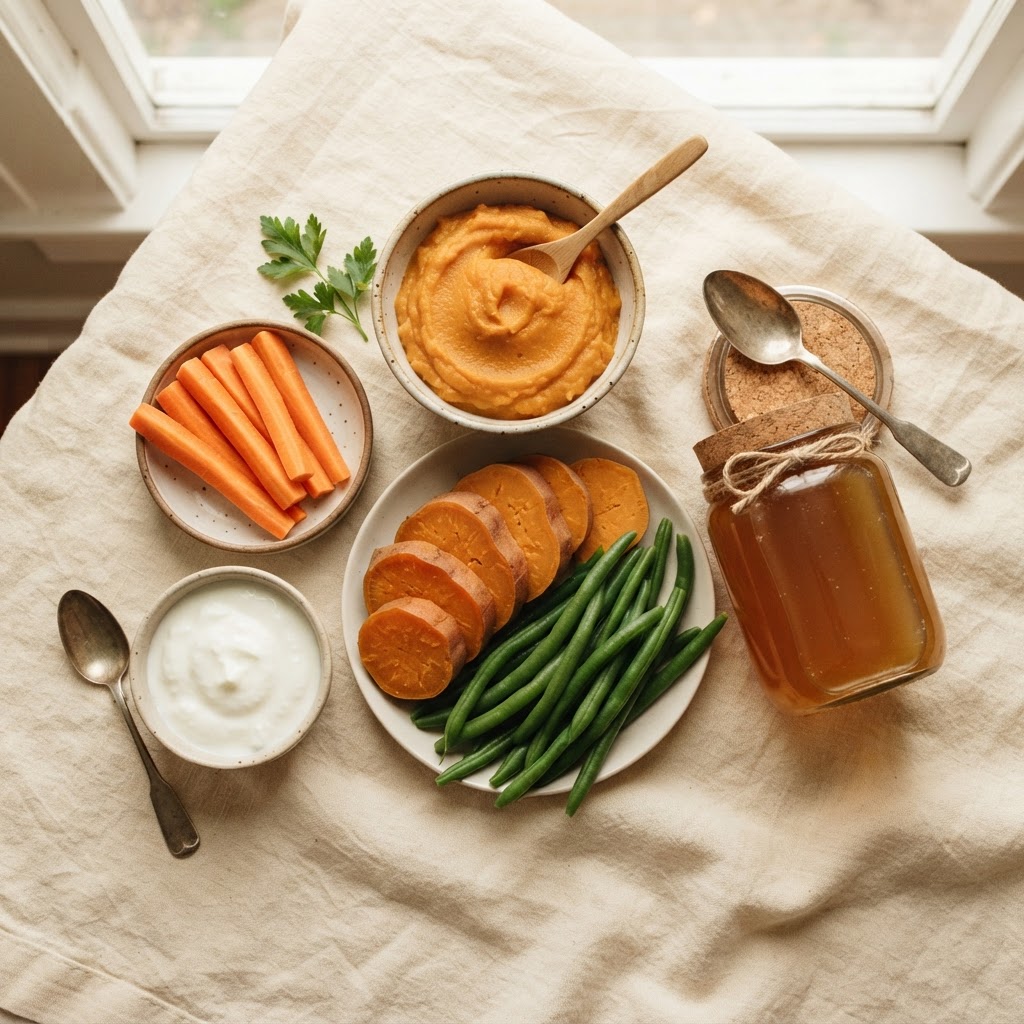
You don't need a prescription to start making a difference. Here are veterinary-backed, whole-food approaches to nurturing your dog's gut microbiome:
Prebiotic Fiber (Fuel for the Good Bacteria)
Prebiotics are non-digestible fibers that act as food for beneficial gut bacteria, helping them multiply and thrive.
- Plain cooked pumpkin — Rich in soluble fiber; excellent for regulating digestion
- Steamed sweet potatoes — Gentle, nutrient-dense source of prebiotic fiber
- Carrots and green beans — Low-calorie, dog-safe fiber sources
- Dandelion greens — A natural prebiotic (introduce in small amounts)
Pro tip: Introduce fiber gradually. A sudden increase can cause the very gas and bloating you're trying to prevent.
Fermented Foods (Natural Probiotics)
- Plain, unsweetened kefir — Contains diverse live cultures; start with ¼ teaspoon for small dogs
- Plain Greek yogurt — A mild probiotic source (ensure it contains no xylitol or artificial sweeteners — these are toxic to dogs)
- Unseasoned, low-sodium sauerkraut — Choose organic; avoid versions with onion or garlic
Gut-Soothing Additions
- Bone broth — Helps soothe the digestive tract and provides gentle hydration
- Omega-3 fatty acids (from fish oil) — Support anti-inflammatory pathways throughout the gut
What to AVOID
- Human fermented products with onion, garlic, or seasonings — toxic to dogs
- Any product containing xylitol — life-threatening
- Sudden, dramatic diet changes without gradual transition
How to Choose a Quality Dog Probiotic: A Veterinary Checklist
The pet supplement market is flooded with products making big promises. Here's how to separate the real from the noise, based on criteria used by veterinary professionals:
✅ Look For:
| Criteria | Why It Matters |
|---|---|
| NASC Quality Seal (National Animal Supplement Council) | Independent quality certification for pet supplements |
| Specific strain listed on label (e.g., E. faecium SF68, not just "probiotics") | Probiotic effects are strain-specific; genus-level labels are meaningless |
| Guaranteed CFU count at expiration (not at time of manufacture) | Bacteria die over time; the count at expiration is what matters |
| Third-party testing | Verifies that what's on the label is actually in the product |
| Canine-specific formulation | The canine microbiome is different from the human microbiome |
| Expiration date clearly printed | Probiotics are living organisms; they have a shelf life |
❌ Be Skeptical Of:
- Products that list only "proprietary blends" without specifying strains
- Claims that sound too good to be true ("cures allergies, cancer, and aging!")
- Products with no expiration date or no CFU guarantee
- Supplements marketed for humans being given to dogs without veterinary guidance
Recommended Dosage Range
Veterinarians generally suggest 1 to 10 billion CFU per day for dogs, though the optimal dose depends on the dog's size, age, health status, and the specific condition being addressed (Cornell University College of Veterinary Medicine).
Always consult your veterinarian before starting any supplement — especially if your dog has an underlying health condition, is immunocompromised, or is currently on medication.
The Emerging Frontier: Synbiotics & Postbiotics
The science isn't standing still. Here's where veterinary microbiome research is heading:
Synbiotics
A combination of prebiotics + probiotics in a single formulation. Early research suggests that synbiotic products may offer more comprehensive gut support than either component alone, because the prebiotic "feeds" the probiotic, helping it survive and colonize the gut more effectively (NIH/PubMed; CAS — Chemical Abstracts Service).
Postbiotics
These are inactivated microorganisms or their metabolic byproducts (like short-chain fatty acids, enzymes, or antimicrobial peptides). They offer a promising alternative for dogs who may not tolerate live organisms, and they tend to have a longer shelf life and greater stability (Emerging research, 2024–2026).
Both synbiotics and postbiotics represent the next generation of microbiome-targeted therapies, and we're likely to see a surge of veterinary-grade products in these categories in the coming years.
A Note on What the Science Doesn't Know Yet
Intellectual honesty matters — especially when your dog's health is at stake.
While the evidence for probiotics in managing acute diarrhea and antibiotic recovery is strong, the research base for dogs is still considered "fragmented" compared to human medicine (dvm360; Vet Times). Key limitations include:
- Small sample sizes in many canine clinical trials
- Limited long-term data on probiotic benefits for otherwise healthy dogs
- Lack of standardized regulation — pet supplements are not strictly regulated by the FDA
- Extrapolation from human studies — some conclusions applied to dogs are borrowed from human research that may not fully translate
This doesn't mean probiotics don't work. It means we should be thoughtful and evidence-guided in how we use them — not swept up in marketing hype.
The Bottom Line: Your Dog's Gut Is Worth Fighting For
Here's what we know, backed by veterinary science:
- Your dog's gut microbiome is a complex, vital ecosystem that influences digestion, immunity, inflammation, skin health, and even behavior.
- 70–80% of your dog's immune system lives in the gut. Supporting gut health is supporting whole-body health.
- Specific probiotic strains — particularly Enterococcus faecium SF68, Bifidobacterium animalis AHC7, and Bifidobacterium longum BL999 — have demonstrated real, measurable benefits in clinical studies.
- The gut-brain axis is real, and probiotics may help dogs struggling with anxiety and stress-related behaviors.
- Antibiotics can damage the microbiome for weeks or months. Proactive probiotic support during and after treatment is increasingly recommended.
- Whole foods like pumpkin, kefir, and bone broth can naturally support a healthy gut — when introduced properly.
- Not all probiotics are equal. Choose products with named strains, guaranteed CFU counts, NASC certification, and canine-specific formulation.
- Always consult your veterinarian. They know your dog's specific needs, health history, and potential medication interactions.
Final Thought
There's a quiet revolution happening in veterinary medicine. It's not about flashy surgeries or miracle drugs. It's about something far more fundamental — the understanding that health doesn't begin with what we see on the outside. It begins with what's happening on the inside.
Every time you feed your dog, you're feeding trillions of tiny allies that stand between her and illness. Every choice you make about her diet, her supplements, her stress levels — it's shaping that invisible army.
Your dog trusts you with her life. And now you have the knowledge to honor that trust a little more deeply.
Take care of her gut. It's taking care of everything else.
Sources & References
- Microbiome Journal — 2026 canine gut metagenomic mapping study
- Frontiers in Veterinary Science — Gut microbiome diversity, dysbiosis, and GALT
- Journal of Veterinary Internal Medicine (JVIM) — Gastrointestinal microbiome clinical reviews
- Cornell University College of Veterinary Medicine — Probiotic strain recommendations and dosage
- Purina Institute — Bifidobacterium longum BL999 anxiety study (blinded, crossover trial)
- Texas A&M University GI Laboratory — Dysbiosis Index diagnostic tool
- American Veterinary Medical Association (AVMA) — FMT parvovirus study (2026)
- British Small Animal Veterinary Association (BSAVA) — FMT and chronic enteropathy
- dvm360 — Veterinary probiotic quality and strain-specificity reviews
- NIH / PubMed — Multiple peer-reviewed studies on canine gut immunology, probiotic mechanisms, and dysbiosis
- NASC (National Animal Supplement Council) — Quality certification standards
- ISAPP (International Scientific Association for Probiotics and Prebiotics) — Antibiotic recovery protocols
- MSD Veterinary Manual — Clinical signs of gastrointestinal disease in dogs
- Royal Canin Veterinary — Dysbiosis symptom identification
- AKC (American Kennel Club) — General probiotic guidance for pet owners
Disclaimer: This article is for educational and informational purposes only. It is not intended to replace professional veterinary advice, diagnosis, or treatment. Always consult your licensed veterinarian before making changes to your dog's diet, supplements, or health care regimen.
Found this helpful? Share it with a fellow dog parent:
Keep your dog's care organized
The Complete Dog Care Planner turns all of this into one calm, simple routine you can actually stick to.