Can Dogs Eat…? The Honest, Science-Backed Truth About 5 Common Foods
Before you share your snack, know what’s actually safe
Bananas, chocolate, rice, cheese and grapes — the truth about the five most Googled foods for dogs, drawn from the AKC, ASPCA, Cornell University, the FDA, NIH and the MSD Veterinary Manual, so you never have to guess.
13 min readJuly 2026 Raise Happy Dog
Share
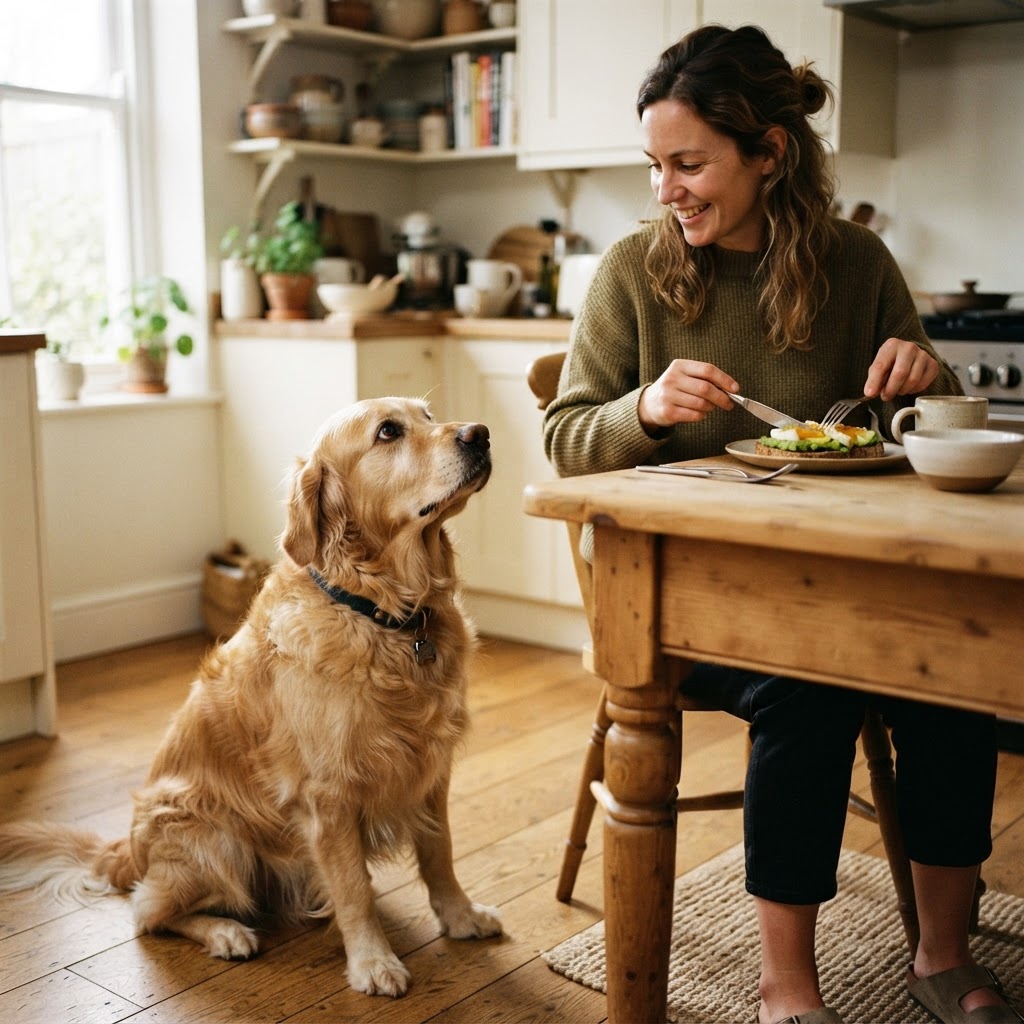
Every dog parent has been there — those big, soulful eyes staring up at you while you eat. That gentle nose nudging your hand. That quiet little whimper that says, “Surely, just one bite?”
But before you share your snack, there’s a question every responsible pet parent must ask: Is this actually safe for my dog?
We researched the science and consulted veterinary literature from the world’s most trusted institutions — the AKC, ASPCA, Cornell University College of Veterinary Medicine, the MSD Veterinary Manual, PetMD, the FDA, and NIH-published peer-reviewed studies — so you don’t have to guess. Here’s the truth about five of the most commonly Googled foods for dogs.
1. Can Dogs Eat Bananas?
Verdict: Yes — in moderation
Good news, banana lovers — this sweet, creamy fruit is perfectly safe for your furry friend and is even considered a healthy treat by veterinarians.
Why Bananas Are Good for Dogs
Nutrient
Benefit for Dogs
Potassium
Supports heart function, muscle health, and nerve signaling
Vitamin B6
Aids brain development and helps regulate mood and sleep
Vitamin C
Supports immune health and acts as an antioxidant
Magnesium
Promotes healthy bone growth
Fiber
Supports digestive regularity
Unlike many commercial treats, bananas contain no cholesterol, no sodium, and no artificial additives — just pure, natural goodness.
The Rules of Banana Feeding
But here’s the thing — bananas are also high in natural sugar. And just like us, dogs don’t do well with too much sugar. The American Kennel Club (AKC) and PetMD recommend the following:
Follow the 10% Rule: All treats — including fruits — should make up no more than 10% of your dog's total daily caloric intake.
Small dogs: 1–2 thin slices per day, max.
Large dogs: Up to half a banana, given occasionally.
Always peel the banana. While the peel isn't toxic, it's tough to digest and can cause gastrointestinal blockage — especially in smaller breeds.
Avoid banana bread, banana chips, and banana smoothies. These often contain added sugars, dairy, fried fats, or — most dangerously — xylitol (an artificial sweetener that is acutely toxic to dogs).
When to skip the banana: If your dog has diabetes, pancreatitis, or is on a weight management plan, consult your veterinarian first. The sugar content, while natural, can spike blood glucose levels in sensitive dogs.
Source: AKC; PetMD; ASPCA; Forbes Vet Advisory.
2. Can Dogs Eat Chocolate?
Verdict: NEVER — chocolate is toxic to dogs
This isn’t a myth. It isn’t an overreaction. Chocolate is one of the most common causes of canine poisoning worldwide, and every year, thousands of dogs end up in emergency veterinary care because of it — especially around holidays like Halloween, Christmas, and Easter.
The Science: Why Chocolate Poisons Dogs
Chocolate contains two compounds called methylxanthines — specifically theobromine and caffeine. While humans metabolize these compounds quickly (in about 2–3 hours), a dog’s body processes them agonizingly slowly.
“The half-life of theobromine in dogs is approximately 17.5 hours — compared to just 2–3 hours in humans.”
This means the stimulant compounds accumulate in their system to dangerous, even lethal levels — overstimulating the heart, central nervous system, and kidneys.
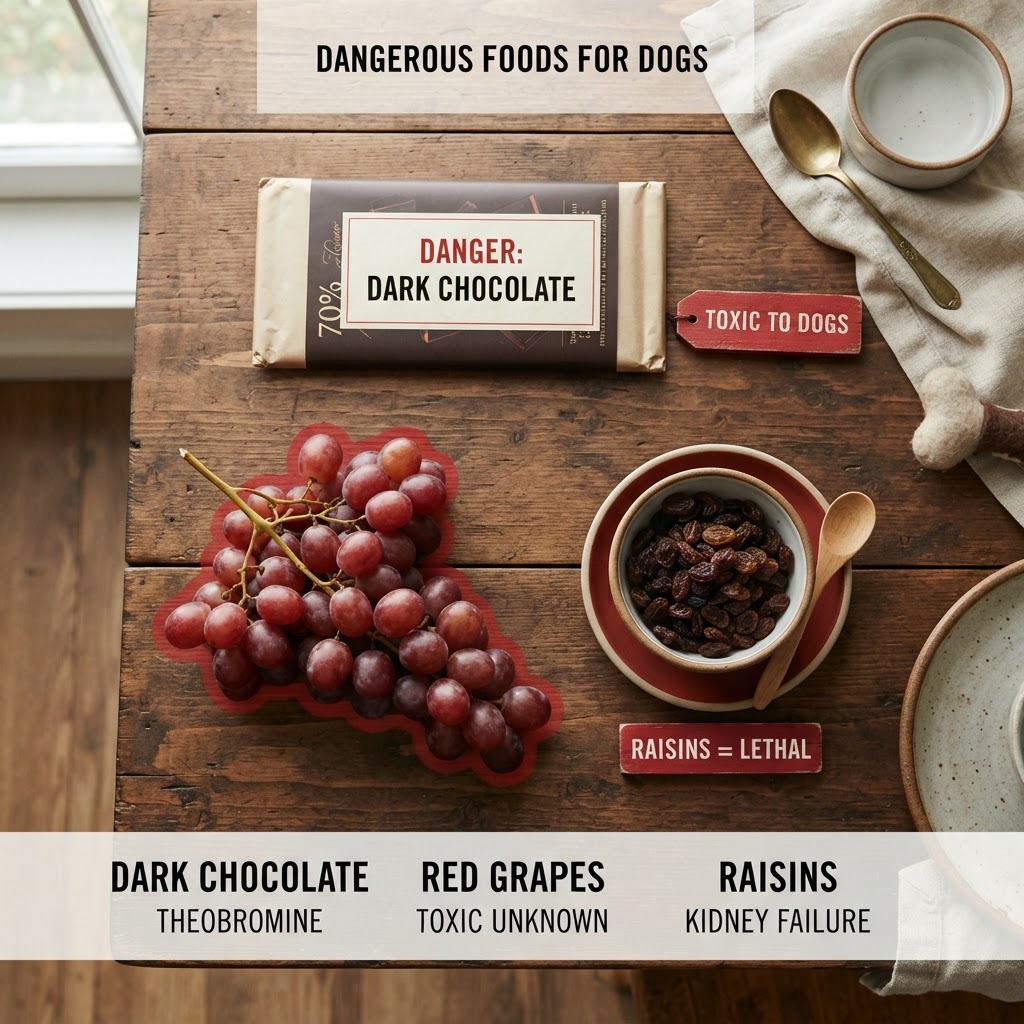
Chocolate, grapes and raisins — the everyday foods most likely to send a dog to the emergency vet.
How Much Is Dangerous?
The toxicity depends on two factors: the type of chocolate and your dog’s body weight.
Chocolate Type
Theobromine Content (per ounce)
White Chocolate
Negligible (trace amounts)
Milk Chocolate
~44–64 mg
Semisweet / Dark Chips
~136–160 mg
Dark Chocolate (70–85%)
~227–450 mg
Unsweetened Baker's Chocolate
~364–450 mg
Dry Cocoa Powder
~800 mg
Dose (per kg of dog's body weight)
Expected Effect
20 mg/kg
Mild signs — vomiting, diarrhea, restlessness
40–50 mg/kg
Cardiotoxic — racing heart, arrhythmias
60+ mg/kg
Severe — tremors, seizures
100–200+ mg/kg
Potentially lethal
To put this in perspective: A single ounce of baker’s chocolate could seriously poison a 10-pound dog. A few ounces of dark chocolate could be fatal for a small breed.
Symptoms to Watch For
Symptoms typically appear within 2–12 hours of ingestion:
Vomiting and diarrhea
Excessive panting and restlessness
Increased thirst and urination
Rapid or irregular heartbeat
Muscle tremors or seizures
Collapse
What to Do If Your Dog Eats Chocolate
Time is everything. Do not wait for symptoms to appear.
1Call your veterinarian or the Pet Poison Helpline (855-764-7661) immediately.
2Be ready to tell them: the type of chocolate, the estimated amount consumed, and your dog’s weight.
3Treatment may include induced vomiting, activated charcoal, IV fluids, and cardiac monitoring.
Source: Cornell University College of Veterinary Medicine; CSU Veterinary Health; NIH; Pet Poison Helpline; MSD Veterinary Manual; VCA Hospitals.
3. Can Dogs Eat Rice?
Verdict: Yes — safe and often recommended
If you’ve ever called a vet because your dog had an upset stomach, you’ve probably heard the classic advice: “Give them some plain boiled rice and chicken.” Rice is one of the most veterinarian-endorsed human foods for dogs. It’s gentle, easy to digest, and is actually a common ingredient in many commercial dog foods.
White Rice vs. Brown Rice: Which Is Better?
Feature
White Rice
Brown Rice
Digestibility
Very high — easy on the stomach
Harder to digest (retains bran & germ)
Fiber
Low
Higher
Nutritional density
Lower (processed)
Higher (whole grain — more vitamins & minerals)
Best for
Upset stomachs, digestive recovery
Healthy dogs needing extra fiber
Glycemic Index
Higher (can spike blood sugar)
Lower
Veterinarian preference: Most vets recommend white rice for dogs with active GI distress (diarrhea, vomiting), because its low fiber content helps bind stool and soothe the digestive tract. — AKC, PetMD, Petco Veterinary Services
Plain boiled rice and a slice of banana — two of the safest human foods you can share, in moderation.
How to Feed Rice Safely
Always cook rice thoroughly — plain boiled in water, nothing more.
Never add salt, butter, oil, garlic, onions, or spices. Garlic and onions are toxic to dogs. Seasonings can irritate the GI tract.
Keep it to 10% or less of your dog's daily caloric intake. Rice is not a complete meal — it lacks essential amino acids and fats.
For a bland recovery diet, combine plain boiled white rice with plain boiled chicken breast (no skin, no bones, no seasoning) in a 2:1 ratio (rice to protein).
What you can do
A note for diabetic dogs: White rice has a high glycemic index, which means it can cause blood sugar spikes. If your dog is diabetic or pre-diabetic, talk to your vet before adding rice to their diet. Brown rice, with its lower glycemic impact, may be a better option — but only if your vet approves.
Verdict: Yes, with caution — many dogs are lactose intolerant
Ah, cheese. The universal training treat. The sneaky pill-hider. The one food that makes every dog suddenly sit perfectly still. Cheese isn’t toxic to dogs — but it’s not as straightforward as it seems.
The Lactose Question
Here’s the biology: when puppies are born, their bodies produce an enzyme called lactase, which helps them digest their mother’s milk. But as dogs grow and wean, their lactase production naturally decreases. This means many adult dogs — just like many adult humans — are lactose intolerant to varying degrees.
Signs Your Dog Can’t Handle Dairy
Watch for these symptoms within a few hours of eating cheese:
Gas and bloating
Nausea or vomiting
Loose stools or diarrhea
Abdominal discomfort or cramping
Decreased appetite or lethargy
If you see these signs, dairy should come off the menu entirely.
If Your Dog Tolerates Cheese — Here’s How to Do It Right
Choose these
Mozzarella — lower in fat and lactose
Cottage cheese — gentle and protein-rich
Plain Swiss cheese — naturally low in lactose
Avoid entirely
Blue cheese (Stilton, Roquefort) — contains roquefortine C, a mycotoxin that can cause tremors and seizures
Cheese with garlic, onions, chives, or herbs — these alliums are toxic to dogs
Processed cheese products — often loaded with sodium and preservatives
Beware the fat: Cheese is calorie-dense and high in fat. Overconsumption can lead to obesity and pancreatitis — a painful, potentially life-threatening inflammation of the pancreas. Always follow the 10% treat rule.
What you can do
The smart approach: Start with a tiny amount — a pea-sized piece — and observe your dog for 24 hours. No digestive drama? You can cautiously use small cheese pieces as occasional treats. Any signs of distress? Skip the cheese entirely and consult your vet.
If there’s one food on this list that demands your full attention, it’s this one. Grapes and raisins are among the most dangerous foods a dog can consume. Even a small quantity can trigger acute kidney injury (AKI) — and if untreated, fatal kidney failure. This isn’t dose-dependent the way chocolate toxicity is. This is unpredictable, idiosyncratic, and terrifying.
The Science: What Makes Grapes Lethal?
For decades, the exact mechanism of grape toxicity in dogs was a complete mystery. Veterinarians knew grapes killed dogs, but nobody understood why. That changed with groundbreaking research from the ASPCA Animal Poison Control Center and Cornell University College of Veterinary Medicine, which identified the most likely culprit:
“Tartaric acid and its salt, potassium bitartrate (cream of tartar), are now strongly implicated as the primary toxic agents in grapes and raisins.”
The evidence was compelling: dogs that ingested cream of tartar or tamarinds (both extremely high in tartaric acid) developed the exact same kidney damage — proximal renal tubular necrosis — as dogs poisoned by grapes. Further research from the MSD Veterinary Manual suggests that dogs may lack a specific kidney transporter (OAT-4) that humans possess, causing tartaric acid to accumulate in renal cells, damage mitochondria, and destroy kidney tissue.
Why It’s So Terrifying: The Unpredictability Factor
There is NO known safe dose. Some dogs eat a handful and show no symptoms. Others eat a single grape and end up in kidney failure.
All grape varieties are dangerous — red, green, black, seeded, seedless.
All forms are toxic — fresh grapes, raisins, sultanas, currants, grape juice, and grape-containing baked goods.
Tartaric acid concentration varies by grape variety, ripeness, and growing conditions — which is why the response is so unpredictable.
Symptoms of Grape/Raisin Poisoning
Symptoms typically appear within 6–24 hours:
Early signs
Persistent vomiting (most common and earliest symptom)
Diarrhea
Loss of appetite
Lethargy and weakness
Abdominal pain
As kidney damage progresses
Excessive thirst and urination (then sudden decrease in urination)
Tremors
Anuria (no urine production — a sign of kidney shutdown)
What to Do If Your Dog Eats Even One Grape
This is a medical emergency. Every minute counts.
1Call your veterinarian or the ASPCA Animal Poison Control Center (888-426-4435) immediately.
2Do NOT wait for symptoms to appear. By the time symptoms show, kidney damage may already be underway.
3Early veterinary intervention — including induced vomiting, activated charcoal, and aggressive IV fluid therapy — is the single most critical factor in preventing permanent kidney damage.
Note for pet parents: Also check ingredient lists on trail mix, baked goods, cereals, and snack mixes. Raisins and currants hide in many human foods you might not expect.
Source: Cornell University College of Veterinary Medicine; ASPCA Animal Poison Control Center; NIH; MSD Veterinary Manual; Tufts University Veterinary Medicine; AKC; Zoetis US.
Quick Reference: The Safety Cheat Sheet
Food
Safe?
Key Rule
🍌 Bananas
✅ Yes
Peel them. Small amounts. Follow the 10% rule.
🍫 Chocolate
🚫 Never
All types are toxic. Darker = more dangerous. Call the vet immediately.
🍚 Rice
✅ Yes
Cook plain. White rice for upset stomachs. No seasonings ever.
🧀 Cheese
⚠️ With Caution
Many dogs are lactose intolerant. Low-fat varieties only. No blue cheese.
🍇 Grapes
🚫 Never
All forms are deadly. No safe dose exists. This is a medical emergency.
Loving your dog means protecting them — even from your own plate. The urge to share is natural, but the responsibility to know what’s safe is sacred. When in doubt, call your vet. It’s always better to ask a “silly” question than to face a heartbreaking emergency.
Your dog trusts you with their whole heart. Let’s make sure we deserve that trust.
References & Authoritative Sources
Research / Finding
Source / Institution
Year
Banana feeding guidelines & the 10% treat rule
American Kennel Club (AKC); PetMD
—
Theobromine half-life in dogs (~17.5 hours) & methylxanthine toxicity
NIH / National Library of Medicine; MSD Veterinary Manual
—
Theobromine content by chocolate type
FDA; Merck Veterinary Manual; Washington State University
—
Chocolate toxicity dose thresholds
MSD Veterinary Manual; Cornell University College of Veterinary Medicine
—
Rice as a bland recovery diet; white vs. brown rice
AKC; PetMD; Petco & Purina Veterinary Resources
—
Lactose intolerance in adult dogs; safe & unsafe cheeses