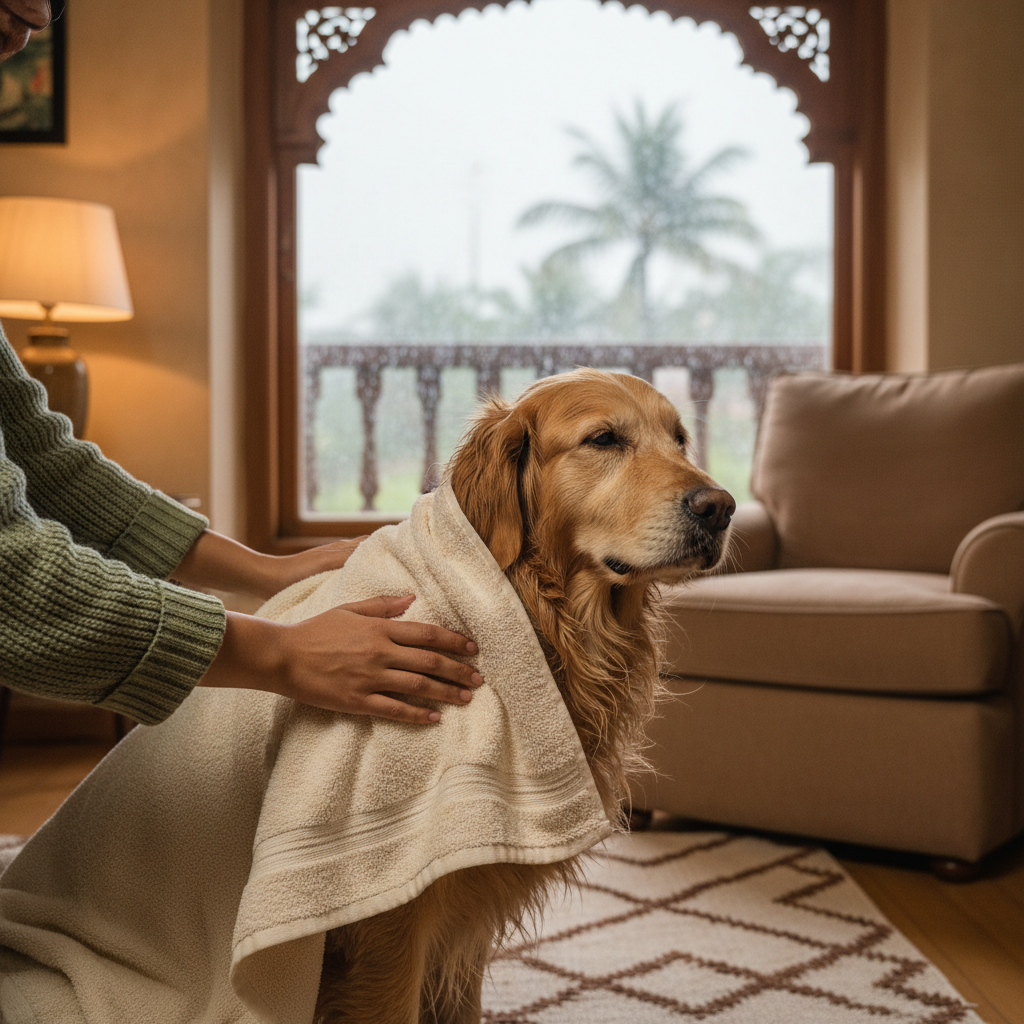
How Hot Is Too Hot to Walk a Dog? Safe Temperatures, Hot Pavement, Heatstroke Signs & What to Do
Warm weather can become dangerous for dogs faster than many owners realise. Learn how temperature, humidity, exercise and hot pavement affect your dog—and what to do at the first sign of overheating.
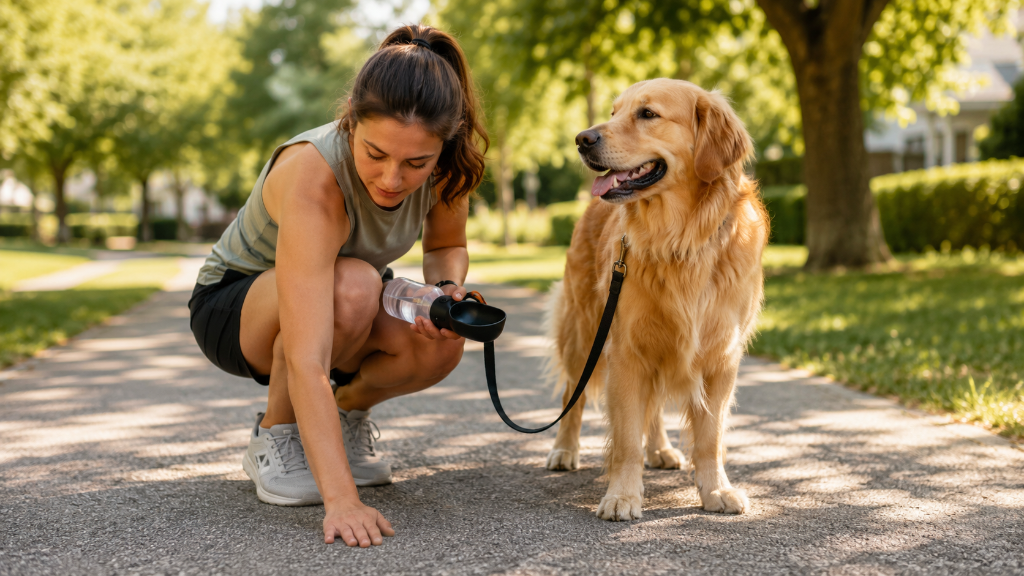
A warm, sunny walk can seem harmless—especially when your dog is standing by the door, tail wagging and lead in sight.
But dogs do not experience heat in the same way humans do. A temperature that feels merely uncomfortable to us may become dangerous for a dog once exercise, humidity, direct sunlight and hot ground are added.
The danger is not limited to dogs left inside hot cars. A major UK study examining veterinary records from more than 900,000 dogs found that exercise was responsible for approximately 74% of recorded heat-related illness cases. Among those exercise-related cases, 68% occurred after something as ordinary as walking. Approximately 14% of affected dogs died. (Royal Veterinary College)
Knowing when to shorten, reschedule or completely skip a walk could therefore save your dog's life.
Emergency warning: Heatstroke is a veterinary emergency. If your dog is panting heavily, becoming weak, confused, uncoordinated or collapsing, stop the activity, begin cooling immediately and contact a veterinarian urgently.
How hot is too hot to walk a dog?
There is no single outdoor temperature that is guaranteed to be safe for every dog.
A healthy, lean and well-acclimatised adult dog may tolerate conditions that could be dangerous for a senior dog, an overweight dog or a flat-faced breed. Humidity, sunlight, ground temperature, fitness, health, walking speed and the length of the walk all affect the risk.
Temperatures up to approximately 20°C or 68°F may be comfortable for many healthy dogs, but even this is not a safety guarantee. Once the temperature rises above 20°C, heatstroke risk increases—particularly during strenuous activity and for vulnerable dogs. Heat-related illness can also develop at lower temperatures when humidity is high or exercise is intense. (Blue Cross)
A practical temperature guide
This guide is intentionally cautious. It should be used alongside your dog's health, behaviour, the humidity and the walking conditions—not as a medical guarantee.
| Conditions | Recommended approach |
|---|---|
| Below 20°C / 68°F | Usually lower risk for most healthy dogs, but continue monitoring during running, vigorous play, direct sun or humid conditions. |
| 20°C / 68°F and above | Begin exercising greater caution. Choose cooler hours, shorten the walk, reduce intensity, carry water and stay near shade. Vulnerable dogs may need to remain indoors. |
| Hot, humid or strongly sunny weather | Avoid routine walks. Use only brief, necessary toilet breaks in shaded areas and provide indoor enrichment instead. |
| Official heat warning, hot pavement or panting before exercise | Skip the walk. Waiting for cooler conditions is safer than attempting to "get the walk done." |
The British Veterinary Association advises limiting walks to the early morning or late evening during hot weather and skipping them altogether on particularly hot days. (British Veterinary Association)
Why the temperature shown on your weather app is not enough
The forecast tells you the air temperature, but it does not tell you everything your dog will experience at ground level.
Before walking, consider all of the following.
1. Humidity
Dogs cool themselves primarily through panting. Air moving over moist surfaces in the mouth and respiratory tract allows heat to leave the body through evaporation.
When humidity rises, evaporation becomes less effective. This means a moderately warm but humid day can be more difficult for a dog than the air temperature alone suggests. Veterinary research describes panting as becoming progressively less effective as environmental temperature and humidity increase. (PMC)
2. Direct sunlight
A weather reading is normally taken in controlled, shaded conditions. Your dog may instead be walking in direct sun with heat radiating from buildings, vehicles and the ground.
A shaded path can therefore feel dramatically different from an exposed pavement, even within the same neighbourhood.
3. Exercise intensity
Walking slowly, chasing a ball and running beside a bicycle produce very different amounts of body heat.
Exercise is especially important because it is the leading recorded trigger of canine heat-related illness. Dogs can overheat through exertion even when the weather does not appear exceptionally hot. (Royal Veterinary College)
4. Your dog's individual risk
There is no "average dog" when it comes to heat tolerance. Age, skull shape, bodyweight, coat, health, fitness and previous heat exposure all matter.
5. Ground temperature
The pavement beneath your dog may be much hotter than the surrounding air and can injure the paws before your dog visibly appears overheated.
Which dogs are most vulnerable to heatstroke?
Every dog can develop heat-related illness, but some need much greater protection.
Flat-faced dogs
Brachycephalic breeds—including French Bulldogs, English Bulldogs, Pugs, Boston Terriers, Pekingese and similar dogs—often have narrowed airways and shorter muzzles. This reduces the efficiency of panting and makes breathing more difficult during heat and exercise.
A 2024 UK emergency-care study found that brachycephalic dogs had more than four times the odds of heat-related illness compared with dogs having a medium-length skull. (PubMed)
Older dogs and puppies
Puppies and senior dogs may be less effective at regulating their body temperature. Older dogs are also more likely to have heart, respiratory or mobility conditions that further increase their risk. (RSPCA)
Overweight and very large dogs
Excess bodyweight makes heat loss more difficult and can place additional pressure on the respiratory system.
VetCompass research found increased risk among dogs weighing more than 50 kilograms and dogs that were heavier than the average for their breed. (PubMed)
Dogs with heart or breathing conditions
Any condition affecting the airways, lungs, heart or circulation can reduce a dog's ability to tolerate heat safely.
Dogs with brachycephalic obstructive airway syndrome, laryngeal paralysis, collapsing trachea or other breathing difficulties may overheat very quickly.
Thick-coated dogs
A dense coat can make heat loss more difficult. Regular breed-appropriate grooming may help remove loose undercoat, but shaving a dog without professional advice is not automatically safer and may expose the skin to sunlight.
Unfit, dehydrated or unwell dogs
An unfit dog may generate more heat during an activity than a well-conditioned dog performing the same task. Vomiting, diarrhoea and inadequate water intake can also reduce the body's ability to cool effectively. (Royal Veterinary College)
Highly driven and energetic dogs
Some dogs remain eager to retrieve, run or play long after they should stop. Enthusiasm should never be interpreted as proof that the dog is coping safely.
Some breeds have shown particularly high risk
In one large UK primary-care study, several breeds showed substantially greater heat-related illness risk than Labrador Retrievers. These included Chow Chows, Bulldogs, French Bulldogs, Dogues de Bordeaux, Greyhounds, Cavalier King Charles Spaniels, Pugs, Golden Retrievers and English Springer Spaniels.
The reported risk was approximately 17 times higher for Chow Chows, 14 times higher for Bulldogs and six times higher for French Bulldogs in that study population. These figures should not be treated as precise predictions for an individual dog, but they clearly demonstrate that breed characteristics can make a meaningful difference. (Royal Veterinary College)
Can hot pavement burn a dog's paws?
Yes. Asphalt, concrete, sand, artificial grass and metal surfaces can absorb and retain large amounts of heat.
The American Animal Hospital Association reports that sun-exposed surfaces may become 40–60°F hotter than the surrounding air. On a sunny day when the air is approximately 86°F or 30°C, asphalt may reach around 135°F or 57°C—hot enough to burn paws rapidly. Actual temperatures vary according to sunlight, material, shade, wind and location. (AAHA)
Use the hand test—but treat it as a warning screen
Place the back or palm of your hand firmly against the intended walking surface for five to seven seconds.
If you cannot comfortably keep it there, the surface is too hot for your dog's paws. Veterinary and animal-welfare organisations currently recommend versions of this simple test. (British Veterinary Association)
However, passing the hand test does not guarantee that the weather is safe for exercise. It only helps assess one risk: surface heat.
Signs of burned paw pads
Watch for:
- Sudden limping or reluctance to walk
- Lifting one or more paws
- Licking or chewing the feet
- Red, swollen or discoloured paw pads
- Blisters or peeling skin
- Whimpering when the paws are touched
Move the dog away from the surface immediately. Rinse the paws gently under cool—not ice-cold—running water and contact your veterinarian. Do not apply human burn creams or ointments unless your vet recommends a specific product. (AAHA)
Dog boots may protect paws from hot surfaces, but they do not protect the dog's whole body from overheating. A booted dog can still develop heatstroke.
Early signs that your dog is becoming too hot
Do not wait for collapse. The earliest warning may simply be a subtle change from your dog's normal walking behaviour.
Stop the walk if you notice:
- Panting that is heavier or faster than expected
- Panting that does not settle after resting
- Noisy, strained or distressed breathing
- Excessive or thick, sticky drooling
- Restlessness or repeatedly seeking shade
- Reluctance to continue walking
- Slowing down or falling behind
- Bright red gums or tongue
- A faster-than-normal heartbeat
- Repeated attempts to reach water
- An anxious or unusually unsettled expression
Respiratory changes and lethargy were the two most frequently recorded signs in a study of 856 canine heat-related illness events. (Nature)
Signs that the condition is worsening
More serious signs include:
- Weakness
- Vomiting or diarrhoea
- Wobbling or poor coordination
- Confusion or disorientation
- Episodic collapse
- A seizure
Critical emergency signs
Severe heat-related illness may cause:
- Repeated seizures
- Loss of consciousness
- Inability to stand
- Coma or unresponsiveness
- Bloody vomit or diarrhoea
- Unexplained bleeding
- Severe breathing distress
The VetCompass clinical grading system classifies altered breathing and lethargy as mild signs; gastrointestinal symptoms, a single seizure and episodic collapse as moderate; and significant neurological dysfunction, gastrointestinal bleeding or bleeding disorders as severe. In the original study, severe cases had a much greater fatality rate than mild or moderate cases. (Nature)
Do not wait for a certain body-temperature reading before acting. Veterinary researchers have found that a single temperature measurement does not always reflect the severity or duration of heat injury. Clinical signs and the circumstances are critically important. (Nature)
What to do if your dog is overheating
Remember this simple instruction:
Cool first, transport second
Cooling should begin immediately rather than waiting until you arrive at a veterinary clinic. The longer the body remains dangerously hot, the greater the opportunity for tissue and organ damage. (Royal Veterinary College)
Step 1: Stop the activity
Stop walking, running or playing immediately.
Do not make the dog walk home. Carry them where practical, or bring transport to them.
Step 2: Move to a cooler area
Move the dog:
- Out of direct sunlight
- Into shade
- Into an air-conditioned building or vehicle
- Near a fan or strong airflow
- Away from hot ground
Remove unnecessary clothing, heavy harnesses or coverings if doing so will not delay cooling.
Step 3: Begin cooling with water
Pour or spray water that is cooler than the dog over the body. Concentrate on areas such as the neck, chest, stomach and thighs.
Avoid pouring water directly over the face or head of a distressed dog because this may interfere with breathing or cause water to be inhaled.
For a young, conscious and otherwise healthy dog, cold-water immersion can provide rapid and effective cooling when it can be performed safely.
For an older, unconscious, unwell or medically vulnerable dog, thoroughly wet the body with water cooler than the dog and combine it with continuous airflow from a fan, breeze or air conditioning. (Royal Veterinary College)
Use the water that is available rather than losing valuable time searching for a perfect temperature. Current evidence does not support delaying cooling because of the outdated fear that ordinary cold water will automatically cause shock. (Royal Veterinary College)
Step 4: Create airflow
Fanning a thoroughly wet dog supports evaporative cooling.
Keep air moving across the dog during cooling and, where possible, while travelling to the veterinary clinic.
Step 5: Offer small amounts of water
Offer small sips of cool water if the dog is conscious and able to drink normally.
Do not force water into the mouth, and do not allow a distressed dog to gulp a very large quantity at once. (Royal Veterinary College)
Step 6: Contact a veterinarian urgently
Call your veterinarian or nearest emergency veterinary service while cooling is underway.
Tell them:
- What activity the dog was doing
- The outdoor conditions
- When the signs began
- What symptoms you have observed
- What cooling you have started
Step 7: Transport in a cool vehicle
Begin cooling before placing the dog inside the vehicle.
Cool the vehicle first, use air conditioning or open windows safely, and continue airflow during the journey. Even when the dog appears to recover, veterinary assessment may still be required because serious complications are not always immediately visible. (Royal Veterinary College)
What should you not do?
Do not cover the dog with wet towels. A wet towel placed over the body can warm up, restrict evaporation and trap heat. Water may be poured over the dog, and a damp towel can be placed underneath them when necessary, but avoid wrapping or covering the body. (RSPCA)
Do not rely only on ice packs. Small ice packs cool a limited area and may delay more effective whole-body cooling. Do not place ice directly against the skin.
Do not apply rubbing alcohol. Research comparing cooling methods found that partial water immersion cooled dogs more effectively than applying isopropyl alcohol to the paw pads. Alcohol may also irritate damaged skin and creates toxicity and flammability concerns. (PMC)
Do not force the dog to walk. A weak or overheated dog should not be made to continue exercising to reach home or the car.
Do not assume recovery means the danger has passed. A dog that looks better after cooling may still have internal complications. Contact a veterinarian and follow their instructions.
How to make summer walks safer
Walk at the coolest time—not simply the most convenient time
Early morning is often safer than late evening because pavements and buildings may continue releasing stored heat after sunset. Check the actual conditions before leaving rather than relying only on the clock.
Keep the walk shorter and slower
Replace long routes, running and repeated ball-chasing with a gentle sniffing walk. Sniffing can provide mental engagement without requiring continuous strenuous exercise.
Carry water
Carry drinking water and a collapsible bowl, even for a walk that is normally short. Also carry enough water to begin cooling your dog if necessary.
Choose shade and natural ground
Select routes containing:
- Grass
- Soil paths
- Tree cover
- Accessible shade
- Places where the walk can be shortened quickly
Avoid long stretches of exposed asphalt or artificial grass.
Take breaks before your dog asks for them
A motivated dog may not stop voluntarily. Schedule frequent shade and water breaks rather than waiting for visible distress.
Leave energetic games for cooler weather
Running, cycling, fetch and vigorous play can raise body temperature quickly. A dog may overheat during exercise before the owner recognises what is happening.
Check your dog before leaving
Postpone the walk when your dog:
- Is already panting indoors
- Has vomited or had diarrhoea
- Appears tired or unwell
- Is recovering from surgery or illness
- Is experiencing breathing difficulty
- Has not been drinking normally
Safe alternatives when it is too hot to walk
Missing or shortening one walk will not harm your relationship with your dog. Heatstroke can.
Try calm indoor activities such as:
- Hide treats around a cool room
- Use a food puzzle or snuffle mat
- Practise simple cues in short sessions
- Play gentle indoor tug
- Teach your dog to identify toys by name
- Create a cardboard-box scent search
- Practise grooming and cooperative handling
- Offer a stuffed, chilled food toy
- Play hide-and-seek
- Allow supervised exploration in a cool, shaded garden
Avoid highly energetic indoor activity when the room itself is warm or poorly ventilated.
Can dogs overheat inside the house?
Yes.
Heat-related illness can develop in warm, enclosed or poorly ventilated environments, including:
- Conservatories
- Garages and sheds
- Sunny rooms
- Caravans
- Enclosed balconies
- Rooms without airflow
- Spaces beneath heavy blankets
- Vehicles, including vehicles in motion without adequate cooling
RVC research has identified environmental heat, hot buildings and entrapment beneath blankets among recorded triggers of canine heat-related illness. (Royal Veterinary College)
During extreme heat, provide:
- Fresh drinking water
- Ventilation
- Shade from direct sunlight
- Access to cooler rooms
- Fans or air conditioning where available
- Cool resting surfaces
Observe high-risk dogs even while they are resting.
Common hot-weather myths
"My dog is fit, so heatstroke will not happen"
Fitness may help a dog cope with exercise, but it does not make them immune. Young and active dogs are frequently affected by exertional heat-related illness because they generate considerable body heat through activity. (Royal Veterinary College)
"My dog will stop when they become too hot"
Some dogs will slow down, but others remain motivated by play, training, excitement or their owner's encouragement. The person supervising the dog must decide when to stop.
"It is not hot enough for heatstroke"
Heat-related illness can occur during exercise in warm rather than extreme conditions, especially when humidity, direct sun or individual risk factors are present. (Royal Veterinary College)
"Dog boots make summer walks safe"
Boots may protect paws, but they do not prevent the dog's core body temperature from rising.
"Cold water must never be used"
Current canine cooling evidence supports rapid water-based cooling. Cold-water immersion can be effective for young, healthy and conscious dogs, while wetting with cooler-than-body-temperature water plus airflow is suitable more broadly. Ice directly against the skin and wrapping the dog in wet towels are different practices and should be avoided. (PubMed)
Frequently asked questions
Is 20°C or 68°F too hot to walk a dog?
Not automatically, but it is an appropriate point to begin exercising additional caution. Strong sun, high humidity, vigorous exercise or an at-risk dog can make 20°C unsafe. Keep the activity gentle and closely monitor your dog.
Is 25°C or 77°F too hot?
For many dogs, especially flat-faced, overweight, senior, unfit or medically vulnerable dogs, routine exercise at this temperature may be unsafe. Reschedule the walk for a significantly cooler period or use indoor enrichment.
Is it safe to walk after sunset?
Possibly, but check the air, humidity and ground first. Pavement can remain hot well after the sun has gone down.
How long can a dog walk in hot weather?
There is no universally safe number of minutes. Risk depends on the individual dog, temperature, humidity, sunlight, pace and surface. A five-minute vigorous run may create more heat than a longer, gentle shaded sniffing walk.
Should I take water on every summer walk?
Yes. Carry drinking water and enough extra water to begin cooling your dog in an emergency.
Can a dog get heatstroke without collapsing?
Yes. Heavy panting, unusual breathing, lethargy, drooling, vomiting or reluctance to continue can appear before collapse. Early action is much safer than waiting for severe symptoms.
Should a dog with suspected heatstroke still see a vet after cooling?
Yes, unless a veterinarian who has assessed the situation advises otherwise. Internal damage may not be immediately apparent even when the dog appears calmer. (Royal Veterinary College)
The safest walk is sometimes no walk
Dogs depend on us to make decisions they cannot make for themselves.
They may still bring the lead. They may still become excited when you reach for your shoes. They may appear willing to chase the ball one more time.
But willingness is not the same as safety.
On a hot or humid day, shortening or skipping a walk is not neglecting your dog. It is thoughtful care. A calm day indoors filled with water, rest, scent games and companionship is always better than taking an unnecessary risk with heatstroke.
Before every summer walk, check three things: the weather, the ground and your dog. When any one of them feels unsafe, stay home and try again when conditions improve.
Keep Important Care on Track
Hot weather can disrupt even the best routines. Use Raise Happy Dog's free tools to stay mindful of hydration, preventive care and your dog's everyday wellbeing.
Check Your Dog's Score Free Care Reminder
Important medical disclaimer
This article provides general educational information and does not replace examination, diagnosis or treatment by a qualified veterinarian. Heatstroke can progress rapidly and may be fatal. Begin cooling immediately and seek urgent veterinary advice whenever heat-related illness is suspected.
References & Trusted Sources
- Royal Veterinary College — VetCompass heat-related illness research and first-aid guidance. (Royal Veterinary College)
- British Veterinary Association — hot-weather guidance. (British Veterinary Association)
- RSPCA — heatstroke recognition and cooling guidance. (RSPCA)
- American Animal Hospital Association — pavement-safety guidance. (AAHA)
- Peer-reviewed studies on canine cooling and heat-related illness. (MDPI)
Found this helpful? Share it with a fellow dog parent:
Keep your dog's care organized
The Complete Dog Care Planner turns all of this into one calm, simple routine you can actually stick to.