Dog Ear Infection Symptoms: Causes, Warning Signs, Treatment & When to See a Vet
Head shaking, scratching, odour and discharge are your dog's way of saying an ear is uncomfortable. Learn what causes ear infections, why they keep coming back, what never to put in a painful ear and when to see your vet.
Written by the Raise Happy Dog editorial team. Educational only — not a substitute for your veterinarian. Read our editorial policy.
A dog shaking their head once after waking up is usually nothing unusual. But when the shaking continues, the scratching becomes frantic, or your dog pulls away when you touch the ear, something is wrong.
Ear problems can become painful surprisingly quickly. They are also easy to misunderstand. A strong smell does not automatically mean yeast. Dark discharge does not always mean ear mites. And what people commonly call an "ear infection" may actually begin as an allergy, irritation, trapped foreign object or another condition that changes the environment inside the ear.
The sooner the underlying problem is recognised, the better the chance of relieving your dog's discomfort before the ear becomes chronically inflamed.
Contact a veterinarian promptly if your dog's ear is painful, swollen, producing discharge or causing persistent head shaking. Seek urgent veterinary care for loss of balance, difficulty walking, uncontrolled eye movements, facial drooping or a pronounced head tilt.
Dog ear infection symptoms: the quick answer
Common signs of an ear infection or inflammation in dogs include:
- Repeated head shaking
- Scratching at one or both ears
- Rubbing the head against furniture, carpet or the floor
- Redness inside the ear
- Swelling of the ear canal
- An unusual or unpleasant odour
- Increased wax or discharge
- Pain when the ear is touched
- Holding one ear differently from the other
- Crusting, scaling or irritated skin around the ear
- Hair loss caused by repeated scratching
Veterinary references describe head shaking, itching, pain, redness, swelling, odour, discharge, erosions and ulceration among the recognised signs of otitis externa—the medical term for inflammation of the external ear canal. (MSD Veterinary Manual)
These symptoms can tell you that the ear is uncomfortable, but they cannot reveal the exact cause. A veterinary examination is usually needed to distinguish between allergy-related inflammation, yeast, bacteria, parasites, a foreign object and deeper ear disease.
What is a dog ear infection?
The external ear canal runs from the visible opening of the ear down towards the eardrum. Inflammation of this canal is called otitis externa.
Otitis externa can be:
- Sudden or long-lasting
- Painful or primarily itchy
- Present in one ear or both
- Infectious or non-infectious
This distinction matters because an inflamed ear is not necessarily infected at the beginning.
For example, an environmental or food-related allergy may first irritate the skin lining the ear canal. That inflammation changes the ear's natural environment, allowing yeast or bacteria to multiply and become a secondary infection. AAHA guidelines specifically caution that allergic otitis externa is an inflammatory condition and should not be confused with the secondary infection that often follows it. (AAHA)
A useful way to understand the process is:
Underlying problem → inflammation → altered ear environment → yeast or bacterial overgrowth
This is one reason ear infections sometimes return soon after treatment. The medication may have reduced the microbes, but the allergy, trapped moisture, canal structure or other original cause may still be present.
How common are ear infections in dogs?
Ear disease is among the common reasons dogs are taken to veterinary clinics.
A large VetCompass study examined records from a random sample of 22,333 dogs receiving primary veterinary care in the United Kingdom. It found that 7.3% were diagnosed with otitis externa during a single year—roughly one in every 14 dogs in that study population. The figure should not be treated as a worldwide prevalence rate, but it illustrates how frequently veterinary teams encounter the condition. (Springer)
Ear disease is also a welfare concern because it can be persistently itchy, painful and difficult to manage when inflammation becomes chronic.
Early symptoms dog parents may overlook
Some dogs show dramatic signs, but others begin with subtle changes.
More frequent head shaking
A dog may shake their head after bathing, waking up or experiencing a brief tickle. Concern increases when the shaking:
- Happens repeatedly
- Interrupts sleep or play
- Begins suddenly and intensely
- Continues over several hours
- Is accompanied by scratching or pain
Repeated head shaking is one of the most consistently recognised signs of outer-ear inflammation. (MSD Veterinary Manual)
Scratching around the ear
Your dog may scratch the ear flap, the skin behind the ear or the side of their face.
Watch for scratches becoming forceful enough to create:
- Red marks
- Scabs
- Hair loss
- Open sores
- Bleeding
Frequent scratching is not simply an annoying habit. It may indicate significant itching or pain and can injure the ear flap and surrounding skin.
Rubbing the head
Some dogs rub the affected side of the head against:
- Carpets
- Sofas
- Bedding
- Walls
- Your legs
This may be their attempt to relieve discomfort deeper inside the canal.
Sensitivity to touch
A normally affectionate dog may suddenly:
- Pull away when the ear is handled
- Lower their head
- Cry, growl or snap
- Avoid being stroked near the face
- Resist having a collar or harness placed over the head
Pain can change behaviour. A defensive reaction from a dog with a painful ear should not be interpreted as bad temperament.
A change in ear position
One ear may hang lower, sit farther away from the head or appear different from the other.
Asymmetric ear carriage can occur with inflammation or secondary infection, but the position alone cannot determine the diagnosis. (AAHA)
Changes in wax or discharge
You may notice more material than usual inside the ear.
It might appear:
- Waxy
- Brown
- Dark brown or black
- Yellow
- Cream-coloured
- Moist
- Thick
- Pus-like
The appearance gives the veterinarian useful context, but it cannot reliably identify whether yeast, bacteria or mites are responsible.
An unusual smell
A healthy ear should not have a strong, unpleasant odour.
A musty, sour or foul smell can accompany inflammation and microbial overgrowth. However, smell is a warning sign—not a laboratory test.
What discharge and odour can—and cannot—tell you
It is natural to search online for phrases such as:
- "Brown discharge means yeast"
- "Black ear wax means mites"
- "Sweet smell means bacterial infection"
Unfortunately, dog ears are not that predictable.
Yeast, bacteria, mixed infections, mites and inflamed wax-producing glands can create overlapping appearances. AAHA recommends cytology—microscopic examination of material from the ear—in every case of otitis externa because visual inspection alone is not sufficiently reliable. (AAHA)
Dark, coffee-ground-like debris
This appearance can suggest ear mites, particularly where there has been contact with affected animals. Cornell notes that mites can cause intense scratching and dark brown debris. However, the ear still requires proper evaluation because infection or mixed disease may be present as well. (Cornell Vet College)
Thick or pus-like discharge
This can occur with substantial inflammation or infection and warrants veterinary assessment, especially when the ear is painful, swollen or moist.
Brown wax with a musty odour
Yeast overgrowth is one possibility, but it should not be diagnosed from smell or colour alone.
Yellow or green discharge
This may raise concern about bacterial involvement, but cytology—and sometimes a culture—is required to guide treatment accurately.
The safe message is simple:
Look, note and report—but do not try to diagnose the organism from the discharge.
One ear or both ears: does the pattern provide a clue?
It can provide a clue, but it is not a diagnosis.
When one ear suddenly becomes affected
A sudden and severe problem in one ear may make a veterinarian consider:
- A grass awn, foxtail or other plant material
- An insect or tick
- A local injury
- A polyp or growth
- A narrowed or unusually shaped canal
- A localised infection
Foreign objects can cause abrupt, intense head shaking and pain. Cornell notes that plant material, ticks and insects may become lodged inside the canal and sometimes require sedation for safe removal. (Cornell Vet College)
Do not insert tweezers or other instruments into the ear. A dog may move suddenly, pushing the object farther down or causing injury.
When both ears are affected
Inflammation in both ears—especially when it returns repeatedly—may point towards an underlying condition affecting the skin more broadly.
Allergic otitis commonly affects both ears, although one side may be more severe than the other. In some dogs, recurring ear inflammation may even be the only obvious sign of an allergy. (AAHA)
Look for other possible allergy signs, including:
- Paw licking
- Itchy skin
- Face rubbing
- Recurrent skin infections
- Redness around the eyes or mouth
- Seasonal flare-ups
The ear pattern helps the veterinarian ask better questions, but it does not replace an examination.
The most common causes of dog ear infections
Ear disease usually involves several interacting elements. Veterinary dermatology often separates them into primary causes, secondary causes, predisposing factors and perpetuating factors.
That sounds technical, but the idea is straightforward.
1. Allergies
Allergies are among the most important causes of recurring ear inflammation.
Possible allergic triggers include:
- Environmental allergens such as pollens, moulds and dust mites
- Food-related allergy
- Contact reactions
Cornell veterinary dermatology guidance explains that many dogs first develop allergic inflammation in the ear and later develop yeast or bacterial infection as a secondary complication. AAHA reports that more than half of dogs with allergies experience allergic otitis externa. (Cornell Vet College)
This does not mean every ear infection is an allergy. It means allergies deserve consideration when:
- Both ears are repeatedly affected
- Problems return after medication stops
- The dog also licks their paws
- Symptoms follow a seasonal pattern
- Skin infections occur elsewhere
- No foreign object or other direct cause is found
Managing the secondary infection without controlling the allergy often produces only temporary improvement.
For a broader look at recognising allergies, see our guides on dog allergy symptoms and management and why dogs lick their paws — paw licking and ear problems frequently appear together.
2. Yeast overgrowth
Malassezia yeast can live in small numbers in healthy canine ears. It becomes problematic when inflammation, moisture or another change allows excessive growth.
The external ear canals of many healthy dogs contain low numbers of normal yeast and bacteria. When the canal environment changes, these organisms can become pathogenic and contribute to disease. (MSD Veterinary Manual)
Possible signs include:
- Itching
- Redness
- Waxy discharge
- A musty or unusual smell
- Thickened skin in chronic cases
But none of these signs confirms yeast without cytology.
Yeast treatment also does not explain why the overgrowth happened. The veterinarian may still need to investigate allergies, moisture, anatomy or another underlying issue.
3. Bacterial infection
Bacteria can also multiply in an already inflamed ear.
Signs may include:
- Pain
- Swelling
- Discharge
- Strong odour
- Ulcerated or eroded skin
- Marked redness
Some infections are straightforward; others become difficult because the ear canal is severely narrowed, the eardrum is damaged, deeper structures are involved or the bacteria are resistant to commonly used medication.
Treatment should be guided by microscopic examination. More complicated or previously treated infections may also require culture and susceptibility testing. (AAHA)
4. Ear mites and other parasites
Ear mites can cause intense itching, head shaking and dark debris. They can spread between pets through close contact. (Cornell Vet College)
Other parasites affecting the skin may also contribute to inflammation around the ears.
Over-the-counter mite products are not always appropriate or effective, particularly when a secondary infection is present. Other pets in the household may also require veterinary advice.
5. Foreign objects
Grass awns, seeds, plant fragments, small insects and other debris may enter the ear canal during walks or outdoor play.
A foreign object becomes particularly suspicious when:
- Symptoms begin very suddenly
- Only one ear is affected
- Head shaking is intense
- The dog has recently run through long grass
- Touching the ear causes sharp pain
Foreign material may sit deep inside the horizontal portion of the canal, where it cannot be safely seen or removed at home. Otoscopic examination and sedation may be necessary. (Cornell Vet College)
6. Moisture after swimming or bathing
Water does not automatically cause an ear infection, but excessive moisture can create conditions that favour inflammation and microbial overgrowth.
Veterinary references list moisture from swimming or the environment as a predisposing factor for otitis externa. (MSD Veterinary Manual)
Dogs that swim frequently may benefit from:
- Gentle drying after swimming
- A veterinarian-approved maintenance cleaner where appropriate
- Regular ear checks
- An individual preventive plan if infections recur
Do not place drying products into an already painful ear without veterinary guidance.
7. Ear shape and canal anatomy
Hanging ears do not directly "cause" infection, but ear conformation can affect ventilation, moisture and access to the canal.
The UK VetCompass study found that, compared with breeds having erect ears:
- Breeds with pendulous ears had approximately 1.76 times the odds of otitis externa.
- Dogs with V-shaped drop ears had approximately 1.84 times the odds.
Basset Hounds, Chinese Shar Peis, Labradoodles, Beagles and Golden Retrievers were among the breeds showing higher odds in that particular UK study. These are population-level associations, not predictions for an individual dog. (Springer)
Other anatomical factors can include:
- Narrow canals
- Heavy hair within or around the canal
- Thickened skin
- Obstructive growths
A floppy-eared dog may never develop an ear infection, while an erect-eared dog can still experience severe disease. Anatomy is only one part of the picture.
8. Growths, polyps or structural obstruction
A mass, polyp or other abnormal tissue may block airflow and drainage.
This possibility deserves particular attention when:
- The same ear is repeatedly affected
- The problem does not respond as expected
- Bleeding occurs
- A visible lump is present
- The canal cannot be examined properly
Otoscopic examination and, in some cases, imaging or biopsy may be needed.
9. Hormonal, immune or skin disorders
Less commonly, conditions such as endocrine disease, immune-mediated disease and disorders affecting skin-cell turnover may contribute to chronic ear inflammation.
These causes cannot be identified from an online symptom list. They become more relevant when ear disease is persistent, unusual or accompanied by changes elsewhere on the body. (MSD Veterinary Manual)
Which dogs may be at higher risk?
Any dog can develop otitis externa.
Risk may be higher in dogs with:
- Environmental or food allergies
- Recurrent skin disease
- Pendulous or V-shaped drop ears
- Narrow ear canals
- Heavy ear-canal hair
- Frequent swimming
- A history of repeated ear infections
- Chronic moisture exposure
- Structural changes from previous inflammation
Breed and ear shape matter, but underlying allergy is often more important in dogs with recurring disease. (Springer)
When could the problem involve the middle or inner ear?
The ear has three main regions:
- Outer ear: the visible flap and external canal
- Middle ear: the space behind the eardrum
- Inner ear: structures involved in balance and hearing
Outer-ear inflammation can sometimes spread deeper, particularly when the disease is severe, recurrent or associated with a damaged eardrum.
Urgent warning signs
Seek prompt or emergency veterinary care if your dog develops:
- A pronounced head tilt
- Falling, circling or stumbling
- Difficulty standing
- Loss of balance
- Rapid, uncontrolled eye movements
- Facial drooping
- Inability to blink normally
- Sudden hearing loss
- Severe pain when opening the mouth
- Disorientation
- Weakness or collapse
Middle-ear disease can affect nerves controlling facial movement. Inner-ear disease can interfere with balance, coordination and hearing. MSD notes that otitis media is found in more than half of dogs with recurrent external-ear inflammation, although that figure relates specifically to recurrent cases rather than dogs experiencing a first mild episode. (MSD Veterinary Manual)
These symptoms should not be watched at home while waiting for them to resolve.
Another possible complication: an aural haematoma
Forceful head shaking or scratching can rupture small blood vessels within the ear flap.
Blood then collects between layers of tissue, producing a soft or firm swelling known as an aural haematoma.
Signs include:
- A swollen ear flap
- A warm, fluid-filled appearance
- Holding the ear away from the head
- Tenderness
- Continued head shaking
The swelling itself needs veterinary attention, but the original cause of the shaking—such as allergy, mites or infection—must also be addressed. Cornell warns that untreated haematomas can heal with permanent crinkling and thickening of the ear flap. (Cornell Vet College)
What can dog parents safely check at home?
You can collect useful information without putting anything deep inside the ear.
In a calm, well-lit area:
- Observe your dog before touching the ear. Note head shaking, tilting, scratching, balance changes or reluctance to move.
- Compare both ears. Look for differences in position, redness, swelling or discharge.
- Lift the ear flap gently. Stop if your dog shows pain, fear or aggression.
- Look only at the visible portion. Do not insert fingers, cotton swabs, cameras, tweezers or other objects into the canal.
- Notice the discharge. Record its colour, texture, amount and smell without attempting to diagnose it.
- Check the ear flap. Look for scratches, scabs, hair loss, ticks, swelling or an aural haematoma.
- Think about recent events. Consider swimming, bathing, grooming, long-grass walks, a new diet, seasonal itching or contact with other animals.
Photographs and short videos of head shaking, balance changes or discharge may help your veterinarian understand what has been happening.
When should you make a veterinary appointment?
Contact your vet if you notice any of the following:
- Persistent head shaking
- Frequent ear scratching
- Redness or swelling
- Unpleasant odour
- Increased wax or discharge
- Pain when the ear is handled
- Open sores caused by scratching
- A swollen ear flap
- A problem that repeatedly returns
- Symptoms continuing beyond a brief isolated episode
- Any sudden severe one-sided ear problem
Painful ears should generally be assessed sooner rather than later. Waiting allows scratching, swelling and secondary microbial overgrowth to worsen.
Seek urgent care for:
- Loss of balance
- Difficulty walking
- Falling or circling
- Uncontrolled eye movements
- Facial paralysis
- Inability to blink
- Severe head tilt
- Sudden hearing loss
- Marked disorientation
- Severe or rapidly worsening pain
What should you never put into a painful dog ear?
Avoid experimenting with home remedies.
Do not place the following into an inflamed or painful ear unless your veterinarian specifically instructs you to do so:
- Hydrogen peroxide
- Rubbing alcohol
- Essential oils
- Undiluted vinegar
- Human ear medication
- Human antibiotic or antifungal cream
- Leftover prescription drops
- Medication previously prescribed to another pet
- Powdered home remedies
- Strong disinfectants
Cornell recommends avoiding cleaners containing alcohol or hydrogen peroxide because they may irritate the ear. (Cornell Vet College)
Medication selection also depends on whether the eardrum is intact. AAHA warns that special care is required when the eardrum has ruptured because only products considered safe for the middle ear should be used. (AAHA)
Something that helped during a previous infection may be inappropriate for the current one. The organism, inflammation level and condition of the eardrum may have changed.
Avoid cotton swabs inside the canal
Cotton swabs can push wax and debris deeper and may injure the ear if the dog moves.
Cornell recommends wiping only as far as a finger can safely reach using a cotton pad or ball and avoiding cotton swabs within the canal. (Cornell Vet College)
How veterinarians diagnose dog ear infections
A proper examination is designed to answer two different questions:
- What is happening inside the ear now?
- Why did it happen?
Medical history
The veterinarian may ask about:
- When the symptoms started
- Whether one or both ears are affected
- Previous infections and medications
- Swimming or recent bathing
- Seasonal patterns
- Paw licking or skin itching
- Diet changes
- Parasite prevention
- Response to earlier treatment
Recurring cases often require more investigation than a first uncomplicated episode.
Examination of the whole dog
Because allergies and skin disease commonly contribute to ear problems, the veterinarian may inspect:
- Paws
- Face
- Armpits
- Groin
- Skin folds
- Coat and general skin condition
An ear problem may be one part of a wider dermatological condition.
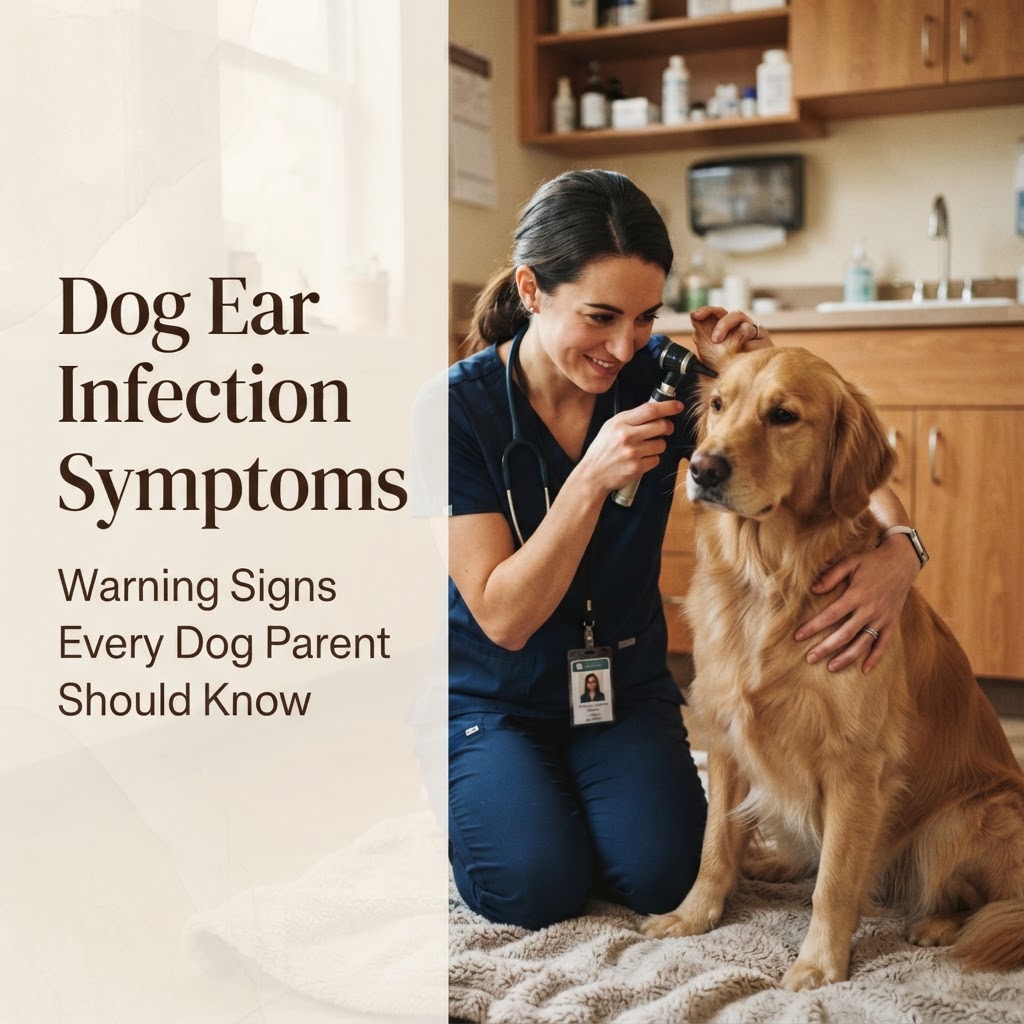
Otoscopic examination
An otoscope allows the veterinarian to examine deeper parts of the canal and, where visible, the eardrum.
The examination may reveal:
- A foreign object
- Severe swelling
- Canal narrowing
- A mass or polyp
- Ulceration
- Excessive discharge
- A damaged or abnormal eardrum
A very painful dog may require sedation, or the inflammation may need to be reduced before a complete examination is possible. (MSD Veterinary Manual)
Ear cytology
The veterinary team collects a small sample of material and examines it under a microscope.
Cytology can reveal:
- Yeast
- Cocci-shaped bacteria
- Rod-shaped bacteria
- Inflammatory cells
- Parasites or other abnormalities
AAHA identifies cytology as an essential test in otitis externa and advises that treatment should be guided by the findings. (AAHA)
Culture and susceptibility testing
A culture may be recommended when:
- Rod-shaped bacteria are seen
- The infection is severe
- Treatment has failed
- The condition repeatedly returns
- Resistant bacteria are suspected
- Deeper-ear infection is possible
Culture should be interpreted alongside cytology and the clinical examination.
Imaging
X-rays, CT or MRI may be considered where the veterinarian suspects:
- Middle-ear disease
- Inner-ear disease
- A mass
- Severe chronic structural change
- Disease hidden behind an intact eardrum
How are dog ear infections treated?
Treatment depends on the cause, organisms present, degree of pain and condition of the ear canal and eardrum.
A veterinary plan may involve:
- Reducing pain and inflammation
- Carefully cleaning or flushing the ear
- Treating confirmed yeast
- Treating confirmed bacteria
- Treating parasites
- Removing a foreign object
- Managing an allergy
- Addressing a growth or structural obstruction
- Treating middle- or inner-ear disease where present
- Scheduling follow-up examinations
Topical ear treatment is commonly used for uncomplicated outer-ear disease, but deeper disease may require a different approach and longer treatment. (AAHA)
Do not stop medication simply because the smell disappears or your dog scratches less. Improvement in behaviour does not necessarily mean that inflammation and infection have fully resolved deeper in the canal.
A recheck allows the veterinarian to:
- Repeat cytology
- Confirm that microbes have returned to acceptable levels
- Assess whether inflammation has resolved
- Adjust the medication
- Begin a preventive plan
- Investigate an underlying allergy if needed
Why does my dog's ear infection keep coming back?
Recurring infections usually mean that at least one part of the problem remains unresolved.
The underlying allergy is still active
Medication may remove yeast or bacteria temporarily, but continued allergic inflammation recreates the conditions that allowed overgrowth.
Treatment ended too early
The visible symptoms may improve before the deeper canal has fully recovered.
The ear was not rechecked
Without follow-up cytology, it may be impossible to know whether treatment truly cleared the secondary problem.
Moisture continues to collect
Frequent swimming, bathing or humid conditions may contribute in susceptible dogs.
The canal has changed
Repeated inflammation can lead to:
- Swelling
- Thickened tissue
- Narrowing
- Excess wax production
- Reduced natural cleaning
- Calcification
- Eardrum damage
These changes can trap moisture and medication, making each future episode harder to treat. (MSD Veterinary Manual)
Middle-ear disease is present
A dog may appear to have repeated outer-ear infections when infection or fluid remains deeper behind the eardrum. (MSD Veterinary Manual)
A foreign body or mass was missed
Persistent one-sided disease requires careful investigation for obstruction or foreign material.
Can you prevent dog ear infections?
Not every infection can be prevented, especially when the dog has allergies or anatomical risk factors. But thoughtful ear care may reduce avoidable irritation and help you recognise problems earlier.
Check the ears regularly
A quick weekly look helps you learn what is normal for your dog.
Healthy ears are generally:
- Comfortable when touched
- Free from strong odour
- Not excessively red
- Free from heavy discharge
- Not causing repeated scratching
Keep ears dry after swimming or bathing
Gently dry the visible ear flap and surrounding fur.
Dogs with frequent swimming-related problems may need a veterinarian-approved drying or maintenance product.
Manage allergies
For many dogs with recurring ear disease, long-term allergy control is more important than repeatedly treating individual infections.
Follow parasite-prevention advice
A suitable preventive plan can reduce the risk of mites and other parasites contributing to irritation.
Avoid unnecessary cleaning
More cleaning is not always better.
Cornell advises that a dog with healthy ears generally needs cleaning only when dirt or debris is visible. Overcleaning can irritate the canal and contribute to inflammation. Dogs with allergies or recurring infections may need an individual schedule recommended by their veterinarian. (Cornell Vet College)
Use only an appropriate ear cleaner
Different products are designed for different purposes. A routine cleaner may not be suitable for an active infection, a damaged eardrum or a very inflamed canal.
Do not pluck ear hair routinely without advice
Some dogs may need professional management of excessive hair, but aggressive or unnecessary plucking may irritate the canal. Decisions should be based on the individual dog rather than a universal grooming rule.
Frequently asked questions
Can a dog ear infection go away on its own?
Mild irritation may appear to improve temporarily, but painful, smelly, red or discharging ears should not be left untreated. Ear disease often involves an underlying cause and can become chronic or spread deeper.
Does brown discharge mean my dog has a yeast infection?
Not necessarily. Yeast is one possibility, but bacteria, mites, mixed infection and inflamed wax-producing glands can look similar. Cytology is the reliable way to identify what is present. (AAHA)
Does black debris mean ear mites?
Dark, coffee-ground-like debris may suggest mites, but appearance alone is not definitive. Your veterinarian may perform a microscopic examination and check for secondary infection. (Cornell Vet College)
Can allergies cause ear infections?
Yes. Allergic inflammation is a major underlying cause of recurring otitis externa, and in some dogs the ears may be the main or only obvious location affected. (AAHA)
Can swimming cause a dog ear infection?
Swimming can leave excess moisture inside the ear, which is recognised as a predisposing factor. It usually acts alongside other issues such as allergies, ear anatomy or previous inflammation rather than being the entire cause by itself. (MSD Veterinary Manual)
Can I use human ear drops on my dog?
No, not unless a veterinarian specifically prescribes or approves them. Products may contain inappropriate ingredients, and some can be harmful if the eardrum is damaged.
Should I clean an infected ear before visiting the vet?
Unless your veterinarian instructs you to, avoid deep or repeated cleaning before the appointment. Cleaning can be painful and may remove material needed for diagnostic cytology. MSD advises collecting samples before flushing or cleaning. (MSD Veterinary Manual)
How often should I clean my dog's ears?
There is no universal schedule. Healthy ears may need cleaning only when debris is visible. Dogs with allergies, floppy ears or recurring disease may require a veterinarian-designed maintenance routine. Excessive cleaning can itself cause irritation. (Cornell Vet College)
Is a head tilt always an ear infection?
No. Head tilt can have several neurological and vestibular causes. When it appears with an ear problem, it may indicate middle- or inner-ear involvement and requires prompt veterinary assessment. (MSD Veterinary Manual)
Listen to the small signs
Dogs cannot explain that the inside of an ear feels hot, itchy or painful.
Instead, they shake. They scratch. They lean away from your hand. They become quieter, restless or unusually defensive. Sometimes the first sign is simply that one ear no longer sits the way it normally does.
Those small changes are worth noticing.
Most ear conditions are easier to manage before repeated inflammation causes thickening, narrowing or deeper-ear complications. Early veterinary assessment also gives your dog something every caring parent wants for them: faster relief from discomfort.
When your dog's ears begin to look, smell or behave differently, do not rely on guessing the cause. Observe carefully, avoid home remedies and let a veterinarian examine what is happening beneath the surface.
Stay Ahead of Your Dog's Health
Ear problems are far easier to manage when caught early. Use Raise Happy Dog's free tools to track your dog's wellness and never miss preventive care.
Check Your Dog's Score Free Care Reminder
Medical disclaimer
This article provides general educational information and does not replace an examination, diagnosis or treatment from a qualified veterinarian. Contact your veterinary clinic for persistent scratching, head shaking, odour, discharge, redness or pain. Loss of balance, difficulty walking, uncontrolled eye movements, facial drooping, severe head tilt or sudden hearing changes require urgent veterinary attention.
References & Trusted Sources
- MSD Veterinary Manual — Otitis Externa in Animals: causes, signs, diagnosis and treatment
- American Animal Hospital Association — 2023 AAHA Management of Allergic Skin Diseases in Dogs and Cats Guidelines
- Royal Veterinary College VetCompass (Springer) — Frequency and predisposing factors for canine otitis externa in the UK
- Cornell University College of Veterinary Medicine — Itchy ear problems in dogs
- MSD Veterinary Manual — Otitis Media and Interna (Middle and Inner Ear Infections) in Dogs
- Cornell University College of Veterinary Medicine — How to Clean Your Dog's Ears
Found this helpful? Share it with a fellow dog parent:
Keep your dog's care organized
The Complete Dog Care Planner turns all of this into one calm, simple routine you can actually stick to.