
Why Is My Dog Not Eating? Causes, Red Flags, What to Try & When to See a Vet
Learn why your dog may stop eating, which warning signs require veterinary care, safe steps to try and when to contact your vet.
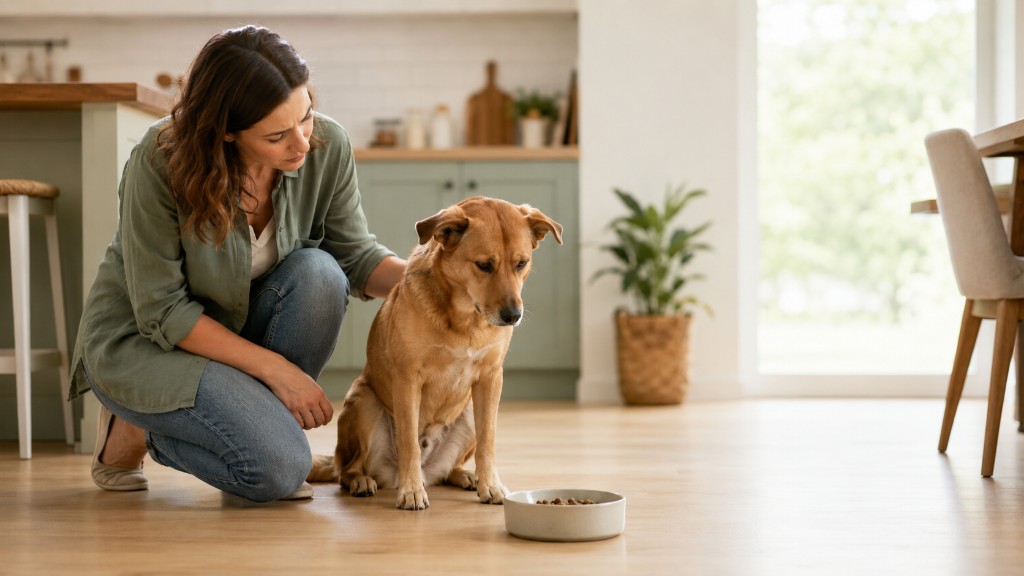
You come home from work and find the bowl exactly where you left it. Full. Untouched. Your dog is lying on the sofa, tail wagging when they see you, but the food — their favourite food — has not been touched.
Maybe they sniffed it this morning and walked away. Maybe they ate half of yesterday's dinner and left the rest. Maybe this is day three and you have started quietly Googling at midnight.
You are right to pay attention. And you are right to take it seriously — even if it turns out to be nothing.
Dogs are, for the most part, enthusiastic eaters. When a dog who normally inhales their dinner suddenly loses interest in food, it is almost always a signal. Sometimes the signal is small — a mild stomach upset, a warm afternoon, a stressful change in routine. Sometimes it points to something that needs medical attention.
The challenge is knowing the difference. And that is exactly what this article is here to help with.
Contact a veterinarian or emergency animal hospital immediately if your dog is refusing water, repeatedly vomiting, weak or collapsing, showing significant pain, struggling to breathe, has abnormal gum colour or a swollen abdomen, or may have swallowed a toxin or foreign object. If an otherwise well adult dog refuses all food for about 24 hours, contact your veterinarian for advice. Call sooner for puppies, senior or frail dogs, toy breeds and dogs with chronic conditions such as diabetes.
First things first — is it an emergency?
Before we look at the full list of causes, let us start with the most urgent question: does your dog need a vet right now?
Emergency red flags — act immediately if you see any of these
- Refusing both food AND water — dehydration can become dangerous quickly, particularly when vomiting, diarrhoea or heat is also involved
- Repeated vomiting — especially if it contains blood or looks like coffee grounds
- Severe or bloody diarrhoea
- Lethargy, weakness or collapse — a dog who cannot or will not stand needs urgent care
- A swollen, tight or painful abdomen — this can indicate bloat (gastric dilatation-volvulus), a surgical emergency
- Pale, white, blue or brick-red gums — normal gums should be pink and moist
- Difficulty breathing — rapid, laboured or noisy breathing, or a blue-grey tinge to the gums, needs emergency care
- Signs of pain — whimpering, trembling, a hunched "praying" posture (front legs down, hind end raised)
- Known or suspected ingestion of something toxic or a foreign object (socks, toys, bones)
- Your dog is a young puppy, a toy breed, senior or frail, or has a chronic condition such as diabetes — seek veterinary advice promptly because these dogs may become unwell more quickly
If none of these apply and your otherwise healthy adult dog has skipped one meal but remains bright, comfortable and drinking normally, you may have time to observe closely and gather information. Contact your veterinarian if complete food refusal approaches 24 hours, or sooner if anything changes or concerns you.
How long can a dog safely go without eating?
There is no single safe waiting period. A dog's age, size, medical history, water intake and accompanying symptoms matter more than a fixed number of hours.
As a practical safety rule, contact your veterinarian if an otherwise healthy adult dog refuses all food for about 24 hours, even if they seem normal. Call sooner if your dog is a puppy, toy breed, senior or frail, has diabetes or another chronic condition, or develops any additional symptom. Puppies who skip meals should be discussed with a veterinarian promptly rather than monitored against a rigid timeline. (PetMD; VCA Animal Hospitals; AAHA)
Puppies are especially vulnerable to hypoglycaemia — dangerously low blood sugar — when they go without food. Toy- and small-breed puppies may become unwell quickly, which is why a skipped meal in a puppy warrants prompt veterinary advice.
Water intake is especially important. A dog who refuses both food and water needs prompt veterinary attention. The risk becomes more urgent when vomiting, diarrhoea, fever or hot weather is also present.
Two types of "not eating" — and why the difference matters
Before your veterinarian can determine why your dog has stopped eating, they need to understand how. There are two fundamentally different types of appetite loss, and the distinction changes the entire diagnostic approach.
True anorexia — no desire to eat
In true anorexia, the dog has genuinely lost their appetite. They show no interest in food — not their regular meal, not treats, not the chicken you are waving under their nose. Even their favourite things do not tempt them.
This typically signals a systemic problem — something affecting the body as a whole. Illness, organ dysfunction, nausea, fever, pain and significant emotional stress can all suppress the brain's hunger signals.
Pseudo-anorexia — wants to eat but physically cannot
In pseudo-anorexia, the dog is hungry. They approach the bowl, they sniff with interest, they may even try to take a bite — but then they stop. They drop the food, chew on one side, cry out or back away from the bowl.
This signals a physical barrier — usually pain in the mouth, teeth, jaw or throat that makes chewing or swallowing too uncomfortable to continue.
| Feature | True Anorexia | Pseudo-Anorexia |
|---|---|---|
| Desire to eat | Absent — no appetite at all | Present — but physically hindered |
| Behaviour at the bowl | Ignores food entirely | Approaches, attempts to eat, then stops |
| Common root cause | Systemic illness, nausea, stress | Dental pain, oral or throat issues |
| Diagnostic focus | Blood work, imaging, full health workup | Oral examination, often under sedation |
Why this matters to you: Watch your dog carefully when you put food down. Are they ignoring it completely? Or are they interested but struggling? Telling your vet which pattern you are seeing can save significant time and guide the right diagnostic path. (Merck Veterinary Manual)
Medical causes — when the body is signalling something
Loss of appetite is one of the most common — and most non-specific — symptoms in veterinary medicine. It can accompany almost any illness. That is both the challenge and the reason it should never be ignored.
1. Dental and oral pain
Dental and periodontal disease are common in dogs and can easily go unnoticed because the signs may remain subtle until discomfort is significant. (American Veterinary Dental College; Cornell University College of Veterinary Medicine)
Signs that dental pain may be behind the food refusal:
- Dropping food while trying to eat
- Chewing on one side of the mouth
- Bad breath — beyond the normal "dog breath"
- Swollen, red or bleeding gums
- Reluctance to chew hard food or toys
- Pawing at the face or mouth
- Visible broken, loose or discoloured teeth
If your dog seems interested in food but struggles to eat it, dental pain should be high on the list.
2. Gastrointestinal problems
When something is wrong in the gut, the body's natural response is to stop putting more food in.
Common gastrointestinal causes include:
- Dietary indiscretion — the polite veterinary term for "they ate something they should not have." Garbage, spoiled food, a sock, part of a toy. Dogs are creative.
- Gastritis — inflammation of the stomach lining, often from eating something irritating
- Intestinal obstruction — a swallowed foreign object blocking the digestive tract. This is a surgical emergency.
- Inflammatory bowel disease (IBD) — chronic inflammation of the intestinal wall
- Constipation — yes, dogs get constipated too, and it can make them lose interest in food
- Intestinal parasites — roundworms, hookworms and others can suppress appetite, especially in puppies
3. Pancreatitis
Pancreatitis — inflammation of the pancreas — deserves special attention because it can be serious. Dietary indiscretion or a high-fat meal may precede some cases, although many dogs have no single obvious trigger.
Dogs with pancreatitis typically show a very specific pattern: loss of appetite, vomiting, abdominal pain and sometimes a distinctive hunched or "praying" posture — front legs down, hind end raised — as they try to relieve the discomfort.
Pancreatitis can range from mild and self-limiting to severe and life-threatening. It always warrants veterinary assessment. (PetMD; MSD Veterinary Manual)
4. Systemic illness and organ disease
When major organs are not functioning properly, appetite is often one of the first things to decline.
- Kidney disease — toxins the kidneys can no longer filter build up in the blood, causing nausea and appetite loss
- Liver disease — impaired liver function causes nausea, lethargy and food refusal
- Cancer — many types of cancer suppress appetite, sometimes long before other symptoms appear
- Infections — bacterial, viral or fungal infections can cause fever and generalised malaise
- Endocrine disorders — conditions such as Addison's disease can cause intermittent appetite changes
5. Pain
Dogs do not always cry out or show pain in obvious ways, so changes in ordinary behaviour can be important clues.
Loss of appetite is a subtle but important indicator of chronic pain — particularly arthritis in older dogs, back or neck discomfort, post-surgical soreness or undiagnosed injuries. A dog who is hurting may simply not feel like eating.
If your dog's appetite loss is accompanied by stiffness, reluctance to move, changes in posture or a decrease in activity, pain should be considered. (Merck Veterinary Manual; Cornell University College of Veterinary Medicine)
6. Nausea
This is one of the most easily overlooked causes because nausea does not always lead to vomiting. Its signs can be subtle, and a nauseous dog may simply turn away from food.
Signs that may indicate nausea:
- Lip licking or excessive swallowing
- Drooling more than usual
- Turning their head away from food
- Eating grass
- Restlessness or an inability to settle
Nausea can be caused by motion sickness, medications, gastrointestinal inflammation, organ disease and many other conditions.
7. Medication and vaccination side effects
Many common medications can temporarily reduce appetite as a side effect, including certain antibiotics, non-steroidal anti-inflammatory drugs (NSAIDs), chemotherapy agents and some heart medications.
Vaccination can sometimes be followed by a mild, temporary reduction in appetite or energy. Contact your veterinarian if the signs are marked, worsening or persistent. Facial swelling, hives, difficulty breathing, collapse or repeated vomiting or diarrhoea after vaccination require immediate veterinary attention. (WSAVA)
Behavioural and environmental causes — when the world feels different
If a medical cause has been ruled out — or not yet identified — the explanation may be environmental or emotional. Dogs are far more sensitive to changes in their world than most people realise.
1. Stress and anxiety
Just as stress can kill a human's appetite, it can do the same to a dog's.
Common stress triggers that suppress appetite:
- A new home or a recent move
- A new baby, partner, pet or housemate
- The loss of a family member or companion animal
- Construction noise, renovations or loud disturbances
- Boarding, kennelling or a stay with unfamiliar people
- Changes in the owner's work schedule
- Separation anxiety — dogs with this condition often refuse to eat when left alone. If your dog shows signs of distress when you leave — destructive behaviour, excessive vocalisation, house soiling — separation anxiety may be a factor. We have written a complete guide on this condition: Dog Separation Anxiety: Signs, Causes, What Actually Works & When to See a Vet.
Some dogs begin eating again as they settle, but do not assume stress is the cause until medical problems have been considered. If complete food refusal approaches 24 hours, contact your veterinarian; call sooner for higher-risk dogs or if any other symptom appears. (ASPCA; VCA Animal Hospitals)
2. Hot weather
This catches many dog parents off guard, especially during their first summer with a new dog.
Some dogs may eat less during very hot weather. However, a sudden or substantial change in appetite should not automatically be blamed on the temperature.
If your dog is eating a little less but remains bright, comfortable, well hydrated and otherwise normal, offer meals during the cooler parts of the day and continue monitoring. Complete refusal, worsening appetite or any additional symptom warrants veterinary advice.
However: Do not confuse a heat-related appetite dip with heatstroke. If your dog is panting excessively, drooling heavily, weak, staggering or has bright red gums, this is a medical emergency. To understand more about what excessive panting means, read our guide: Why Is My Dog Panting So Much? Heat, Pain, Anxiety, Heart Disease & When to See a Vet.
3. Food-related issues
Sometimes the problem is not the dog — it is the dinner.
- Spoiled food — check the expiration date. Kibble can go rancid, especially in warm weather or if stored improperly.
- Sudden diet change — switching foods abruptly can cause digestive upset and food refusal. Any transition should happen gradually over 7 to 10 days, mixing increasing amounts of the new food with the old.
- Learned selectivity — some dogs learn to hold out when refusing a meal repeatedly produces treats, table food or a different dinner.
- Bowl or location issues — noise, reflections, competing pets or a high-traffic feeding area can make some dogs uncomfortable.
4. The "treats but not dinner" paradox
This is one of the most common scenarios pet parents describe: "My dog won't eat their food, but they will happily eat treats."
This is an important clue, but it is not proof that your dog is healthy. Accepting treats while refusing regular food may reflect preference or learned behaviour, but it does not rule out dental pain, nausea or another illness.
Dogs are remarkably good at training their owners. If refusing dinner has ever resulted in chicken, cheese or an upgrade to wet food, they may have learned that patience pays off.
Important caveat: This pattern can also occur when a dog has mild dental pain or nausea — they can manage soft, small treats but find a full bowl of hard food too uncomfortable. If this behaviour is new or sudden, do not assume pickiness without first considering a physical cause.
Low-risk steps to try while monitoring
If an otherwise healthy adult dog has skipped one meal, shows no emergency red flags and remains bright, comfortable and normally hydrated, the following gentle steps may help while you monitor closely. Do not delay veterinary care to keep experimenting with food. If your dog has a chronic condition, food allergy, history of pancreatitis or prescribed diet, consult your veterinarian before adding toppers or changing food.
- Warm the food slightly. Warming food releases its aroma, making it more appealing. For wet food, a few seconds in the microwave (stir well and check the temperature). For dry food, adding a splash of warm water can help.
- Check the food itself. Confirm that it is fresh, correctly stored and from the expected recipe or batch. Discard food that smells rancid, looks mouldy or has been left out too long.
- Use a small topper cautiously. If your dog has no dietary restriction, a small amount of plain, lean, boneless cooked chicken or onion- and garlic-free low-sodium broth may make the regular meal more appealing. A topper is not a complete diet and should not replace veterinary assessment when appetite loss continues.
- Try temporary hand-feeding. Some anxious dogs may accept a few bites from a hand when they will not approach a bowl. Stop if your dog resists, coughs, gags or appears unable to chew or swallow.
- Optimise the feeding environment. Feed in a quiet, low-traffic area away from other pets and loud appliances. Some dogs are sensitive to being watched while they eat.
- Use a consistent schedule only after illness has been considered. For a dog with medically cleared selective eating, offering meals at predictable times and removing the bowl after 15 to 20 minutes can help restore a routine. Do not use this strategy to wait out a dog who may be unwell.
- Reduce treats. If your dog fills up on treats throughout the day, they may simply not be hungry at mealtime. Treats should make up no more than 10 percent of daily calories. (AAHA)
- For senior dogs — consider physical comfort. Arthritis or back pain may make reaching the bowl difficult. A non-slip mat or individually adjusted bowl height may help, but ask your veterinarian what setup is appropriate for your dog.
What NOT to do:
- Do not force-feed your dog. Forcing food into a dog's mouth can cause aspiration (food entering the lungs) and will increase stress.
- Do not give human medications. Ibuprofen, paracetamol (acetaminophen) and aspirin are all potentially toxic — even fatal — to dogs. Never medicate without veterinary guidance.
- Do not drastically change their diet overnight. Sudden food switches can worsen digestive problems.
- Do not keep trying toppers while symptoms worsen. Food experiments must never delay veterinary assessment.
When your vet might prescribe an appetite stimulant
If your dog's appetite loss is prolonged or connected to an underlying illness, your veterinarian may recommend a pharmaceutical appetite stimulant while the primary condition is being treated.
Capromorelin (Entyce) is an FDA-approved appetite stimulant for dogs. It acts as a ghrelin-receptor agonist, mimicking signals involved in hunger. It is a prescription oral liquid and must be used under veterinary direction. (FDA)
Other medications your vet may consider include:
- Mirtazapine — used off-label for its appetite-stimulating and anti-nausea properties
- Maropitant (Cerenia) — an anti-nausea and anti-vomiting medication that may help appetite when nausea is the underlying cause; it is not itself an appetite stimulant
These are prescription medications. They are designed to support a dog while the veterinarian diagnoses and treats the root cause. They are not a substitute for finding out why your dog stopped eating.
When to see a vet — the definitive guide
- Your otherwise healthy adult dog is approaching 24 hours of complete food refusal
- A puppy, toy breed, senior or frail dog, or a dog with a chronic condition, has skipped a meal — call sooner for individual guidance
- Your dog has stopped drinking water — this is urgent
- Appetite loss is accompanied by vomiting, diarrhoea or lethargy
- Your dog seems interested in food but unable to eat it
- You notice a swollen, tender or painful abdomen
- There are changes in gum colour — pale, blue, grey or brick-red
- Your dog is breathing rapidly or with visible effort
- Your dog has been losing weight
- The appetite loss is getting progressively worse over days
- Your dog has a pre-existing condition such as diabetes, kidney disease or cancer
- You suspect they may have eaten something toxic or swallowed a foreign object
- Anything at all that does not feel right to you
Trust your instincts. You know your dog better than anyone else does. If something feels wrong, it probably warrants a closer look. Early veterinary assessment can prevent a manageable problem from becoming a serious one.
What your vet will do
History and physical examination
Your vet will ask detailed questions — when the appetite loss started, whether it was sudden or gradual, what your dog will and will not eat, and whether anything has changed recently. A thorough physical examination follows, including checking the mouth, teeth, abdomen, temperature, heart and body condition.
Diagnostic testing
Depending on findings, your vet may recommend:
- Blood work — complete blood count (CBC) and biochemistry panel to check organ function, infection markers and electrolytes
- Urinalysis — to assess kidney function and screen for infections
- Faecal analysis — to check for intestinal parasites
- Abdominal X-rays or ultrasound — to look for obstructions, masses, organ changes or fluid
- Dental examination under sedation — including dental radiographs for a full assessment of oral health
In more complex or chronic cases, further investigation — endoscopy, biopsies, advanced imaging or specialist referral — may be needed.
Frequently Asked Questions
Your dog's appetite is trying to tell you something
A full food bowl at the end of the day is one of those small signals that is easy to wave off — until it happens again the next morning, and the morning after that.
A dog who skips a single meal on a hot afternoon may be fine when everything else is normal — but context matters. A dog who has quietly lost interest in food over several days, who turns away from treats they used to scramble for, who walks to the bowl and then just stands there — that dog is telling you something important.
The causes range widely — from a sore tooth to a stressful week to something deeper that needs medical attention. But the message underneath is always the same: something has changed, and it deserves your attention.
Appetite is one of the most honest indicators of how your dog is feeling — physically and emotionally. When the bowl stays full, your dog is asking you to look a little closer. The sooner you do, the sooner you can help.
You do not need to have all the answers. You just need to notice the change, gather what you can and bring it to your veterinarian. That is what good dog parents do — and the fact that you are here, reading this, already tells me you are one of them.
Important medical disclaimer
This article provides general educational information and does not replace examination, diagnosis or treatment by a qualified veterinarian. Loss of appetite in dogs can have many causes, some of which are medical emergencies. Seek emergency care for the red flags described above. If an otherwise well adult dog refuses all food for about 24 hours, contact your veterinarian for advice; call sooner for puppies, toy breeds, senior or frail dogs, dogs with chronic conditions, or whenever you are concerned.
References and Trusted Veterinary Sources
- PetMD — Loss of Appetite in Dogs: causes, diagnosis and treatment
- VCA Animal Hospitals — Anorexia in Dogs
- Merck Veterinary Manual — Drugs That Affect Appetite in Monogastric Animals
- Merck Veterinary Manual — Pancreatitis in Dogs and Cats
- Cornell University College of Veterinary Medicine — Recognizing Pain in Dogs
- Cornell University College of Veterinary Medicine — Periodontal Disease
- Cornell University College of Veterinary Medicine — Gastrointestinal Foreign Body Obstruction in Dogs
- American Veterinary Dental College — Primary Care Practice Resources
- ASPCA — Separation Anxiety in Dogs: signs and management
- American Animal Hospital Association (AAHA) — 10 Pet Health Signs You Should Never Ignore
- World Small Animal Veterinary Association (WSAVA) — Global Nutrition Guidelines
- World Small Animal Veterinary Association (WSAVA) — Owner and Breeder Vaccination Guidelines
- U.S. Food and Drug Administration — Capromorelin and its approval for appetite stimulation in dogs
- VCA Animal Hospitals — Maropitant Citrate
Found this helpful? Share it with a fellow dog parent:
References & trusted sources
- PetMD — Loss of Appetite in Dogs: causes, diagnosis and treatment
- VCA Animal Hospitals — Anorexia in Dogs
- Merck Veterinary Manual — Drugs That Affect Appetite in Monogastric Animals
- Merck Veterinary Manual — Pancreatitis in Dogs and Cats
- Cornell University College of Veterinary Medicine — Recognizing Pain in Dogs
- Cornell University College of Veterinary Medicine — Periodontal Disease
- Cornell University College of Veterinary Medicine — Gastrointestinal Foreign Body Obstruction in Dogs
- American Veterinary Dental College — Primary Care Practice Resources
- ASPCA — Separation Anxiety in Dogs: signs and management
- American Animal Hospital Association (AAHA) — 10 Pet Health Signs You Should Never Ignore
- World Small Animal Veterinary Association (WSAVA) — Global Nutrition Guidelines
- World Small Animal Veterinary Association (WSAVA) — Owner and Breeder Vaccination Guidelines
- U.S. Food and Drug Administration — Capromorelin and its approval for appetite stimulation in dogs
- VCA Animal Hospitals — Maropitant Citrate
Keep your dog's care organized
The Complete Dog Care Planner turns all of this into one calm, simple routine you can actually stick to.

