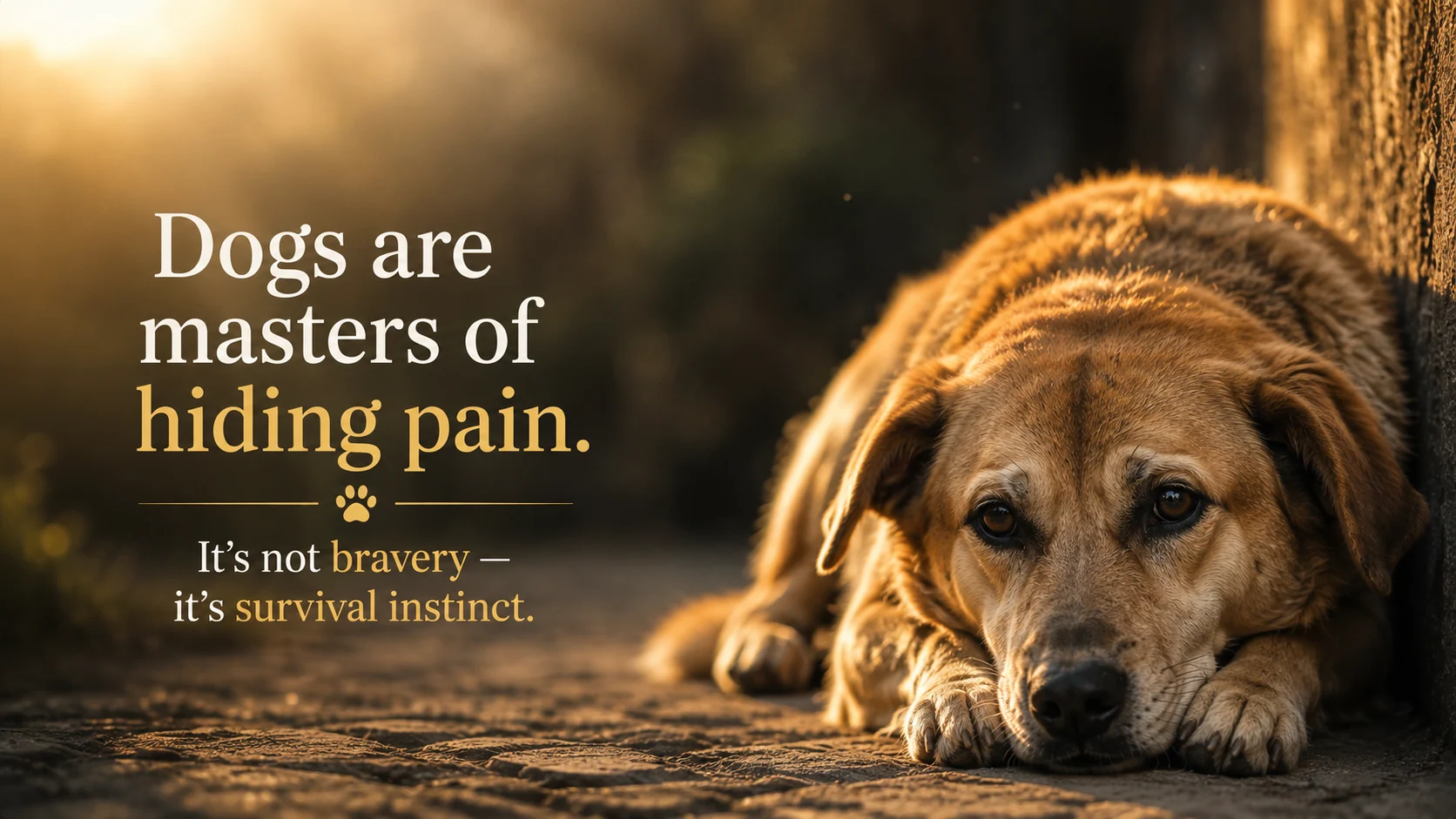
Why Is My Dog Panting So Much? Heat, Pain, Anxiety, Heart Disease & When to See a Vet
Panting is how dogs cool down — but when it becomes heavy, constant or happens at rest, it can signal something serious. Learn what normal panting looks like, the medical and emotional causes behind excessive panting and when it is time to call your vet.
Written by the Raise Happy Dog editorial team and researched from 10 veterinary and scientific sources listed at the end. Educational only — not a substitute for your veterinarian. Read our editorial policy.
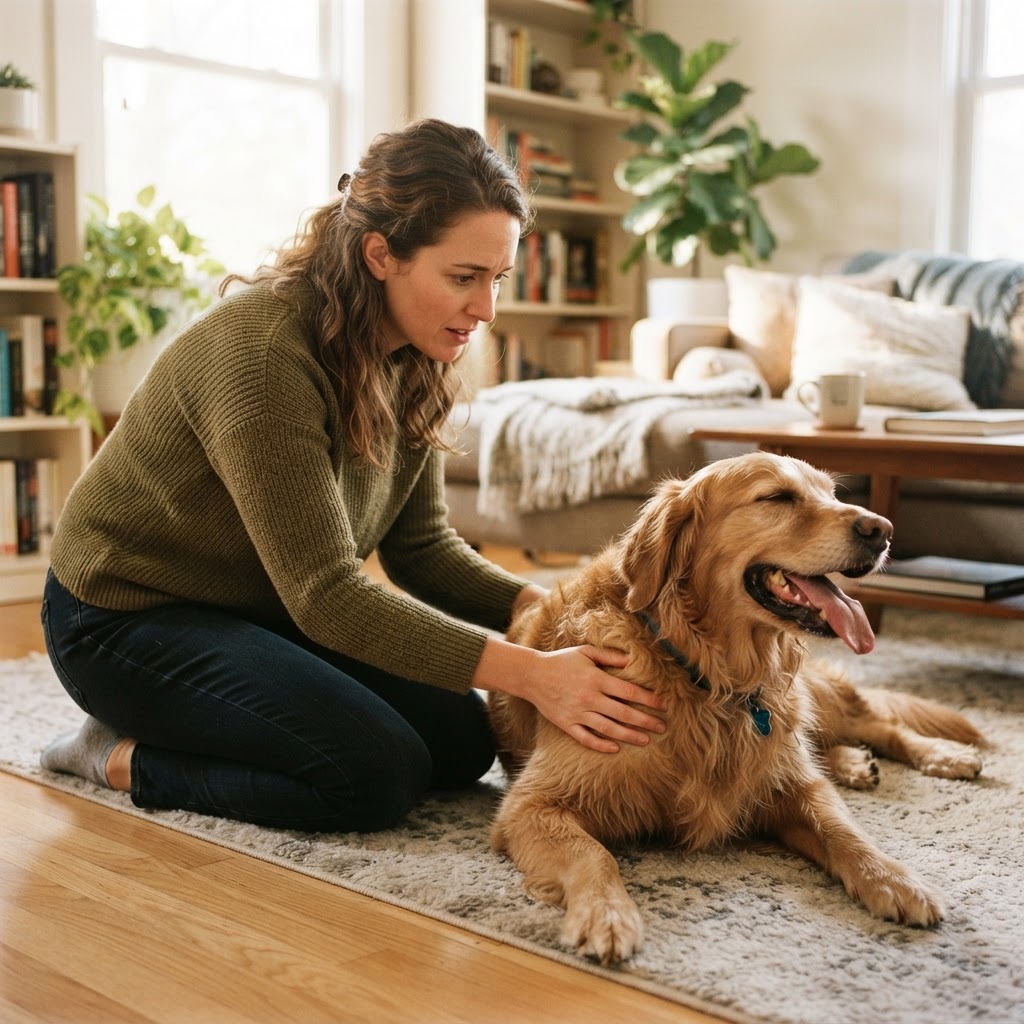
It starts quietly. You glance over at your dog and notice they are panting — mouth open, tongue out, sides moving a little faster than usual. Maybe they just came in from outside. Maybe they were playing. Or maybe they are lying on the cool kitchen floor doing absolutely nothing, and yet they are breathing like they just sprinted across the yard.
That moment — when panting does not quite match the situation — is the moment most dog parents start to wonder: is this normal?
You are right to pay attention. And you are right to take it seriously.
Panting is one of the most natural things a dog does. It is their primary way of cooling down, and in most cases it is completely harmless. But when panting becomes excessive, happens at rest, occurs in cool environments or seems heavier and more urgent than usual, it can be the body's way of saying something important.
The challenge is that panting can mean many different things — overheating, pain, anxiety, heart problems, hormonal conditions and more. That is why understanding the difference between normal and abnormal panting — and knowing when to act — could genuinely save your dog's life.
Important note: This article is designed to help you recognise patterns and understand possible causes. It is not a substitute for veterinary examination and diagnosis. If your dog's panting is persistent, unexplained or accompanied by other symptoms, please consult your veterinarian.
How panting actually works — the science behind it
Before we talk about what can go wrong, it helps to understand what panting is designed to do.
Unlike humans, dogs cannot cool themselves efficiently through sweating. They have a small number of sweat glands in their paw pads, but these are not nearly enough to regulate body temperature on their own. Instead, dogs rely on evaporative cooling through their respiratory tract — and panting is the engine that drives this process.
When a dog pants, they draw air rapidly across the moist surfaces of their tongue, mouth and upper airways. The moisture on these surfaces evaporates into the passing air, carrying heat away from the body. It is a remarkably efficient system — a panting dog can cycle air at rates of up to 200 to 400 pants per minute, compared to a normal resting respiratory rate of just 10 to 30 breaths per minute. (American Red Cross; Cornell University College of Veterinary Medicine)
Research published in the Journal of Applied Physiology has shown that dogs actively modulate their airflow patterns depending on how much cooling they need. At rest, they breathe through the nose. As cooling demand increases, they progressively shift to mouth breathing — increasing the surface area available for evaporation. (NIH / National Library of Medicine)
This system works beautifully under normal conditions. But it has limits — particularly in high humidity, where the air is already saturated with moisture and evaporation slows dramatically. At humidity levels above approximately 80 to 85 percent, a dog's ability to cool itself through panting becomes severely compromised, significantly increasing the risk of overheating.
A normal body temperature for a dog is between 38.3°C and 39.2°C (101°F and 102.5°F).
When is panting normal?
Panting is expected and healthy in several everyday situations:
- After exercise or active play
- During warm or hot weather
- When your dog is excited — greeting you at the door, anticipating a walk, riding in the car
- Briefly after eating or drinking
- During mild, short-lived stress — a visit to the vet, meeting a new dog
In these situations, panting typically:
- Matches the context (there is a clear reason for it)
- Settles within a few minutes once the trigger passes
- Does not seem laboured, forced or unusually loud
- Is not accompanied by other concerning signs
If your dog pants for a few minutes after a walk and then settles into quiet, relaxed breathing — that is their cooling system working exactly as it should.
When panting becomes a concern
Panting crosses into concerning territory when it:
- Happens at rest — with no exercise, heat or excitement to explain it
- Occurs in a cool or air-conditioned environment
- Is heavier, faster or louder than your dog's normal pattern
- Persists for an unusually long time after activity has stopped
- Disrupts sleep — yours or theirs
- Is accompanied by restlessness, pacing or an inability to settle
- Comes with changes in gum colour, posture or behaviour
The key word here is context. A dog panting after a run on a summer afternoon is expected. The same dog panting at 2 a.m. in a cool room for no apparent reason — that warrants attention.
The most common causes of excessive panting
1. Overheating and heatstroke
This is the most urgent and immediately dangerous cause of excessive panting.
Heatstroke occurs when a dog's body temperature rises above 40°C (104°F) and their cooling system can no longer keep up. It is a life-threatening emergency that can cause organ damage, seizures, collapse and death if not treated immediately.
The Royal Veterinary College (RVC) in London identifies the following early signs of heatstroke: excessive and rapid panting, drooling, bright red gums and tongue, increased heart rate, and restlessness or seeking shade and water. As the condition progresses, signs escalate to disorientation, staggering, vomiting or diarrhoea (sometimes with blood), muscle tremors, seizures and collapse. (Royal Veterinary College, London)
VCA Animal Hospitals notes that brachycephalic breeds (flat-faced dogs like Bulldogs, Pugs, French Bulldogs and Boston Terriers) are at significantly higher risk because their shortened airways make panting less efficient. (VCA Animal Hospitals)
High-risk factors for heatstroke include:
- Brachycephalic (flat-faced) breeds
- Overweight or obese dogs
- Senior dogs and very young puppies
- Dogs with existing heart, lung or respiratory conditions
- High humidity — even moderate temperatures can be dangerous
- Being left in a parked car — never leave a dog in a parked vehicle
- Excessive exercise in warm weather
If you suspect heatstroke:
- Move your dog to a cool, shaded or air-conditioned area immediately
- Apply cool (not cold or icy) water to the neck, belly, armpits and paws
- Do not use ice or freezing water — this can cause blood vessels to constrict and trap heat inside the body
- Offer small amounts of cool water to drink
- Contact your veterinarian or emergency animal hospital immediately
2. Pain
Dogs are remarkably stoic. They have an evolutionary instinct to mask pain and vulnerability, which means they rarely cry out or show obvious signs of suffering until the discomfort is significant. Panting is one of the subtle ways dogs communicate that something hurts.
The Merck Veterinary Manual notes that there is no single "gold standard" test for chronic pain in dogs. Veterinarians rely heavily on owner observations of behavioural changes — including increased panting, restlessness and changes in breathing patterns — to assess discomfort and guide treatment. (Merck Veterinary Manual)
Cornell University College of Veterinary Medicine emphasises that panting, especially when accompanied by restlessness, difficulty getting comfortable or an inability to settle at night, is a frequent indicator of chronic arthritic pain. (Cornell University College of Veterinary Medicine)
Pain-related panting is worth considering when your dog:
- Pants at rest without any heat or exercise trigger
- Is older and may be developing arthritis or joint problems
- Has recently had surgery, an injury or a dental procedure
- Shows stiffness, limping or reluctance to move
- Pants more at night when distractions are fewer
- Has changed their posture, sleeping position or activity level
3. Anxiety, stress and fear
Just as humans breathe faster when anxious, dogs pant in response to emotional stress. This is one of the most common non-medical causes of excessive panting — but it should only be considered after medical causes have been explored.
Cornell University's College of Veterinary Medicine identifies panting as a key behavioural sign of anxiety in dogs, often accompanied by whale eye (whites of the eyes visible), ears pinned back, a tucked tail, yawning, lip licking, pacing and trembling. (Cornell University College of Veterinary Medicine)
Common anxiety triggers that cause panting include:
- Thunderstorms and fireworks — noise phobias are among the most common canine anxiety disorders
- Separation anxiety — panting, vocalising and destructive behaviour when left alone
- New environments — unfamiliar places, car travel, vet visits
- Changes in routine — a new home, a new family member, altered schedules
- Past trauma — rescue dogs may carry anxiety from previous experiences
The ASPCA notes that dogs with separation anxiety may show distress signals — including panting, drooling and destructive behaviour — specifically when they sense their owner is preparing to leave. (ASPCA)
4. Heart disease and congestive heart failure
When the heart is not pumping efficiently, fluid can accumulate in or around the lungs — a condition known as pulmonary oedema. This makes it increasingly difficult for the lungs to exchange oxygen, and the dog compensates by breathing harder and faster.
Panting caused by heart disease tends to:
- Occur at rest or with minimal exertion
- Worsen gradually over time
- Be accompanied by coughing (especially at night or after lying down)
- Come with exercise intolerance — tiring more quickly on walks
- Involve changes in gum colour — pale, blue-tinged or grey instead of healthy pink
Veterinary cardiologists recommend monitoring your dog's resting respiratory rate — the number of breaths per minute while sleeping — as one of the most reliable early indicators of heart disease progression. A consistently elevated resting rate (above 30 breaths per minute) warrants veterinary attention. (VCA Animal Hospitals; Texas A&M College of Veterinary Medicine)
If your dog is panting heavily at rest with laboured breathing, pale or blue gums, or an inability to lie down comfortably — this is an emergency. Seek veterinary care immediately.
5. Cushing's disease (hyperadrenocorticism)
Cushing's disease is a hormonal disorder caused by the chronic overproduction of cortisol by the adrenal glands. It is most common in middle-aged and older dogs and develops so gradually that many owners mistake the symptoms for normal ageing.
Excessive panting is one of the hallmark signs of Cushing's disease. The U.S. Food and Drug Administration (FDA) identifies panting as a key clinical sign, alongside increased thirst, increased urination, increased appetite and a pot-bellied appearance. (U.S. FDA)
Cornell University College of Veterinary Medicine describes the classic presentation as the "five P's": Panting, Polyuria (increased urination), Polydipsia (increased thirst), Polyphagia (increased appetite) and a Pot-bellied appearance. (Cornell University College of Veterinary Medicine)
Other signs of Cushing's disease include:
- Symmetrical hair loss or a thinning coat
- Thin, fragile skin that bruises easily
- Recurrent skin or urinary tract infections
- Lethargy and reduced activity
- Muscle weakness
Cushing's disease can be difficult to diagnose because its symptoms overlap with many other conditions. Diagnosis typically involves specific endocrine tests such as the ACTH stimulation test or the low-dose dexamethasone suppression test, along with abdominal ultrasound. (MSD Veterinary Manual)
6. Respiratory conditions
Any condition that compromises the airways or lungs can cause a dog to pant more heavily as they work harder to get enough oxygen.
Brachycephalic Obstructive Airway Syndrome (BOAS):
Flat-faced breeds — French Bulldogs, English Bulldogs, Pugs, Boston Terriers, Shih Tzus — are born with anatomical features that restrict airflow: narrowed nostrils, an elongated soft palate and sometimes a narrowed trachea. Cornell University College of Veterinary Medicine notes that these primary traits create chronic resistance to airflow, and if left untreated, the constant struggle to breathe can lead to secondary complications such as laryngeal collapse. (Cornell University College of Veterinary Medicine)
Never assume that noisy, heavy breathing is "normal" for a flat-faced breed. Early veterinary assessment and, where appropriate, surgical correction of primary airway obstructions can significantly improve quality of life.
Laryngeal paralysis:
This neurological condition, most common in older large-breed dogs (particularly Labrador Retrievers), affects the nerves that control the opening and closing of the larynx. The larynx fails to open properly during breathing, creating a characteristic harsh, raspy sound and increased respiratory effort. It is often part of a broader condition called GOLPP — Geriatric Onset Laryngeal Paralysis and Polyneuropathy. (Cornell University College of Veterinary Medicine; University of Wisconsin School of Veterinary Medicine)
Other respiratory causes of excessive panting include:
- Pneumonia or lung infections
- Collapsed trachea (common in small breeds)
- Lung tumours or masses
- Pleural effusion (fluid around the lungs)
7. Obesity
Carrying excess weight places significant strain on a dog's respiratory system. Research published in the Journal of Veterinary Internal Medicine has shown that obese dogs exhibit reduced tidal volume (the amount of air inhaled per breath), decreased lung capacity and increased airway reactivity. Fat deposits around the chest and abdomen compress the lungs and restrict diaphragm movement, forcing the dog to work harder to breathe. (NIH / Journal of Veterinary Internal Medicine)
Additionally, the insulating layer of subcutaneous fat makes it harder for the dog to dissipate heat, reducing the efficiency of their panting-based cooling system and significantly increasing the risk of heat stress.
Research from Frontiers in Veterinary Science confirms that obesity is a major independent risk factor for heatstroke in dogs. (Frontiers in Veterinary Science)
The encouraging news is that these respiratory complications are often reversible with weight loss. Studies show significant improvements in breathing efficiency, exercise tolerance and overall comfort as dogs return to a healthy body condition.
8. Medications and toxins
Certain medications and toxic substances can cause panting as a side effect or symptom.
Corticosteroids (prednisone, prednisolone, dexamethasone):
Panting is one of the most commonly reported side effects of steroid therapy in dogs. VCA Animal Hospitals notes that increased panting — often alongside increased thirst, appetite and urination — is an expected effect of corticosteroids. It occurs because these drugs mimic cortisol and can increase metabolic rate and cause mild restlessness. (VCA Animal Hospitals)
Important: Never stop or adjust steroid medication abruptly without veterinary guidance. Sudden withdrawal can be dangerous.
Other medications that may cause panting include:
- Opioid pain medications
- Certain anti-anxiety drugs (paradoxical reactions)
- Thyroid hormone supplements (if over-dosed)
Toxins and poisoning:
Panting can be an early sign that a dog has ingested something harmful. Common household toxins include chocolate, xylitol (birch sugar), grapes and raisins, certain plants, rodenticides and human medications such as ibuprofen or paracetamol. If you suspect poisoning, contact your veterinarian or a pet poison helpline immediately.
9. Fever and infection
A dog's normal body temperature is between 38.3°C and 39.2°C (101°F and 102.5°F). A temperature above 39.4°C (103°F) is considered a fever. Just as humans sweat when feverish, dogs pant to try to bring their temperature down.
Fever-related panting may be accompanied by:
- Lethargy and reduced appetite
- Warm ears and dry nose
- Shivering
- Red or glassy eyes
- Nasal discharge or coughing
Fever is the body's response to infection, inflammation or immune activity — it is a symptom, not a diagnosis. A veterinary examination is needed to identify and treat the underlying cause.
Panting at night — why does it seem worse after dark?
Many dog parents notice that panting seems worse at night. This is a common pattern, and there are several reasons it may be more noticeable — or genuinely more intense — after dark.
- Fewer distractions. During the day, your dog is engaged with walks, play, meals and interaction. At night, the house is quiet and there is nothing to redirect attention away from discomfort, itching or anxiety.
- Natural cortisol drop. The body's circulating cortisol — a natural anti-inflammatory hormone — decreases in the evening hours. This can make existing pain or inflammation feel more intense after dark.
- Ambient temperature. Some dogs struggle with temperature regulation at night, particularly older dogs, overweight dogs and those with hormonal conditions like Cushing's disease.
- Anxiety triggers. Nighttime can amplify noise sensitivity (distant thunder, fireworks, unfamiliar sounds) and separation-related anxiety.
However — nighttime panting should never be dismissed as "just a habit" without first ruling out medical causes. If your dog regularly pants at night without a clear reason, your veterinarian should know about it.
What to observe before calling your vet
You do not need to diagnose the problem yourself. But gathering specific observations before your appointment will help your veterinarian enormously.
A quick home assessment
-
Note the timing. When does the panting happen? After exercise? At rest? At night? In specific situations?
-
Observe the context. Is it hot? Has your dog been active? Are there stress triggers present? Or is there no obvious reason?
-
Check the gums. Healthy gums should be pink and moist. Pale, white, blue, grey or brick-red gums indicate a potential emergency.
-
Count the breaths. When your dog is calm or sleeping, count the number of breaths in 60 seconds. A resting rate consistently above 30 breaths per minute is worth reporting.
-
Listen to the breathing. Is it quiet? Raspy? Wheezy? Is there a new sound you have not heard before?
-
Watch the body. Is your dog using their abdominal muscles to breathe? Are they extending their neck or standing with legs spread apart to get more air? These are signs of respiratory distress.
-
Look for accompanying signs. Coughing, lethargy, restlessness, loss of appetite, vomiting, limping, behaviour changes — note everything.
-
Consider recent changes. New medication? Change in diet? Recent surgery or injury? New environment? Exposure to chemicals or potential toxins?
Write down your observations. Your veterinarian will appreciate having this information ready.
When to contact a veterinarian
Contact your vet promptly if you notice any of the following:
- Panting that is heavy, persistent and has no clear cause
- Panting at rest — in a cool environment with no exercise or excitement
- Panting that wakes your dog (or you) at night
- Changes in gum colour — pale, blue, grey or brick-red
- Laboured breathing — using abdominal muscles, extending the neck, or standing with legs apart
- Inability to lie down or get comfortable
- Coughing, especially at night or after lying down
- Collapse, weakness or staggering
- Excessive drooling alongside panting
- Panting accompanied by vomiting, diarrhoea or loss of appetite
- Panting that is getting progressively worse over days or weeks
- Any panting that just does not feel right to you
Trust your instincts. You know your dog. If something feels wrong, it probably warrants a closer look. Early veterinary assessment can prevent a manageable condition from becoming a crisis.
How veterinarians investigate excessive panting
Because panting can be a symptom of so many different conditions, your veterinarian will approach diagnosis systematically.
Physical examination
A thorough hands-on examination — checking temperature, heart rate, respiratory rate, gum colour, hydration, lymph nodes and abdominal palpation — is always the starting point. Your vet will also take a detailed history from you.
Blood work
A complete blood count (CBC) and biochemistry panel can reveal infection, organ dysfunction, anaemia, hormonal imbalances and other systemic issues. Thyroid function tests may also be included.
Chest X-rays (radiography)
X-rays of the chest allow your vet to evaluate the heart size and shape, look for fluid in or around the lungs, check for masses and assess the airways and lung tissue.
Cardiac evaluation
If heart disease is suspected, your vet may recommend an echocardiogram (ultrasound of the heart), an electrocardiogram (ECG) or referral to a veterinary cardiologist.
Endocrine testing
If Cushing's disease is suspected, specific tests — such as the ACTH stimulation test or the low-dose dexamethasone suppression test — along with abdominal ultrasound will help confirm the diagnosis.
Advanced diagnostics
In complex cases, further investigation may include:
- Arterial blood gas analysis — to assess oxygen levels
- CT scan or MRI — for detailed imaging of the airways, lungs or brain
- Bronchoscopy or laryngeal examination — direct visualisation of the airways under sedation
- Referral to a veterinary specialist — internist, cardiologist or surgeon
Frequently asked questions
Why is my dog panting at night for no reason?
Nighttime panting is rarely without reason — the reason may simply not be visible to you. Common causes include pain (especially arthritis, which worsens at rest), anxiety, heart disease, Cushing's disease and respiratory conditions. The body's natural drop in cortisol levels in the evening can also make existing inflammation feel more intense after dark. If your dog pants regularly at night, a veterinary assessment is recommended.
Is panting a sign of pain in dogs?
Yes. Panting is one of the most common subtle signs of pain in dogs. Because dogs instinctively mask discomfort, panting — especially when it occurs at rest or without an obvious trigger — may be one of the few outward indicators that your dog is hurting. The Merck Veterinary Manual identifies changes in breathing patterns, including panting, as an important pain indicator in dogs.
How do I know if my dog is panting too much?
Normal panting matches the situation — it occurs during or shortly after exercise, heat exposure or excitement and resolves within a few minutes. Abnormal panting occurs at rest, in cool environments, persists for an unusually long time, sounds different from your dog's usual pattern or is accompanied by other symptoms like restlessness, coughing or changes in gum colour.
Can anxiety cause a dog to pant heavily?
Yes. Stress, fear, noise phobias (thunderstorms, fireworks) and separation anxiety can all cause significant panting. However, behavioural causes should only be considered after medical conditions have been ruled out. Many dogs initially labelled as "anxious panters" turn out to have underlying pain, heart disease or other physical conditions driving the behaviour.
Why is my old dog panting more than usual?
Senior dogs are more prone to conditions that cause excessive panting, including arthritis, heart disease, Cushing's disease, laryngeal paralysis, obesity and cognitive dysfunction. Age-related changes in temperature regulation can also contribute. Any new or increased panting in an older dog should be discussed with your veterinarian — it is rarely "just old age."
Do certain breeds pant more than others?
Yes. Brachycephalic breeds (flat-faced dogs) — including French Bulldogs, English Bulldogs, Pugs, Boston Terriers, Pekingese and Shih Tzus — pant more because their shortened airways make breathing less efficient. However, heavy panting should never be dismissed as "normal for the breed." These dogs are at higher risk for airway obstruction and heatstroke and should be monitored carefully.
Should I take my dog to the vet for panting?
If the panting is persistent, occurs at rest, happens without an obvious cause, is getting worse over time or is accompanied by any other symptoms — yes, a veterinary consultation is warranted. If you see signs of respiratory distress (laboured breathing, abnormal gum colour, collapse), treat it as an emergency.
Your dog's breathing is trying to tell you something
Panting is one of those behaviours that is so common, so familiar, that it is easy to overlook — until the pattern changes.
A dog who pants after a game of fetch on a warm afternoon is doing something perfectly normal. A dog who pants heavily on the sofa at midnight in an air-conditioned room, who cannot seem to settle, whose breathing sounds heavier than you remember — that dog is communicating something important.
The causes are varied, but the message is the same: something needs your attention.
Panting is your dog's breathing language. When the pattern changes — when it no longer matches the moment — your dog is asking you to listen. The sooner you do, the better the outcome is likely to be.
You do not need to have all the answers. You just need to notice the change, gather what you can and bring it to your veterinarian. They will take it from there.
Stay One Step Ahead of Your Dog's Health
Breathing changes are easier to manage when you catch them early. Use Raise Happy Dog's free tools to track your dog's wellness and stay on top of preventive care.
Check Your Dog's Score Free Care Reminder
Important medical disclaimer
This article provides general educational information and does not replace examination, diagnosis or treatment by a qualified veterinarian. Excessive panting can have many different causes, some of which are medical emergencies. If your dog's panting is persistent, unexplained or accompanied by other symptoms, please consult your veterinarian immediately.
Found this helpful? Share it with a fellow dog parent:
References & trusted sources
- Heatstroke in Dogs — Royal Veterinary College (RVC), London
- Heat Stroke in Dogs — VCA Animal Hospitals
- Canine Health Center — Cornell University College of Veterinary Medicine
- Pain Assessment in Dogs — MSD Veterinary Manual
- Cushing's Disease in Dogs — U.S. FDA
- Prednisone and Prednisolone for Dogs — VCA Animal Hospitals
- Separation Anxiety in Dogs — ASPCA
- Monitoring Resting Respiratory Rate — Texas A&M College of Veterinary Medicine
- Laryngeal Paralysis and GOLPP — University of Wisconsin School of Veterinary Medicine
- Respiratory mechanics and thermoregulation in dogs — NIH / PubMed
Keep your dog's care organized
The Complete Dog Care Planner turns all of this into one calm, simple routine you can actually stick to.