
Dog Scared of Thunder? How to Help Them Feel Safe During a Storm
When the sky frightens your dog, your calm presence and a thoughtful plan can make the world feel safer again.
Written by the Raise Happy Dog editorial team and researched from 4 veterinary and scientific sources listed at the end. Educational only — not a substitute for your veterinarian. Read our editorial policy.
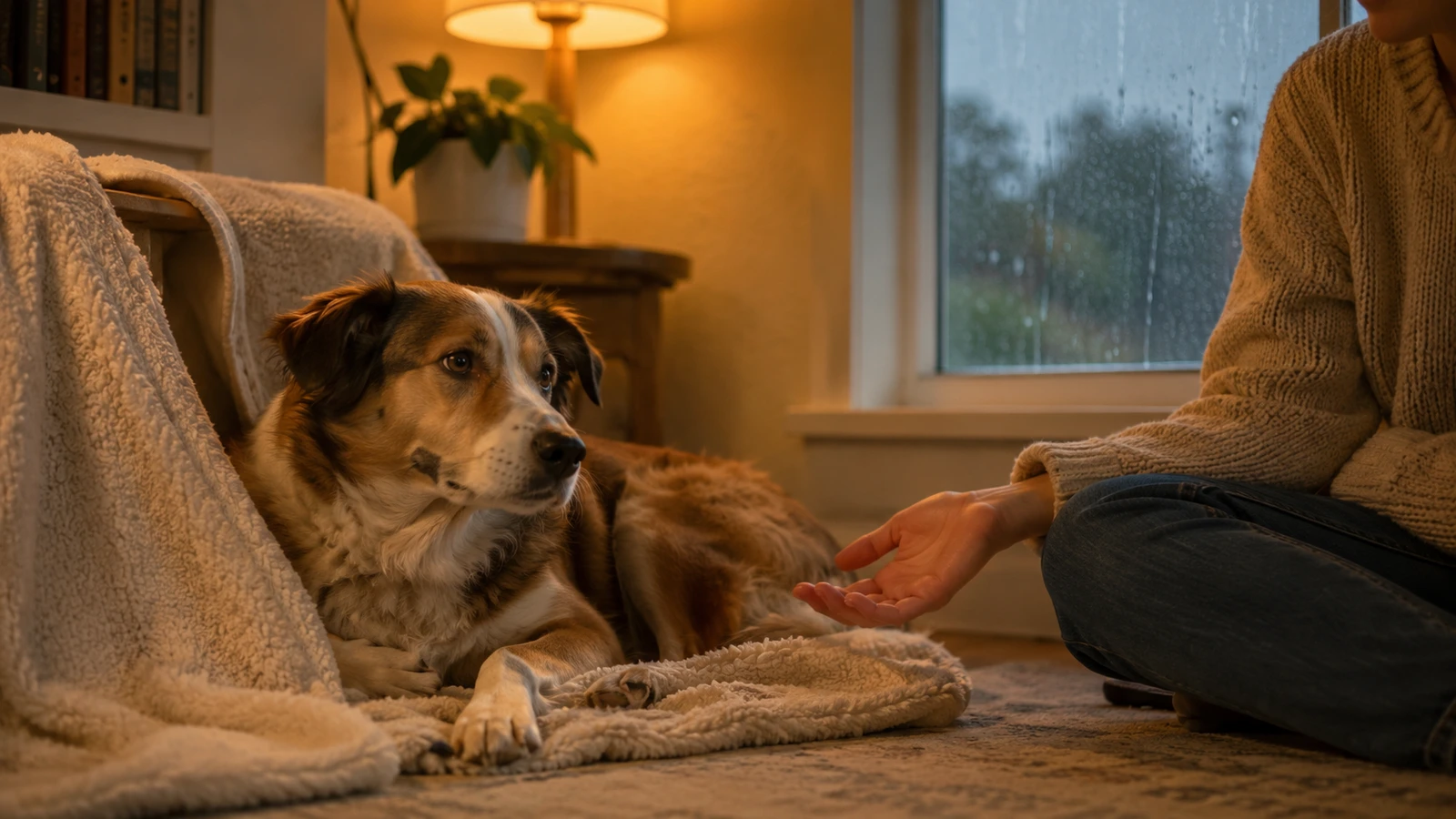
The rain has barely begun, but your dog is already watching the windows.
Then comes the first distant rumble. Their ears lower. Their breathing changes. The dog who normally follows you from room to room is suddenly trying to squeeze behind the sofa—or press their whole body against your legs.
To us, it may be weather. To a frightened dog, it can feel as though something enormous, unpredictable and inescapable has entered their world.
If your dog shakes, pants, hides, paces or tries to escape during a storm, they are not misbehaving. They are afraid. And although you cannot explain thunder to them, you can help them feel less alone and more secure.
The short answer: Bring your dog indoors, reduce flashes and noise, give them access to a familiar safe place, and offer calm companionship if they seek it. Never punish or force them out of hiding. If their fear is intense, worsening or dangerous, speak with a veterinarian before the next storm.
Why Are Some Dogs Scared of Thunder?
Thunder is not simply a loud sound. A storm can bring deep rumbles, sudden cracks, lightning flashes, heavy rain, strong wind and vibrations—often arriving in unpredictable combinations.
Some dogs are naturally more sensitive to noise. Others may have had a frightening experience during a storm, had limited exposure to varied sounds when young, or gradually learned that darkening skies predict something frightening. A dog may also react to storm-related changes before a person notices the first rumble. Veterinarians recognize that wind, rain, lightning and other environmental cues can become part of the fear response, although we cannot know exactly which sensation every individual dog detects.
Fear can also spread through association. A dog initially frightened by thunder may later become anxious when rain begins, when the wind rises or even when the family starts closing windows before a storm.
This is why thunderstorm anxiety can appear to start “before anything has happened.” Your dog may already have noticed that the frightening pattern is beginning.
Early Signs of Thunderstorm Anxiety in Dogs
Not every frightened dog runs under the bed. Anxiety often begins quietly, and recognising the earliest signs gives you more time to help.
Watch for:
- Becoming unusually watchful or unable to settle
- Following you more closely than usual
- Yawning, lip licking or repeatedly swallowing
- Ears held back or a lowered body posture
- Pacing or moving from one hiding place to another
- Panting when the room is not hot and there has been no exercise
- Trembling or shaking
- Refusing food or a favorite treat
- Whining, barking or drooling
- Hiding in a bathroom, closet, under furniture or behind you
- Scratching doors, chewing barriers or trying to escape
- Urinating or defecating indoors despite being house-trained
The behavior may look inconvenient, but the feeling behind it is real. Treat it as distress, not disobedience.
What to Do While the Storm Is Happening
When your dog is already frightened, the goal is not to conduct a training session. The goal is to reduce danger and help their nervous system get through the event.
1. Bring them inside and prevent escape
Keep your dog indoors before the storm becomes intense. Close exterior doors and check that windows, gates and screens are secure. Frightened dogs can bolt, climb, dig or squeeze through spaces they would normally ignore.
If a bathroom break is unavoidable, use a leash—even in a fenced yard—and keep the outing brief. Cornell University’s veterinary guidance similarly recommends planning exercise and bathroom breaks before the storm and using a leash if going outside becomes necessary.
Make sure your dog’s identification tag and microchip details are current. This preparation matters most on the day you hope never to need it.
2. Let your dog choose a safe place
Many dogs select an interior bathroom, closet, space under a desk or quiet corner away from windows. If the location is physically safe, let them use it.
Add familiar bedding, water and a favorite toy. Close curtains or blinds to soften lightning flashes. A fan, television, calm music or white noise may help mask some of the outside sound.
A crate can be comforting only if your dog already sees it as a secure resting place. Do not suddenly confine a panicking dog in an unfamiliar crate, and never lock them into a space where they are trying to escape. Cornell and PDSA both advise creating a familiar safe area and not forcing a dog to use it.
3. Offer comfort without forcing contact
If your dog comes to you, it is okay to speak softly, sit nearby or stroke them gently if that helps them settle. You are not “rewarding” the emotion of fear by being kind.
Some dogs want to lean against their person. Others need space and prefer to hide. Follow your dog’s choice. Do not pull them onto your lap, hold them tightly or drag them from their hiding place in an attempt to prove that nothing is wrong.
Your presence should say, You are safe with me, without demanding that your dog behave differently before they are ready. Veterinary behavior guidance supports calm reassurance or gentle contact when it helps the animal relax, while strongly rejecting punishment.
4. Offer an activity—but accept “no”
A familiar food toy, lick mat, chew or simple sniffing game may help a mildly worried dog redirect their attention. Offer it; do not insist.
Refusing food is valuable information. It often means the dog is too distressed to engage. Put the activity aside and focus on quiet safety rather than repeatedly asking them to eat or play.
5. Stay steady and observant
Move normally, keep your voice gentle and avoid adding frantic energy to the room. You do not need to ignore your dog, and you do not need to perform exaggerated cheerfulness. Simply become the most predictable thing in an unpredictable moment.
Watch dogs who chew doors, claw walls or swallow objects when frightened. These behaviors can cause serious injuries or intestinal blockages. The ASPCA recommends close supervision for dogs prone to bolting or destructive panic during storms.
Should You Comfort a Dog Who Is Scared of Thunder?
Yes—if your dog seeks comfort and your attention helps them settle.
Fear is an emotional response, not a trick your dog is performing for a reward. Calm companionship does not cause thunderstorm fear. What matters is the manner of comfort: be warm and steady rather than alarmed, restraining or overwhelming.
Think of comfort as an invitation:
- Sit close enough for your dog to approach.
- Use slow movements and a normal, gentle voice.
- Pet them if they lean in or visibly relax.
- Stop if they turn away, tense, retreat or choose to hide.
Sometimes love looks like a hand resting softly on a trembling shoulder. Sometimes it looks like sitting quietly outside the bathroom while your dog shelters inside. Both can be comfort.
Seven Things Never to Do During a Storm
- Do not punish fear. Scolding, shouting or using physical corrections adds another threat to an already frightening event.
- Do not drag your dog from a hiding place. A safe retreat is a coping strategy, provided the location itself is safe.
- Do not leave a frightened dog outdoors. Panic greatly increases the risk of escape and injury.
- Do not force cuddling or tight restraint. Let your dog choose whether closeness feels comforting.
- Do not deliberately blast storm recordings during a real storm. Overwhelming exposure—sometimes called flooding—can intensify fear.
- Do not give human medicine, leftover pet medicine or an unapproved supplement. Even products described as natural can have side effects or interact with other treatments.
- Do not wait for a crisis if the pattern is worsening. Severe storm fear is a welfare concern, not a personality quirk.
Remember: You cannot punish fear out of a dog. You can only help them feel safer.
How to Prepare Before the Next Storm
The quiet days between storms are when long-term change becomes possible.
Create the safe place on a calm day
Do not wait for thunder to introduce the space. Let your dog explore it when the weather is quiet. Place comfortable bedding there and occasionally offer a chew, meal or calm attention in the area. The aim is to build a history of ordinary, peaceful moments—not to create a place that only appears when something frightening is coming.
Learn your dog’s earliest warning sign
Keep a simple note after each storm:
- What did the weather sound and look like?
- What was the first change in your dog’s behavior?
- Where did they choose to go?
- What helped, and what seemed to make things worse?
- How long did it take them to recover?
Patterns can help you act earlier and give your veterinarian or behavior professional clearer information.
Use weather alerts
Storm forecasts are imperfect, but alerts can give you time to bring your dog inside, close curtains, prepare background sound and give any veterinarian-prescribed treatment at the instructed time.
If your veterinarian prescribes situational medication, ask when it should be given and whether a trial on a quiet day is appropriate. Several veterinary sources emphasize planning in advance because many treatments work best before panic is fully established.
Consider gradual desensitization and counterconditioning
With professional guidance, some dogs can learn a calmer response to recorded storm sounds. The sound begins at such a low volume that the dog notices it without becoming afraid, while something positive—such as excellent food or gentle play—is provided. Intensity is increased only in tiny steps over many sessions.
This is not the same as repeatedly exposing a frightened dog until they “get used to it.” If the dog begins panting, hiding, freezing, scanning the room or refusing food, the session is already too difficult.
Recordings also cannot reproduce every element of a real storm, so progress with audio does not guarantee comfort during thunder. A veterinarian, veterinary behaviorist or qualified reward-based behavior professional can help create an individual plan. VCA describes desensitization as exposure beginning below the point that triggers an emotional response, paired with counterconditioning to build a positive association.
When Thunderstorm Fear Needs Veterinary Help
Speak with your veterinarian if your dog:
- Tries to break through doors, windows, crates or fences
- Injures themselves or damages teeth, nails or paws while escaping
- Trembles, pants, drools or paces intensely for long periods
- Cannot eat, rest or respond to you during storms
- Takes a long time to recover after the weather passes
- Has fear that is becoming more frequent or severe
- Begins showing major storm anxiety suddenly, especially later in life
- Is also anxious when left alone or around other everyday sounds
A veterinarian can check for health problems that may contribute to behavioral changes and discuss a plan combining environmental management, behavior modification and, when appropriate, prescription medication. Medication is not a failure and should not be used merely to make a dog appear quiet; the purpose is to reduce suffering and make learning possible.
Seek urgent veterinary care if your dog is injured, collapses, has difficulty breathing, has blue or very pale gums, or may have swallowed a harmful object during a panic episode.
Your Dog’s Personal Storm Safety Plan
Complete this before the next forecast. Keep it somewhere every family member can find it.
| Plan item | Your dog’s details |
|---|---|
| Earliest sign of anxiety | ______________________________ |
| Chosen safe place | ______________________________ |
| Bedding or comfort item | ______________________________ |
| Best sound-masking option | ______________________________ |
| Calming activity they may accept | ______________________________ |
| Doors, gates and windows to check | ______________________________ |
| ID tag and microchip details checked on | ______________________________ |
| Veterinarian’s phone number | ______________________________ |
| Prescribed support and timing, if applicable | ______________________________ |
| Trusted person who can stay if you are away | ______________________________ |
A Final Word: Be Their Safe Weather
You may not be able to stop the thunder. You may not be able to convince your dog that the next flash will not hurt them.
But you can close the curtains. You can prepare the quiet corner. You can notice the first worried glance instead of waiting for panic. You can sit nearby without pulling, scolding or asking them to be brave for you.
And when the room shakes and your dog searches for somewhere the sky cannot reach them, you can become the familiar thing that remains gentle.
That is not spoiling a frightened dog.
That is care.
Frequently Asked Questions
Found this helpful? Share it with a fellow dog parent:
References & trusted sources
Keep your dog's care organized
The Complete Dog Care Planner turns all of this into one calm, simple routine you can actually stick to.