Practice 1
Choose a veterinary practice before you need one
Register with a clinic, learn its opening hours, and identify the nearest after-hours emergency service. Having a plan saves precious time when your dog suddenly becomes unwell.
All ages

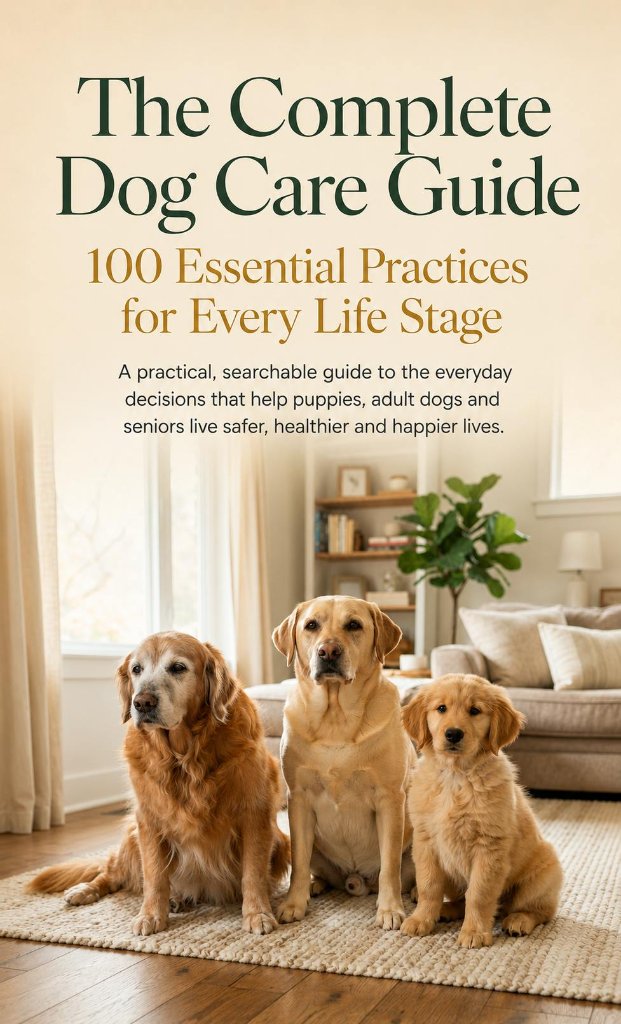
A practical, searchable guide to the everyday decisions that help puppies, adult dogs and seniors live safer, healthier and happier lives.
Important: This guide is educational, not a diagnosis or a personalised care plan. Vaccines, parasite prevention, legal requirements, nutrition and emergency services differ by country and by dog. Use it to prepare better questions for your veterinarian.
Good dog care is not a competition to buy the most expensive products or follow the longest routine. It is the steady work of noticing your dog, meeting essential needs, preventing avoidable harm and asking for help when something changes.
The original version of this resource contained useful ideas, but it also included fixed feeding amounts, universal temperature bands, a rigid vaccination schedule and popular internet rules that could mislead readers. This edition replaces those shortcuts with individual, region-aware guidance grounded in veterinary and animal-welfare sources.
Use the search and life-stage filters to find what matters today. Then return whenever your dog enters a new stage of life.
Build a relationship with a veterinary team before an emergency happens.
Register with a clinic, learn its opening hours, and identify the nearest after-hours emergency service. Having a plan saves precious time when your dog suddenly becomes unwell.
Many dogs benefit from at least an annual preventive examination, while puppies, seniors and dogs with ongoing conditions may need more frequent care. Your veterinarian should set the interval for your dog.
Early appointments are not only about vaccines. They are opportunities to discuss growth, nutrition, parasite control, behaviour, socialisation, dental development and safe handling.
Ageing affects dogs differently. Ask when your dog should begin senior screening and whether more frequent examinations, blood tests, blood pressure checks or mobility assessments are appropriate.
Notice normal appetite, thirst, energy, breathing, stools, urination, movement and behaviour. Small departures from an established baseline can be more useful than comparing your dog with someone else's.
Vaccines depend on age, previous history, lifestyle, travel, disease exposure and local law. Complete the puppy series and follow the schedule created by your veterinarian rather than a generic internet chart.
Some vaccines are widely recommended, while others are important only for dogs with particular regional or lifestyle risks. Boarding, wildlife exposure, travel and local outbreaks can change the recommendation.
Fleas, ticks, heartworm and intestinal parasites vary by climate and location. Ask your veterinarian which products, tests and year-round or seasonal schedules are appropriate where you live and travel.
Tell your veterinary team about every prescription, over-the-counter product, herbal remedy and supplement. Interactions and duplicate ingredients can matter even when a product is marketed as natural.
The benefits and trade-offs of spaying or neutering vary with breed, sex, size, health, lifestyle and local regulations. Avoid relying on one universal age; decide with your veterinarian.
A collar tag can help someone contact you immediately, while a registered microchip provides permanent backup identification. Check that the registry details remain current after every move or phone-number change.
Save your regular vet, emergency clinic and regional animal-poison service in every caregiver's phone. Include transport arrangements, your dog's medications and any handling needs.
Keep vaccination certificates, laboratory results, medication lists, allergies, microchip details, insurance information and a timeline of important symptoms in one accessible place.
Insurance, a dedicated emergency fund or another realistic financial plan can reduce delays in care. Read exclusions, waiting periods and reimbursement rules before choosing a policy.
Evidence anchors: [1] [2] [3] [4]
The best diet is complete, appropriate, safe and workable for the individual dog.
Look for a nutritional adequacy statement showing that the food is complete and balanced for your dog's life stage or intended use. AAFCO does not certify, approve or endorse individual foods.
Useful questions include who formulates the diet, their qualifications, what quality-control testing is used, whether the company can provide complete nutrient information and how it handles recalls.
Foods vary greatly in calorie density. Begin with the manufacturer's guide, then adjust with your veterinary team according to body condition, activity, age, neuter status and health.
A scale shows total weight; body-condition and muscle-condition scoring reveal fat and muscle distribution. Ask your veterinary team to show you what an ideal score feels like.
You should usually be able to feel the ribs with a light fat covering and see a waist from above. Sudden or unexplained weight change deserves veterinary attention.
Treats, table food, chews and foods used for medication all add calories. For many healthy dogs, keeping extras to no more than about 10% of daily calories helps protect nutritional balance.
Growing dogs require a diet formulated for growth. Large- and giant-breed puppies need careful mineral and calorie balance, so avoid adding calcium or other supplements unless prescribed.
Senior dogs are diverse. Some need fewer calories, some need more protein or a therapeutic diet, and others remain well on their adult food. Base the choice on health and body condition.
Water needs change with diet, weather, exercise, pregnancy, nursing and illness. Measure intake when your veterinarian asks, but do not use a rigid universal amount as a substitute for clinical advice.
A gradual transition over several days often reduces digestive upset, but some medical situations require a different plan. Follow your veterinarian's directions for therapeutic or elimination diets.
Raw meat and raw treats can carry pathogens that affect dogs and people. Bones can also fracture teeth or obstruct and injure the digestive tract. Discuss any raw diet with a veterinary nutrition professional.
Home-prepared diets can be nutritionally incomplete even when the ingredients look wholesome. Use a recipe formulated for your individual dog by a board-certified veterinary nutritionist and follow it precisely.
More is not necessarily better. Supplements may add excessive nutrients, interact with medication or be unnecessary in a complete diet. Use them for a defined reason with veterinary guidance.
A brief variation can occur, but persistent diarrhoea, repeated vomiting, refusal of food, marked thirst or weight loss warrants veterinary advice. Puppies and small dogs can deteriorate quickly.
Evidence anchors: [5] [6] [7] [8] [9] [10]
Match movement to the dog in front of you, not to a universal number.
Breed traits can offer clues, but age, fitness, health, temperament, weather and preference matter more than a single daily-minute target. Include both physical movement and time to sniff.
There is no reliable formula that determines safe puppy exercise from age alone. Favour self-paced play, short varied outings and veterinary guidance for developing joints.
Limit repetitive jumping, hard-surface running and sustained forced exercise in puppies, especially large breeds. Let the puppy rest when tired and increase challenges gradually.
Walks, sniffing, controlled play, balance work and breed-appropriate activities use the body differently. Variety can support fitness while reducing repetitive strain.
Regular gentle movement can support mobility and confidence. Shorter walks, non-slip surfaces, controlled strength work and veterinary pain management may be more appropriate than complete rest.
Begin energetic activity with several minutes of easy walking and end gradually. Sudden intense effort after inactivity can increase the risk of strain.
After illness, winter inactivity or a sedentary period, build distance, speed and intensity slowly. Weekend-only bursts of strenuous exercise are not a substitute for consistent conditioning.
There is no single safe temperature for every dog. Humidity, sun, exertion, body condition, airway shape and acclimatisation all matter. Reschedule or replace exercise when conditions are unsafe. See also: How Hot Is Too Hot to Walk a Dog?
Asphalt, sand, metal and artificial turf may become much hotter than the air. Choose shade and natural ground, and stop if your dog lifts paws, slows down or seeks cooler surfaces.
Small, short-coated, very young, older and medically vulnerable dogs may need shorter outings or protective clothing. Dry wet coats and paws, and watch for shivering or reluctance to continue.
Excessive panting, noisy breathing, weakness, repeated lagging, limping, confusion or collapse are not training challenges. Stop activity, move to safety and seek veterinary advice as appropriate.
Evidence anchors: [11] [12]
Enrichment adds choice, curiosity and healthy outlets; it does not replace rest or suitable exercise.
Allowing a dog to investigate scents at a comfortable pace can be enriching. Not every walk needs to focus on distance, speed or perfect heel position.
Food puzzles, scatter feeding and stuffed toys can encourage foraging and slow eating. Count the food within the daily calorie allowance and supervise new products.
A small selection changed regularly can renew interest without clutter. Keep favourite comfort items available and remove damaged toys promptly.
Chewing can be calming, but very hard items such as antlers, hooves and bones can fracture teeth. Select appropriately sized products that do not splinter and supervise use.
Hide a toy or a small portion of food in easy locations, then gradually increase difficulty. Search games can be adapted for small homes and dogs with limited mobility.
A few minutes of reward-based practice can teach useful skills and provide mental engagement. End while the dog is still comfortable and successful.
New surfaces, objects, sounds and places can build confidence when exposure is gradual and voluntary. If your dog avoids, freezes or cannot take food, create more distance.
Hot weather, storms, injury or poor air quality may restrict outdoor activity. Keep a menu of calm scent games, food toys, gentle training and safe chewing options.
Digging boxes, scent work, retrieving, tug, herding-style games and controlled shredding can provide appropriate outlets when matched to the dog and supervised.
Continuous entertainment can create overtired or overstimulated dogs. Provide uninterrupted rest after walks, social events and demanding training.
Pacing, destruction, barking, withdrawal or loss of interest may reflect unmet needs, stress, pain or illness. Avoid assuming every problem is simply boredom.
Evidence anchors: [13]
Teach with safety, reinforcement and realistic expectations.
Reward-based methods are recommended for teaching skills and addressing behaviour problems. Rewards may include food, play, access, praise or distance from something worrying. Our AI Training Advisor can help you get started.
Shock collars, prong collars, leash corrections, alpha rolls and physical punishment can create welfare risks and do not teach the dog what to do instead.
Break skills into small pieces, practise in low-distraction settings and increase difficulty gradually. Frequent successful repetitions are more useful than long frustrating sessions.
Household members should use the same cues and reward criteria. If progress stalls, change the environment or teaching plan rather than blaming the dog.
A reliable response to name, recall, loose-lead walking, leave-it, drop, settling and comfortable handling can improve everyday safety and veterinary care.
Baby gates, leads, distance and secure storage prevent unwanted behaviour from being repeatedly practised. Management is responsible care, not a training failure.
The early socialisation period is important. Work with your veterinarian on safe exposure before the vaccine series is complete, using clean, controlled environments and healthy vaccinated dogs.
Pair gentle handling of paws, ears, mouth and body with rewards. Respect signs of discomfort and build toward grooming and veterinary procedures gradually.
Look for transparent methods, recognised education, reward-based practice and collaboration with veterinarians. Serious fear, aggression or separation distress may require a veterinary behaviourist.
New aggression, house soiling, restlessness, touch sensitivity or withdrawal can be caused by medical problems. Arrange a veterinary assessment before treating the issue as disobedience.
Evidence anchors: [14] [15] [16]
Routine handling helps prevent discomfort and makes small changes easier to notice.
Daily brushing with dog-safe toothpaste is the home-care gold standard. Build the habit gradually and never use human toothpaste, which may contain unsuitable ingredients.
Begin with brief lip lifting and rewards, then touch the teeth and gums before adding a brush. Stop if the mouth is painful and arrange a dental examination.
Dental chews, diets and other products carrying the Veterinary Oral Health Council seal have evidence for plaque or tartar control. They complement, rather than replace, brushing and veterinary care.
A complete veterinary dental procedure requires assessment and cleaning below the gumline, dental probing and radiographs when indicated. Surface scraping alone does not treat hidden disease.
A practical safety check is whether the item is harder than the tooth can safely tolerate. Bones, antlers and hooves are common causes of fractures and can also cause digestive injury.
Coat type, length, shedding and skin disease determine frequency. Brushing removes loose hair, prevents some mats and creates an opportunity to find lumps, parasites or sore areas.
Tight mats can pull skin, hide wounds and restrict movement. Do not cut close mats with household scissors; seek a trained groomer or veterinarian, especially if skin is painful.
Nails that click, snag, alter stance or touch the ground at rest may need attention. Frequency varies greatly. Ask for a demonstration if the quick is difficult to see.
Healthy ears may not need routine cleaning. Look for odour, redness, discharge, pain or repeated head shaking. Use a veterinarian-approved product and avoid cotton swabs inside the canal. If you notice any of these signs, read our guide on dog ear infection symptoms.
Deep cleaning may worsen pain, push debris inward or remove material needed for diagnostic testing. Contact your veterinarian before using drops or home remedies.
There is no universal bathing interval. Use dog-appropriate products, rinse thoroughly and follow veterinary instructions for medicated shampoos or skin disease.
Inspect paws, between the toes, skin folds, armpits, groin, tail and mouth. Record new lumps, wounds, odour, hair loss, redness or changes in symmetry. Persistent paw licking is worth investigating — see Why Is My Dog Licking Their Paws?
Evidence anchors: [17] [18] [19] [20] [21]
Prevention and a calm plan are safer than improvised home treatment.
Secure electrical cords, small swallowable objects, batteries, nicotine products, medications, cleaning agents, sharp tools and children's toys. Reassess as the dog grows or learns new behaviours.
Trash may contain bones, mouldy food, medication, wrappers and toxins. Use lidded containers and keep shopping bags and compost inaccessible.
Chocolate, xylitol, grapes and raisins, onions and related plants, alcohol, raw yeast dough, caffeine and macadamia nuts can be dangerous. Do not assume a small amount is safe.
Common names can be misleading. Use an authoritative toxic-plant database and contact a veterinarian or poison service when exposure is suspected rather than relying on a generic plant list.
Vomiting is unsafe for some substances and situations. Do not use salt, peroxide or other home methods unless a veterinarian or animal-poison specialist gives case-specific instructions.
Store your emergency veterinarian and the appropriate animal-poison service for your country. Fees may apply, and the service may ask for the product, amount, time, dog's weight and symptoms.
Use a crash-tested restraint or secured travel crate appropriate for the dog and vehicle. Never allow a dog to ride loose in an open truck bed or put their head far outside a window.
Vehicles heat rapidly even with windows open. Plan errands so the dog can remain safely at home or with a responsible person in a temperature-controlled setting.
Not all dogs are natural swimmers. Use a properly fitted canine life jacket when appropriate, provide an exit point, prevent access to unsafe water and rinse salt or pool chemicals from the coat.
Carry identification, medical records, medications, food, water, waste supplies, a secure restraint and destination-specific health documents. Check travel and border rules well in advance.
Include contact numbers, records, gauze, non-stick dressings, bandage material, saline, gloves, a thermometer and a muzzle only if your dog can breathe normally and use is safe.
Trouble breathing, blue or grey gums, collapse, repeated seizures, severe bleeding, suspected poisoning, a swollen abdomen with unproductive retching or inability to urinate need immediate veterinary care.
Evidence anchors: [22] [23] [24] [25] [26]
Security grows from predictability, communication, choice and compassionate care.
Regular patterns for meals, toileting, exercise, rest and medication can reduce uncertainty. A routine should support the dog without becoming so rigid that ordinary change causes distress.
Shared walks, gentle play, training, grooming or quiet companionship all count. Follow the dog's preferences rather than forcing constant physical affection.
Allow the dog to move away from petting, choose a resting place and approach new situations gradually. Choice can build trust and reduce conflict.
Lip licking, yawning when not tired, turning away, whale eye, freezing, a tucked tail, panting when not hot and refusing food may indicate discomfort. Respond before behaviour escalates.
Every dog needs a comfortable place where they can rest without being followed, hugged or disturbed. Teach children and visitors that the space is off limits.
Practise brief, calm absences before long ones are necessary. Destruction, vocalising, drooling or panic when alone may indicate separation-related distress and deserves professional help.
Sleep needs vary with age, health and activity. Puppies and seniors often rest more. Avoid treating a tired or sleeping dog as entertainment, especially around children.
No dog is completely child-proof. Adults should actively watch, prevent climbing or hugging, protect the dog's food and rest, and teach children to recognise when the dog wants space.
Night waking, house soiling, confusion, anxiety or altered social behaviour may relate to pain, sensory loss or cognitive dysfunction. Early veterinary assessment can open more options.
Evidence anchors: [14] [27]
A good care plan changes as the dog, household and environment change.
There is no universal ideal room temperature for every dog. Provide shade, ventilation, dry bedding and access to a cooler or warmer area, then watch the individual dog for discomfort.
Place clean bowls where the dog spends time and refresh them regularly. Multiple bowls can help large homes, multi-dog households and dogs with reduced mobility.
The bed should allow the dog to lie fully, change position and rise without slipping. Older dogs may benefit from supportive foam and low-entry designs.
Puppies need frequent sleep and quiet breaks. Overtired puppies may become mouthy or unable to settle. Provide a calm routine instead of trying to exhaust them continuously.
Use non-slip rugs, ramps where safe, raised or repositioned bowls when recommended, easy-access beds and night lighting. Ask your veterinarian about pain and mobility support.
Provide enough beds, water stations, feeding areas and safe spaces to reduce competition. Supervise high-value chews and feed dogs separately when needed.
At least every few months—and after illness, a move or major life change—review weight, food, exercise, behaviour, preventive care, identification and emergency details with the dog's current needs in mind.
Evidence anchors: [3] [11] [28]
These tables are designed as decision aids, not universal prescriptions. They intentionally avoid false precision such as fixed cups of food, guaranteed safe temperatures or toxin doses.
| Life stage | What to discuss | Timing principle |
|---|---|---|
| Puppy | Growth, vaccine series, parasites, nutrition, behaviour, socialisation and reproductive planning | Several visits are commonly needed during the first months; follow the clinic's schedule |
| Healthy adult | Physical exam, weight, teeth, skin, heart/lungs, vaccines, parasite risks and lifestyle | Many dogs benefit from at least annual assessment |
| Senior dog | Mobility, pain, cognition, senses, weight/muscle, organ screening and medication review | Often more frequent than annual, depending on health and age |
| Chronic condition | Symptoms, treatment response, monitoring tests and quality of life | Set by the condition and treatment plan |
There is no single global timetable. Local disease risks, laws and the individual dog determine the plan.
| Question | Why it matters |
|---|---|
| Which vaccines are considered core for this dog? | Core recommendations can vary by region and individual risk. |
| Which lifestyle vaccines should be considered? | Boarding, travel, wildlife, ticks, water exposure and local outbreaks can change risk. |
| What does local law require? | Rabies and documentation rules differ among countries and jurisdictions. |
| When is the next dose or booster due? | Age, product, prior doses and health history influence timing. |
| What reactions should I monitor? | Your clinic can explain expected mild effects and warning signs. |
Use your veterinarian's written schedule; do not copy a schedule from another dog or country.
| Check | Better question |
|---|---|
| Nutritional adequacy | Is it complete and balanced for my dog's life stage or intended use? |
| Formulation expertise | Who formulates it, and what are their nutrition qualifications? |
| Quality control | Does the manufacturer test ingredients and finished products? |
| Calories | How many kilocalories are in each gram, cup, can or pouch? |
| Portion | What starting amount fits this dog's body condition and activity? |
| Monitoring | Is weight, body condition and muscle condition being reassessed? |
AAFCO publishes model standards but does not certify or approve individual pet foods.
| Observation | Possible meaning | Next step |
|---|---|---|
| Ribs, spine or hip bones very prominent | Under ideal; muscle loss may also be present | Arrange veterinary assessment, especially if change is recent |
| Ribs easy to feel with light covering; visible waist and abdominal tuck | Often consistent with ideal condition | Maintain and monitor |
| Ribs difficult to feel; waist reduced or absent | Over ideal | Review calories, treats, activity and health with the veterinary team |
| Weight stable but muscles becoming thinner | Possible muscle loss despite normal or high body weight | Ask for a muscle-condition assessment |
Use the full WSAVA nine-point chart with your veterinary team for a proper score.
| Before activity | Ask yourself |
|---|---|
| Dog | Is my dog well, hydrated, comfortable and willing? |
| Life stage | Is the activity appropriate for a growing puppy or ageing dog? |
| Conditioning | Has distance or intensity increased gradually? |
| Weather | Are heat, humidity, cold, wind or poor air quality creating extra risk? |
| Surface | Is the ground hot, icy, sharp or slippery? |
| During activity | Is breathing controlled, movement even and behaviour normal? |
| After activity | Does the dog recover normally without prolonged distress or pain? |
Stop for noisy or laboured breathing, weakness, confusion, collapse, limping or persistent reluctance.
See also: How Hot Is Too Hot to Walk a Dog?
| Risk factor | Why it raises concern |
|---|---|
| High humidity | Panting becomes less effective for evaporative cooling. |
| Direct sun and hot ground | The dog absorbs radiant heat and paws may be injured. |
| Running, fetch or cycling | Exercise generates substantial internal heat. |
| Flat face or airway disease | Cooling and breathing may be less efficient. |
| Older age, obesity or illness | Physiological reserve may be reduced. |
| Not acclimatised | A sudden hot spell can be riskier than similar weather later in the season. |
When in doubt, choose brief toilet breaks and indoor enrichment, then walk during safer conditions.
| Area | Routine cue | Contact a professional when |
|---|---|---|
| Teeth | Brush daily when possible with dog toothpaste | Bad breath, red gums, pain, loose teeth or difficulty eating |
| Nails | Trim when they touch the ground, click, snag or alter gait | The quick is difficult to see, nails are overgrown or handling is unsafe |
| Ears | Check regularly; clean only when needed with an approved product | Odour, redness, discharge, head shaking or pain is present |
| Coat | Brush according to coat type and matting risk | Mats are tight, skin is painful or the dog cannot be handled safely |
| Skin and paws | Inspect during grooming and after outdoor activity | There is swelling, bleeding, discharge, persistent licking or a new lump |
Frequency varies by individual dog; a calendar alone cannot replace observation.
| Hazard | Examples | What to do |
|---|---|---|
| Sweeteners | Xylitol in gum, sweets, baked goods, toothpaste or medication | Contact a veterinarian or animal-poison service immediately |
| Chocolate and stimulants | Chocolate, cocoa, coffee, tea, energy products and caffeine tablets | Do not wait for symptoms |
| Grapes and related dried fruit | Grapes, raisins, sultanas and currants | Treat any exposure as potentially significant |
| Allium plants | Onion, garlic, leek, chives and concentrated powders | Save packaging and seek advice |
| Alcohol and fermenting dough | Alcoholic drinks, spills, raw yeast dough | Prevent access and seek urgent advice |
| Medications and nicotine | Human painkillers, prescriptions, vitamins, vape liquids and nicotine pouches | Never give home antidotes or induce vomiting without instruction |
Toxicity depends on the exact product, concentration, amount, dog and time since exposure. No table can define a universally safe dose.
| Sign | Action |
|---|---|
| Trouble breathing, blue/grey gums or collapse | Go to an emergency veterinary service immediately |
| Repeated seizures or one prolonged seizure | Emergency care immediately |
| Swollen abdomen with repeated unproductive retching | Possible gastric dilatation-volvulus; emergency care immediately |
| Severe bleeding or major trauma | Apply safe pressure if possible and transport urgently |
| Suspected poisoning | Call a veterinarian or animal-poison service; do not induce vomiting unless directed |
| Inability to urinate, severe pain or sudden paralysis | Urgent or emergency veterinary assessment |
Call ahead when possible so the clinic can prepare and advise on safe transport.
| What you may see | Possible message | Helpful response |
|---|---|---|
| Turning away, sniffing ground, lip licking or yawning | Mild discomfort or an attempt to de-escalate | Pause, create space and reduce pressure |
| Tucked tail, pinned ears, whale eye or refusing food | Significant worry | Increase distance and stop the interaction |
| Freezing, hard stare, growling or showing teeth | The dog feels threatened and may escalate | Do not punish; calmly create safety and seek qualified help |
| Panting, pacing, drooling or destruction when alone | Possible separation-related distress | Record behaviour and consult a veterinarian/qualified professional |
Body language must be interpreted in context. Sudden changes can also reflect pain or illness.
| Region | Resource | Number |
|---|---|---|
| United States | ASPCA Animal Poison Control Center | +1 888 426 4435 |
| United States / Canada | Pet Poison Helpline | +1 855 764 7661 |
| United Kingdom | Animal PoisonLine | 01202 509 000 |
| Australia | Animal Poisons Helpline | 1300 869 738 |
| New Zealand | Animal Poisons Helpline | 0800 869 738 |
| Other locations | Your veterinarian or nearest emergency clinic | Save the local number before an emergency |
Services and fees can change. Verify the number for your location and save it with your emergency clinic.
| Category | Useful contents |
|---|---|
| Information | Vet and emergency numbers, poison service, medication list, microchip details and records |
| Basic supplies | Gauze, non-stick dressings, bandage roll, tape, blunt scissors, saline, gloves and clean towels |
| Transport | Secure lead/harness, carrier or crate, muzzle only when breathing is normal and use is safe |
| Daily needs | Water, bowls, several days of food and medication, waste bags and comfort item |
| Travel/evacuation | Identification photos, destination documents, charger, torch and weather-appropriate supplies |
Ask your veterinarian whether your dog's medical condition requires additional items.
Seek immediate veterinary help for trouble breathing, blue or grey gums, collapse, repeated seizures, severe bleeding, suspected poisoning, a swollen abdomen with repeated unsuccessful retching, sudden paralysis or inability to urinate. Do not induce vomiting unless a veterinarian or animal-poison specialist instructs you.
Many healthy adult dogs benefit from at least an annual preventive examination, but puppies, seniors and dogs with medical conditions may need more frequent visits. Your veterinarian should set the schedule.
There is no single best brand for every dog. Choose a complete and balanced diet appropriate for the life stage, made with appropriate expertise and quality control, then monitor body condition and health.
Exercise needs depend on age, health, fitness, body shape, temperament, weather and activity type. Use the dog's response and veterinary advice rather than one universal time target.
Healthy ears may not need routine cleaning. Check them regularly and use a veterinarian-approved cleaner only when needed or when your veterinarian has prescribed a maintenance schedule.
Important hazards include xylitol, chocolate and caffeine, grapes and raisins, onions and related plants, alcohol, raw yeast dough and some nuts. Contact a veterinarian or animal-poison service after a suspected exposure.
Trouble breathing, blue or grey gums, collapse, repeated seizures, severe bleeding, a swollen abdomen with unsuccessful retching, suspected poisoning or inability to urinate require immediate veterinary help.
Use Raise Happy Dog's free tools to check your dog's wellness score and set up personalised care reminders.
These sources support the major principles used in this guide. Links open the original organisation or document.