10 Most Important Things You Should Do With Your Dog at Home
A dog does not ask for a perfect home — they ask for presence. Here are ten simple, loving things you can do with your dog at home to help them feel healthy, safe, and emotionally fulfilled.
A dog does not ask for a perfect home. They ask for presence.
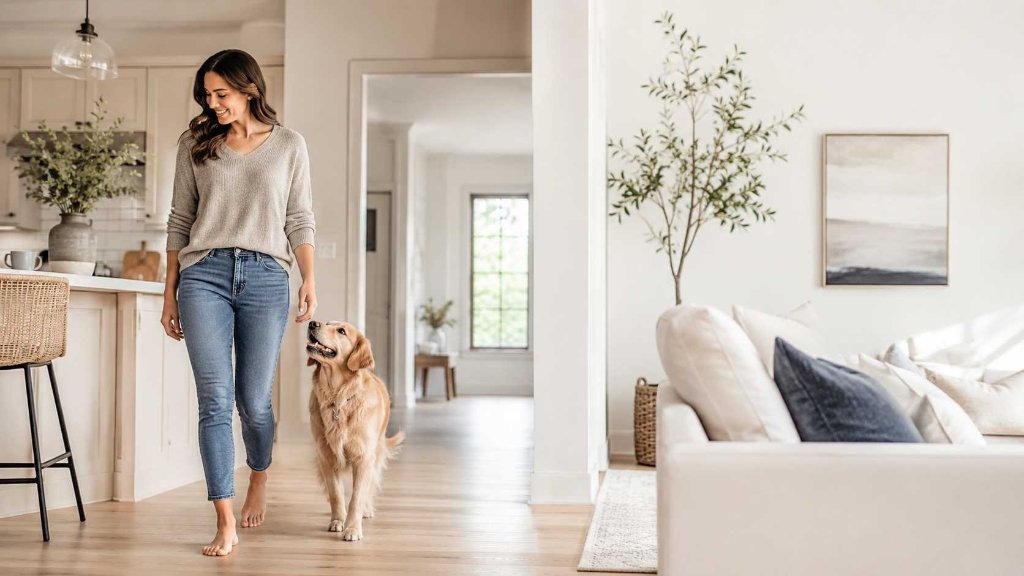
They do not measure love by expensive toys, luxury beds, or fancy treats. They measure it in the way you look at them, the way you call their name, the way you make room for them in your everyday life. Home, for a dog, is not just walls and furniture. Home is where their human is.
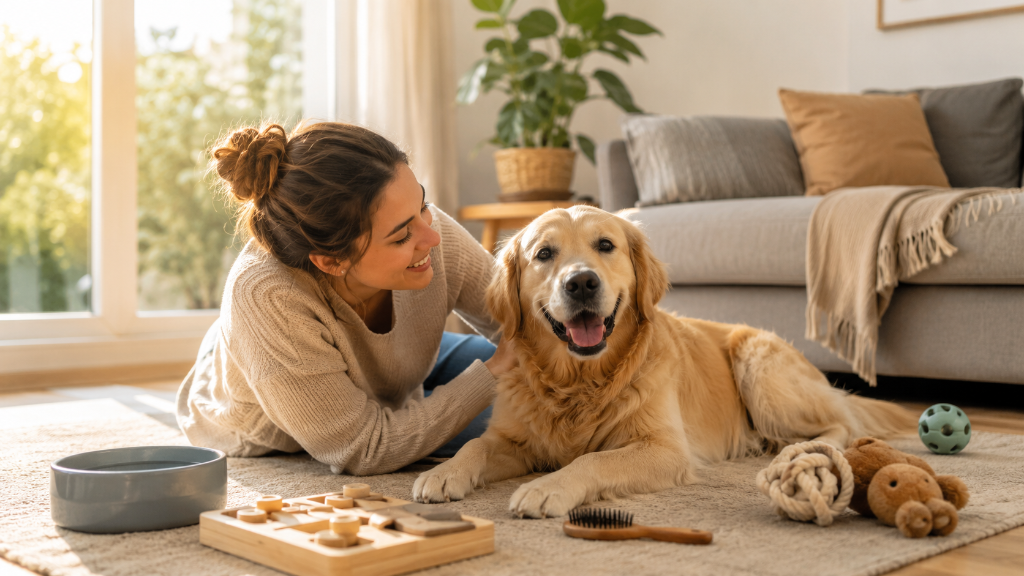
But love becomes even more meaningful when it turns into simple daily care. A few minutes of play, a gentle brushing session, a small training game, a quiet cuddle, or a bowl of fresh water can become powerful acts of love.
Here are ten of the most important things you should do with your dog at home — not only to keep them busy, but to help them feel healthy, safe, loved, and emotionally fulfilled.
1. Give Your Dog a Daily “Connection Moment”
Before toys, training, or routines, your dog needs you.
Start with a small daily ritual that belongs only to the two of you. It could be a soft morning greeting, a few minutes of gentle belly rubs, a calm cuddle after work, or simply sitting beside them without your phone in your hand.
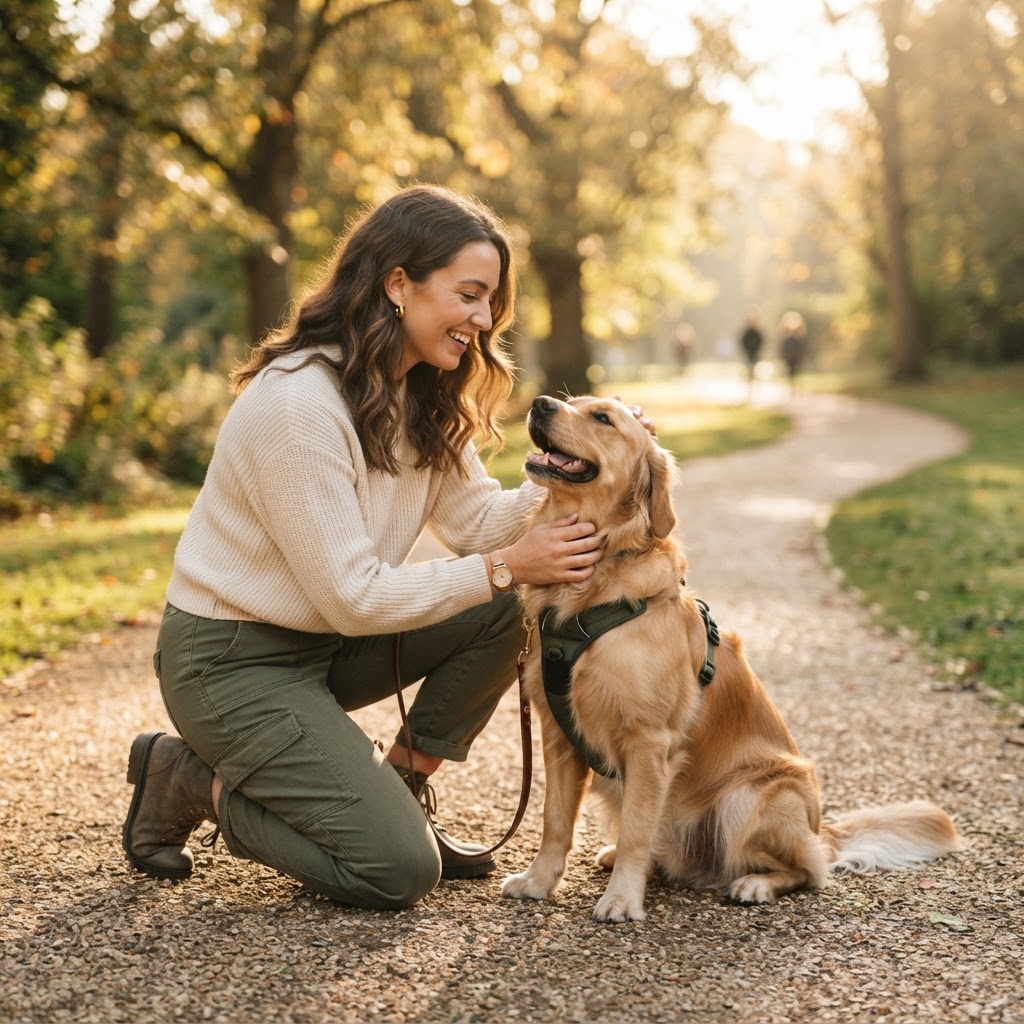
Dogs are social animals. They need positive interaction with trusted humans, but every dog enjoys connection differently. Some love hugs and closeness. Some prefer sitting nearby. Some want play. Some simply want to be noticed. The key is to observe your dog and learn what makes them feel safe and happy. VCA notes that dogs benefit from regular family playtime and social enrichment, but the type of companionship should match the dog’s comfort and personality.
A dog who feels seen at home becomes calmer, more confident, and more deeply bonded with you.
2. Play Interactive Games Like Tug, Fetch, or Hide-and-Seek
Play is not a waste of time. For dogs, play is exercise, communication, learning, and joy — all wrapped into one.
A simple game of tug can help your dog release energy. Fetch can improve movement and focus. Hide-and-seek can make your dog think, search, listen, and celebrate when they find you. VCA explains that play naturally offers physical exercise, mental stimulation, and social interaction, but it should always be fun, safe, and suited to your dog’s preferences.
The magic is not in the toy. The magic is in the shared moment.
Keep play sessions short if your dog gets too excited. Let them win sometimes. Teach gentle rules like “drop,” “wait,” or “take it.” This turns play into a beautiful mix of fun and manners.
Your dog does not need a playground every day. Sometimes, your living room and your attention are enough.
3. Create an Indoor Agility or Obstacle Course
Indoor agility is one of the most joyful things you can do with your dog at home.
You do not need professional equipment. A few cushions, chairs, cardboard boxes, towels, or low broomstick jumps can become a mini adventure. Ask your dog to walk around a chair, step over a pillow, crawl under a safe table, or follow your hand through a small path.
ASPCA specifically recommends indoor agility courses as a home enrichment activity that can help keep the home stimulating and reduce boredom-related behavior issues.
But safety comes first. Keep obstacles low. Avoid slippery floors. Do not force puppies, senior dogs, overweight dogs, or dogs with joint problems to jump. For them, simple walking, turning, and stepping exercises are enough.
The goal is not performance. The goal is confidence.
When your dog completes a tiny obstacle and you celebrate them, they feel proud. And that pride strengthens the bond between you.
4. Let Their Nose Work: Play “Find It” and Scent Games
Your dog’s nose is not just for smelling. It is how they read the world.
One of the easiest home games is “Find It.” Start by showing your dog a treat. Say “find it,” then place the treat nearby. Once they understand the game, hide treats under a towel, behind a chair, inside a snuffle mat, or around a safe room.
ASPCA highlights scent games and says sniffing can be both stimulating and calming for dogs. VCA also explains that sniffing and searching activities help meet a dog’s natural enrichment needs. This game is especially useful on rainy days, busy days, or days when your dog cannot get enough outdoor activity. A few minutes of nose work can leave many dogs beautifully satisfied.
To humans, it may look like a small game. To your dog, it feels like a mission.
5. Use Food Puzzles, Snuffle Mats, and Slow Feeding Games
Dogs naturally enjoy working for food. In the wild, animals do not simply receive meals in bowls — they search, sniff, solve, and explore. At home, we can safely bring back a little of that natural joy.
Use a puzzle feeder, snuffle mat, treat-dispensing toy, or a stuffed rubber toy. You can also scatter part of your dog’s meal on a clean mat or hide small portions around a room.
AAHA describes food enrichment as a way to support a dog’s natural desire to work for food, and notes that options like stuffed food toys, freezing stuffed toys, scatter feeding, and snuffle mats can help dogs stay calmly occupied.
This is especially helpful for dogs who eat too fast, get bored easily, or demand constant attention. Just remember to count the food used in games as part of their daily diet, so you do not accidentally overfeed them.
Food can be more than feeding. It can become a peaceful, brain-healthy activity.
6. Teach One Small Skill Through Positive Reinforcement
Training should not feel like control. It should feel like communication.
Teach simple cues such as “sit,” “stay,” “come,” “touch,” “look at me,” “place,” or “leave it.” You can also teach cute tricks like paw, spin, bow, or putting toys in a basket.
Keep sessions short — even five minutes can be enough. Use rewards your dog actually loves: treats, praise, toys, or a short game. AAHA recommends identifying what motivates your dog because not all dogs are motivated by the same reward.
Positive reinforcement makes learning joyful. Humane Society explains that rewarding desired behavior makes dogs more likely to repeat it and helps shape behavior in a humane way.
The best training does not break a dog’s spirit. It gives their mind a language.
7. Give Them Safe Chewing and Destruction Outlets
Chewing is not always “bad behavior.” For many dogs, chewing is natural, relaxing, and satisfying. The problem begins when they choose your shoes, furniture, wires, or packages.
Instead of only saying “no,” give them a better “yes.”
Offer safe chew toys, food-filled rubber toys, or vet-approved chews. Some dogs enjoy supervised shredding games using cardboard boxes or paper tubes with treats hidden inside. VCA explains that chewing, shredding, and dissecting can be enriching for dogs, but these activities require supervision to prevent choking or swallowing unsafe material.
This is a beautiful principle in dog care: do not just stop the instinct — guide it safely.
A fulfilled dog is often a better-behaved dog.
8. Build a Calm Rest Routine
A happy dog does not need entertainment every minute. They also need rest.
Create a peaceful place where your dog can relax — a bed, crate, mat, or quiet corner. Teach them that this place is safe, not punishment. Give them calm praise when they settle there. You can use a cue like “place” or “relax.”
VCA recommends helping dogs learn to rest independently on a mat or in a safe gated area, starting with short sessions and rewarding calm behavior.
This is especially important for puppies, anxious dogs, high-energy dogs, and dogs who follow their humans everywhere. Calmness is a skill, and home is the best place to teach it.
Sometimes the most loving thing you can give your dog is not excitement. It is peace.
9. Make Grooming a Gentle Bonding Ritual
Grooming is not only about appearance. It is a way to check your dog’s body, notice changes early, reduce shedding, and build trust through touch.
Brush your dog regularly according to their coat type. Check ears, paws, nails, skin, eyes, and coat. Look for ticks, fleas, lumps, wounds, redness, bad smell, or signs of pain. ASPCA recommends frequent brushing, daily flea and tick checks during warm weather, and proper coat care before bathing.
Nail care also matters. Long nails can affect comfort and movement, but nail trimming should be introduced slowly and kindly. VCA advises pairing paw handling and nail tools with positive experiences, moving at the dog’s pace, and watching body language carefully.
Do not turn grooming into a battle. Turn it into trust.
A brush in your hand can become another way of saying, “I care for you.”
10. Care for Teeth, Food, Water, and Home Safety
Some of the most important things you do for your dog at home are quiet things.
Fresh water. Clean bowls. Safe food. Dental care. Hazard-free rooms. These may not look emotional, but they are love in its most responsible form.
ASPCA advises that clean, fresh water should be available at all times and food and water dishes should be washed frequently. It also notes that dogs need exercise to stay healthy and avoid boredom, and that exercise needs vary by breed, age, health, and other factors.
Dental care is also important. AVMA says daily brushing is best for pets’ dental care, though brushing several times a week can still be effective when daily brushing is not possible.
Finally, look around your home from your dog’s point of view. Medicines, toxic foods, cleaning products, wires, small swallowable objects, sharp items, and unsafe plants should be kept out of reach. AVMA warns that many common household items can be dangerous or even fatal to pets.
A safe home is not created once. It is maintained every day.
Final Thought
The best life you can give your dog at home is not made of one big thing.
It is made of many small things repeated with love: a game, a walk, a brush, a fresh bowl of water, a kind word, a safe corner, a patient lesson, a moment of eye contact.
Your dog may not understand every word you say. But they understand your rhythm. They understand your hands. They understand your presence.
And when you care for their body, mind, and heart together, your home becomes more than a place where your dog lives.
It becomes the place where your dog feels loved.
Found this helpful? Share it with a fellow dog parent:
Keep your dog's care organized
The Complete Dog Care Planner turns all of this into one calm, simple routine you can actually stick to.