The 10 Best Things Every Dog Parent Must Do With Their Dog
Backed by the AVMA, AKC, WSAVA and peer-reviewed research — here are the 10 things every dog parent should build into their routine to raise a happier, healthier dog.
Written by the Raise Happy Dog editorial team. Educational only — not a substitute for your veterinarian. Read our editorial policy.
Being a great dog parent isn't about grand gestures — it's about a handful of habits, done consistently. We reviewed guidance from the American Veterinary Medical Association (AVMA), the American Kennel Club (AKC), the World Small Animal Veterinary Association (WSAVA), the RSPCA, and peer-reviewed research to distill the ten things that matter most.
Here they are — in the order that builds a truly happy dog.
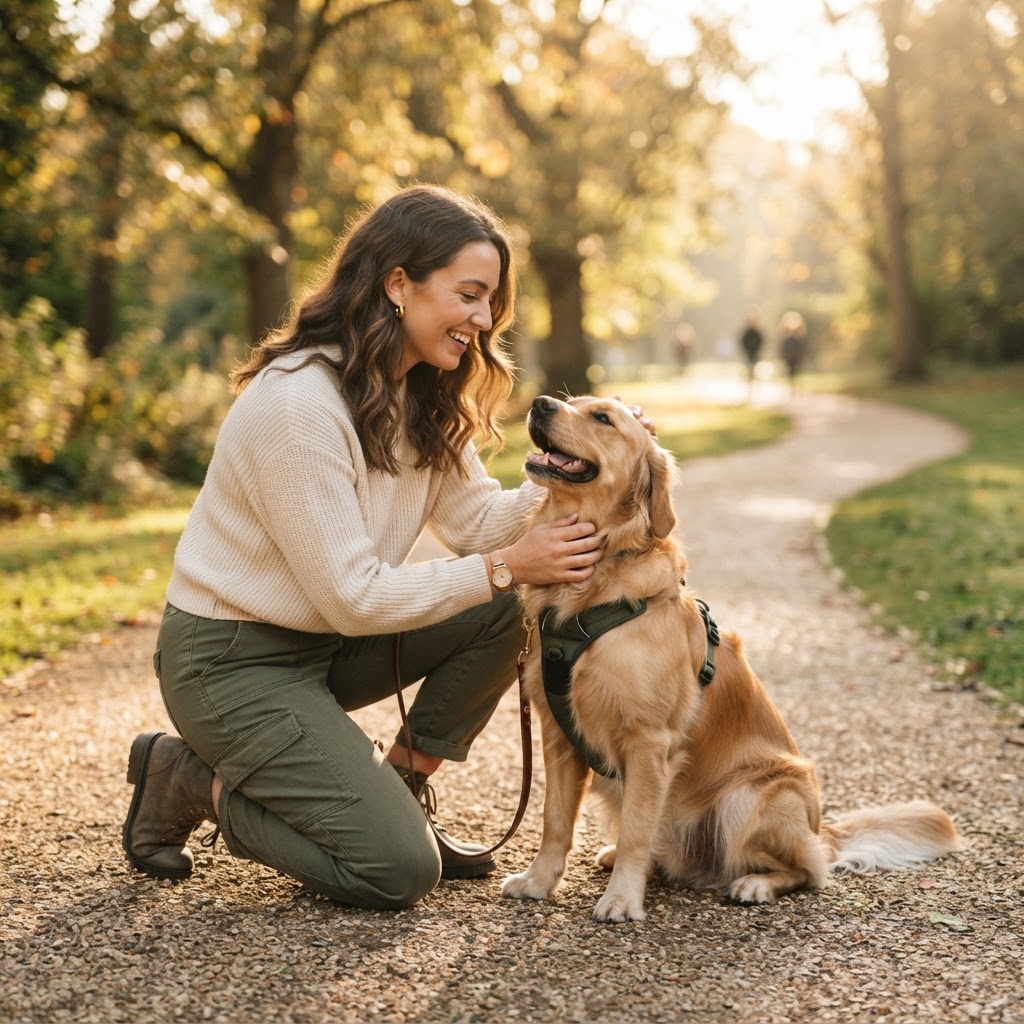
1. Take a real walk together, every single day
Daily exercise isn't optional. The AVMA lists "sufficient exercise" among the core needs of responsible pet ownership, and canine behaviour experts recommend dogs get up to 2–3 hours of physical activity a day depending on breed and age.
But here's the part most people miss: a walk is more than exercise. Letting your dog sniff freely — a so-called "sniffari" — is powerful mental enrichment. A dog's nose is their primary sense; a slow, sniff-heavy walk can tire and satisfy a dog more than a fast, rushed one.
Do this: At least one walk a day where your dog sets the pace and gets to sniff. No phone, no hurry.
2. Give their brain a job (enrichment)
A 2022 peer-reviewed review in Animals (Hunt et al., cited 50+ times) found that environmental enrichment reduces stress, decreases abnormal behaviours, and increases relaxation in dogs. The RSPCA echoes this: enrichment improves resilience and reduces anxiety.
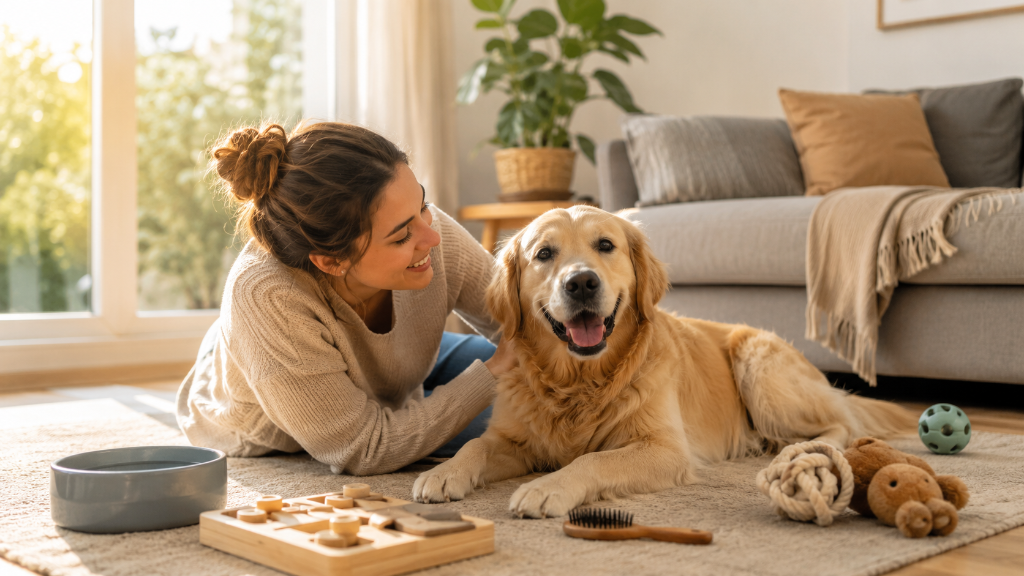
Enrichment doesn't need to be fancy:
- Puzzle feeders and snuffle mats at mealtime
- Rotating toys weekly so they stay novel
- Hiding treats around the house ("find it" games)
- Letting them chew — safe chewing promotes relaxation and supports oral health
Do this: Replace one bowl-meal a day with a puzzle feeder or scatter feeding.
3. Never skip the yearly vet visit
The AVMA's responsible-ownership guidelines put timely veterinary care and preventive health at the centre of dog welfare. Annual wellness exams (twice yearly for seniors) catch problems — dental disease, heart murmurs, lumps, weight creep — while they're still cheap and treatable.
Stay current on:
- Core vaccinations
- Parasite prevention (ticks, fleas, heartworm, deworming)
- Weight and body-condition checks
Do this: Put your dog's next vet visit in your calendar today — or use our free care reminder so you never miss one.
4. Brush their teeth (yes, really)
Dental disease is one of the most common — and most ignored — health problems in dogs. Untreated, it causes pain and can affect the heart, liver and kidneys. Veterinary dental guidelines recommend regular tooth brushing with dog-safe toothpaste, supplemented by vet-approved dental chews.
Do this: Start with 30 seconds, a few times a week. Reward heavily. Build up slowly.
5. Feed for their life stage — and keep them lean
WSAVA's global nutrition guidelines stress feeding a complete, balanced diet appropriate to your dog's life stage (puppy, adult, senior) and monitoring body condition. Obesity shortens lives: studies on Labrador retrievers found lean-fed dogs lived up to two years longer.
Do this: Measure meals, count treats as calories (max ~10% of daily intake), and ask your vet for a body-condition check at every visit.
6. Train with kindness — a few minutes a day
Modern veterinary behaviour science is unanimous: positive reinforcement (rewarding what you want) builds confident, well-behaved dogs — while punishment-based methods increase fear and aggression. The AKC recommends training as an everyday habit, not a one-time event.
Five minutes a day of sit, stay, recall and loose-leash practice does more than an hour once a week — and doubles as brain enrichment and bonding.
Do this: Practice one cue for 5 minutes daily. End on a win. Want tailored guidance? Try our AI Training Advisor.
7. Socialise them — gently and throughout life
Socialisation isn't just for puppies. Positive, low-pressure exposure to new people, dogs, sounds and places keeps dogs confident and prevents fear-based behaviour problems — one of the top reasons dogs are surrendered to shelters.
Do this: One new (calm) experience per week — a new walking route, a friend's visit, a café patio. Watch their body language and never force it.
8. Groom regularly — it's a health check in disguise
The AKC lists regular grooming among the pillars of responsible ownership. Brushing, nail trims, ear checks and baths aren't just about looks — grooming sessions are when you'll find ticks, skin issues, lumps and sore spots early.
Do this: A weekly 10-minute brush-and-check ritual. Nose to tail, ears to paws.
9. Make sure they can always find their way home
The AVMA and AKC both stress identification: a microchip (with your details kept up to date!) plus a well-fitting collar and ID tag. Microchipped dogs are dramatically more likely to be reunited with their families if lost.
Do this: Microchip your dog, and check today that the registered phone number is current.
10. Simply be with them — companionship is a core need
The WSAVA Animal Welfare Guidelines recognise that dogs are social animals with genuine emotional needs — and research shows the human–dog bond benefits both ends of the leash, reducing stress and depression in people too. The AVMA explicitly lists companionship as a basic need, alongside food and shelter.
Dogs don't need a bigger house or more toys. They need you — present, calm, and paying attention.
Do this: Ten minutes of undivided attention every day. Floor time, belly rubs, quiet cuddles. No screens.
The takeaway
| # | Habit | How often |
|---|---|---|
| 1 | Sniff-rich walk | Daily |
| 2 | Brain games / enrichment | Daily |
| 3 | Wellness vet visit | Yearly (seniors: 2×) |
| 4 | Tooth brushing | 3–7× per week |
| 5 | Balanced, measured meals | Every meal |
| 6 | Positive training | 5 min daily |
| 7 | Gentle socialisation | Weekly |
| 8 | Grooming + body check | Weekly |
| 9 | Microchip + ID check | Once, then verify yearly |
| 10 | Undivided attention | Daily |
None of these require money or talent — just consistency. Start with one, make it a habit, and add the next.
Curious how your routine measures up? Take our free Dog Wellness Quiz to see your dog's score.
Sources
- American Veterinary Medical Association — Responsible Pet Ownership Guidelines
- American Kennel Club — What Responsible Dog Ownership Means, According to a Veterinarian
- WSAVA — Animal Welfare Guidelines (2018)
- Hunt, R.L. et al. (2022), Effects of Environmental Enrichment on Dog Behaviour, Animals — PMC8772568
- RSPCA Australia — The Importance of Enrichment for Dogs
This article is educational and not a substitute for veterinary advice. Always consult your vet about your individual dog.
Found this helpful? Share it with a fellow dog parent:
Keep your dog's care organized
The Complete Dog Care Planner turns all of this into one calm, simple routine you can actually stick to.